Three Ghost Blogging Concerns We Hear From Clients

Some people have issues with ghost blogging. We’ve got clients who use it on a regular basis, and love it. Other times, we have run into some people who can’t wrap their brains around it. They’re not sure they want to do it, and they have trouble accepting our help. These people tend to fall into one of three categories.

  • They don’t think they have a high-enough position to need a ghost writer. They don’t think they’re that important to “deserve” it. They think their company needs to be bigger, or they need to have a more prestigious position. I saw this a lot when I was doing speechwriting for a Congressional candidate in 2004. It’s not a matter of prestige, it’s a matter of having the time to do it.
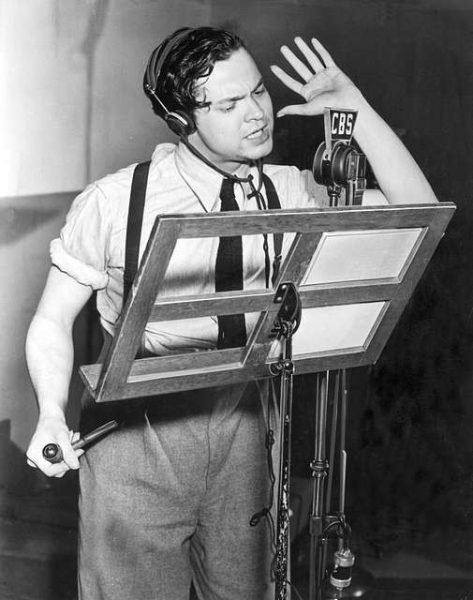
  • A ghost

    Okay, that's kind of creepy.

  • They feel they need to “earn” the words by doing the work themselves. These people have a very strong do-it-yourself ethic, and think that they should be able to and know how to do every aspect of their business. They don’t want someone to do the things they should be capable of doing themselves, and they feel like they’re slacking when they don’t. But a lot of people can’t write quickly or efficiently — they take a couple hours to write a single blog post. That’s a problem when their time is worth $250 an hour, like a defense attorney. Why spend $500 of your billable time, three times a week, when you could hire someone to do the ghost blogging for you?
  • They think writing is so easy that anyone can do it. “After all,” they reason, “I learned how to write in school, so I can just take the skills I learned 20 – 30 years ago, right?” This is like saying, “I know how to work a table saw, so I ought to be able to make my own custom cabinets. Look, we all learned how to communicate via the written word, but that doesn’t make you a writer. A professional ghost blogger has been trained on how to write tight, concise copy that will inform, entertain, or persuade. While some people are able to do this without training, those people are few and far between. Don’t risk turning off your audience with less-than-professional writing that rambles on, is filled with errors, or just plain doesn’t make sense. (Not so surprisingly, these are the same people who demand that every position in their company has experience in their industry, including the accountant, the IT person, and even human resources staff.)

Ghost blogging is one of those services that companies need to maintain an online presence, but don’t have the time or resources to do it. It’s for the people who are too busy to write on a regular basis, no matter what “level” you are in your career. It’s for the people who struggle with writing, or are basically too expensive to do anything that doesn’t directly result in bottom line revenue for their company or firm.

Photo credit: starfish325 (Flickr)

Author :  •  Content Location : Indianapolis, IN  •  Headline : Three Ghost Blogging Concerns We Hear From Clients  •  Keywords : ghost blogging, blogging services, corporate blogging, business blogging  • 

Use Communication Theory to Boost Search Engine Optimization

Google's Personal Results for Corporate Blogging

The persuasion theory behind celebrity endorsements is the same theory behind Google’s new social media search.

It’s called Balance Theory, and when you understand the essence of it, you start to understand why Google is putting so much stock into Google+. And how Google+ can enhance your own search experience.

Balance Theory and Celebrity Endorsements

Without getting into all the scientific language we used when I was in graduate school, balance theory basically says this:

  • I like Celebrity A.
  • Celebrity A likes Product B.
  • That means I should like (and buy) Product B as well.

(Fellow philosophy majors will also recognize this as the 2 premises/1 conclusion logical construction.)

In other words, I like Eminem. Eminem likes Chrysler. Therefore, I should also like Chrysler. (The danger is that if I don’t like Celebrity A, I’ll purposely not like Product B just to restore that balance. It’s why a lot of sponsors drop celebrities who get into trouble.)

This is what marketers are counting on when they put a celebrity’s name and face on a product or company. It’s why Eminem is schlepping Chrysler on the Super Bowl. It’s why Reebok is clamoring for contracts with the NFL. It’s why Nike puts famous basketball players on its shoes.

This is the same basic idea that goes into Google’s personalized “My World” search results. If you’ve used Google lately, you’ve noticed that a lot of your friends are appearing in those results. That’s because Google is relying on Balance Theory to help improve your search results. (Maybe not intentionally, but that’s what’s at play here.)

Here’s what they’re doing with it:

  • I like Douglas Karr.
  • Douglas Karr has talked about corporate blogging.
  • That means I should check out what Douglas has said about corporate blogging.

And if I like what Google has shown me, I’ll continue to use Google.

Google's Personal Results for Corporate Blogging

These are the PERSONAL results for "corporate blogging." But that is not really Jason Falls in the 2nd picture from the left.

How Can You Use Balance Theory in Search Engine Optimization?

If you’re building your personal brand, or you’re doing social media marketing for your company, the best way to use Balance Theory for your search engine optimization is to use Google+, and develop relationships with key decision makers at the companies you want to do business with.

  • Connect with the decision makers at the companies you’re trying to reach.
  • Write blog posts about the key areas and problems they’re dealing with at their company. You can find that out just by paying attention to their conversations on LinkedIn, Twitter, and Google+.
  • Continue to share important articles with them related to those same areas and problems. (This is all part of that “be a valuable resource” stuff we’ve talked about before.)

Then, as these people search for those particular keywords, your blog posts and your articles will rise to the top of their search engine results page. End result? “Hmm, this person seems to know an awful lot about this topic. I wonder what else they can help me with?”

However, this is not a reason to connect with everyone you can find on Google+ or to spam the bejeezus out of them with all kinds of articles and blog posts. You do that, and you’ll most certainly be blocked and ignored by everyone you’re trying to reach. Just write about what you want to write about at an acceptable pace, and connect with a reasonable number of people on a level that doesn’t seem creepy, desperate, or spammy.

With a little effort and just by following some common sense, you can use the Balance Theory — something usually only used by marketers with millions to spend — to start winning higher search engine rankings on your chosen keywords.

Author :  •  Content Location : Indianapolis, IN  •  Headline : Use Communication Theory to Boost Search Engine Optimization  •  Keywords : balance theory, Google, Google+, corporate blogging, communication, search engine optimization  • 

You Don’t Get Social Media ROI Yet? C’mon, Man!

Social media ROI is not that hard to understand. There's a simple formula, a simple process, and some simple tools to do it all.

I was feeling good about social media ROI, and how/whether people understand it. I figured, at least my people — marketers — get it. They understand how to measure social media, or at least the principles behind it.

Apparently not.

eMarketer dashed those hopes to the ground with their December 20, 2011 article When Will Social Media Measurement Mature?.

Marketers know that counting fans, “likes” and followers is not the best way to measure success in social media marketing. Yet these metrics are often the top benchmarks for performance. It’s not surprising, then, that marketers consider calculating return on investment to be the biggest challenge of using social media, and that a majority of them believe they cannot measure social media campaigns effectively.

How to Calculate Social Media ROI

Calculating the ROI of anything is easy. Subtract how much you spent from how much you made, and that’s your answer. If you spent $10,000 on a social media marketing campaign, and you made $50,000, your social media ROI is $40,000.

Simple, right?

$50,000 – $10,000 = $40,000.

So how do you know whether sales are coming from your social media efforts?

I’m not going to delve into the step-by-step process, but I’ll give you the tools and concepts you’re going to need to get started.

  1. Set up Google Analytics, and install the code on every page on your website. If you have a blog, it only needs to be part of the code. If it’s on a website with pre-built pages, it needs to be on every page.
  2. Set up a Bitly account. Bitly is a URL shortener that also lets you do some basic analytics on the number of people that have clicked your link.
  3. Create a Google Analytics tracking campaign for any and all major links you’re sending out. This is how you’re going to measure a particular blog post, tweet, Facebook status update, etc. If it’s just a basic link to the website, a campaign code is optional. But if it’s a blog post about a particular marketing campaign, set up the Google Analytics campaign.
  4. Put a hyperlinked call to action in your blog posts that take people directly to a sales page or order page. Make sure that the hyperlink is given a unique campaign code.

Here’s what will happen:

  • You’ll send out a link to a blog post via Twitter, Facebook, etc. Let’s say that 10,000 people see that link on your various accounts.
  • 1,000 people visit your page and read that blog post, all within a 6-hour span.
  • Of that 1,000 people, 100 people actually make a purchase with a total of $10,000 in sales.
  • Those 100 people also fill out their contact information, which gets placed into your CRM.

By looking at these numbers, you can determine a number of things.

  • 1,000 visitors out of 10,000 social media followers, fans, and friends means you have a 10% click-through rate.
  • 100 sales out of 1,000 visitors is a 10% close rate; out of a 10,000-person network, that’s a 1% close rate.
  • By looking at the entrance and exit paths of that particular 6-hour period, or particular day, you can see that a majority of people were moved enough by the blog post to go directly to the order page. Compare that to another blog post that only lead to 30 sales out of 1,000 visitors, and you know it wasn’t as effective in moving people to act.
  • You can then subtract the cost of that particular campaign from the amount of money you made to calculate the total ROI for the day/week/month.

Calculating social media ROI is not that difficult. It’s just a matter of having the right tools and knowing basic analytics and campaign creation. There are literally hundreds of articles and several books on each step I first described. It’s just a matter of reading, and then trying out what you’ve learned. With some trial and error, and constant measuring, you’ll soon learn what works and what you can stop doing.

Or you could just hire a social media professional to do it all for you.

Author :  •  Content Location : Indianapolis, IN  •  Copyright Holder : Professional Blog Service  •  Copyright Year : 2011  •  Headline : You Don't Get Social Media ROI Yet? C'mon, Man!  •  Keywords : social media ROI, social networking, social media marketing, marketing, ROI  • 

Who Should Rule, Content or Marketing?

The argument about whether content or marketing is king is missing the big picture.

Over on his blog, Nashville writer Jeff Goins questions whether content is really king.

Well, actually, no he doesn’t. he said content is not king anymore. It’s a “fat, dethroned monarch, dis-empowered of his royal ability to influence.”

Janus, the two-faced Roman god, should represent content marketing.

Janus, the two-faced Roman god, should represent content marketing.

Marketing — or as Jeff calls it, “relationships” — are the true king. Without relationships, without marketing, it doesn’t matter how awesome your writing is.

I used to be terrible at this. I thought all I had to do was be a good writer. But I was wrong.

I was scared. And lazy. I didn’t want to have to actually meet people. I just wanted to write.

But that’s not how the world works. So why would I think for one minute the Web would work that way? Yes, even in real life, it’s not just what you know that matters, but also who you know.

And even in business, the best way to promote an idea, product, or service is relationship. We all know this, because in this day of media saturation, we don’t buy what the ads tell us to buy. We buy what our friends recommend.

If I have to give an edge to either of them, I still side with content. Because hidden content can accidentally be discovered one day. I might write a post that gets picked up by search engines, and I could start being found for that topic.

But I could optimize and promote the bejeezus out of something really awful, and a lot of people could see it, but what do you think would happen if everyone showed up and saw — and said — how awful it was?

Still, it’s not a question of whether content or marketing is king.

Content Marketing Rules

This does not have to be an either/or proposition. You shouldn’t have to choose one over the other. And no, this is not one of those “why can’t everyone just get along” cop-outs that I detest. This is like arguing about whether peanut butter or jelly is more important on a PBJ.

Content and marketing have a symbiotic relationship. One cannot exist without the other. You can have great content, but if your marketing sucks, no one will see your stuff. And you can have great marketing, but if your writing sucks, no one will care.

There has to be a happy medium here. Or at the very least, we have to recognize that Content/Marketing is a two-faced king, like Janus, the Roman god of beginnings. You can’t have good marketing and lousy content, and you can’t have lousy marketing and good content. Without one, the other will die.

Content without good marketing is a private diary. Marketing without good content is spam.

I think once writers realize they need to market, we’ll see a bigger explosion in books and ebooks. And once marketers realize that content is not some throwaway afterthought, they’ll start seeing an explosion in sales and profits.

And if you want to learn how to do both, you can buy Branding Yourself or No Bullshit Social Media to see how.

(See what I did there?)

Photo credit: mscolly (Flickr)

Author :  •  Content Location : Indianapolis, IN  •  Headline : Who Should Rule, Content or Marketing?  •  Keywords : content marketing, writing, marketing, relationships, Jeff Goins, social networking  • 

Four Online Predictions for 2012

Okay, I’m going to jump on the trends bandwagon and offer yet another online predictions blog post where I polish my crystal ball and predict the future of social media. I think I have a decent track record going for me. In 2010, I predicted that Android sales were going to outpace iPhones, and I was only six months late on that (it finally happened earlier this year). Of course, I also said SMS would become obsolete, and that ain’t happening any time soon, so I’m batting .500.

Emboldened by my previous success — and with a promise to Allison Carter (@allisonlcarter) that this list will not mention mobile or geo-location networks — here are my four predictions for 2012.Crystal ball

1. An even bigger focus on quality of written content.

Thanks to Google Panda, the traditional SEO techniques of on-site optimization and backlinking is not as effective or important as it once was. Now, Panda measures things like bounce rate and time on site. In other words, if your site sucks, your rankings will drop. If your site is good, your rankings will rise.

Want to improve your rankings? Improve the quality of your content, especially your writing. The better your writing is, the longer people will stick around.

We’ll see a bigger push for web designers and bloggers to have better writing, not just a bunch of schlocky writing. So for anyone who has been in the quantity-over-quality camp of blog writing, you’re going to have a tough time of it in 2012.

2. Disruption will be the watchword, and the way to make money.

We’re already seeing how social media, broadband, and mobile phones are disrupting some middle men businesses. People are canceling their cable and satellite TV, and instead watching videos on Netflix and Hulu. We’re getting local news from local bloggers, or national news from each other, instead of TV news and newspapers. I even quit listening to local commercial radio, choosing instead to listen to an awesome public radio station out of Louisville, KY. Traditional media has been disrupted, but that’s not all.

We’ll continue to see more middle men being disrupted by fast phones and social media — look for advertising and PR agencies, publishers, banks, and credit card companies to take a big hit as people figure out how to circumvent these gatekeepers. Look for other people who figure it out to make a buttload of money being the disruptions, or taking advantage of the new disruptions.

(Case in point, Dwolla, which only charges $.25 per transaction for anything over $10 (under $10 is free), and is currently on course to move about $350 million per year.)

3. Citizen journalism will continue to grow and become more important.

Newspapers have taken a big hit in the last 10 years, thanks to online media — a disruption that’s been years in the making — but people still want local news. The newspapers that will survive and thrive will be the dailies in smaller cities, and the weeklies in small towns. In the big cities, we’ll see more citizen journalism as people report on their local stories. More Twitpics, more cell phone videos, more stories that are pieced together through people acting like their own journalists.

I would love to see some news-minded entrepreneur figure out a way to gather all of this content and monetize it. While that may not happen in 2012, look for online-only newspapers like The American Reporter to pick up the slack of the big city papers, and local news outlets like Patch to become more widespread and easier to use.

We’re going to see more news, commentary, sports, etc. covered up by real people, not professional journalists. I also think we’ll see smaller print newspapers get smarter about their online efforts, and even TV stations to continue to embrace the web. Could we also see someone start an Internet-only TV news style of website?

4. Teenagers will begin to leave Facebook in droves.

Their moms and dads are on Facebook. Their grandparents are on Facebook. The whole point behind Facebook was it was a place to go where you could be cool. And as everyone knows, it’s impossible to be cool when your parents are around. They’re moving to other networks where their parents are not. Even Ben Bajarin (@benbajarin) of Time Magazine is questioning whether it’s the beginning of the end for Facebook. (Hint: No, not yet. But don’t be surprised if it happens one day far off into the future.)

Where they’re all going is still unknown. MySpace is still popular among teenagers. YouTube is actually the second biggest network among teenagers (Facebook is still first). And the gaming console networks are seeing a big uptick. But when all the stats are showing that 1 in 5 teenagers are leaving Facebook, it’s time for marketers to stop with this “social media is for young people” nonsense and recognize that the parents and grandparents are embracing it more easily now.

Photo credit: JasonLangheine (Flickr)

About : Online predictions  •  Accountable Person : Erik Deckers  •  Author :  •  Content Location : Indianapolis, IN  •  Content Rating : G  •  Copyright Holder : Professional Blog Service  •  Copyright Year : 2011  •  Creator : Erik Deckers  •  Editor : Erik Deckers  •  Genre : Non-fiction  •  Headline : Four Online Predictions for 2012  •  Keywords : predictions, social media, citizen journalism, Facebook, disruption, marketing  •  Mentions : Facebook, blogging, social media, citizen journalism  •  Publisher : Professional Blog Service  •  Source Organization : Professional Blog Service  •  Version : 1.0  • 

How Writers Can Use QR Codes

What can writers do with QR codes? Do we even need them? When most writers still have that “I’m a writer, not a marketer” attitude, embracing something as 21st century as a smartphone, let alone a QR code, is going to be difficult.

But, if you’re trying to reach a particular kind of audience — let’s say a tech-savvy audience — or people who might not otherwise discover your work, a QR code could be a great way to market your work in some surprising and creative ways.

QR Code to my About.me page

QR Code to my About.me page

The whole point of a QR code is to reach a mobile audience. People who use their mobile phones to read articles and watch videos. People who use their tablets to read ebooks. Basically anyone not using a laptop or desktop computer, or reading paper-based articles and stories.

By tapping into the growing mobile market — and it’s growing fast — writers can get their words in front of a brand new audience, or at least an audience who can access your old work in new ways.

You can reach that mobile market in a few different ways, including emails, or making people tap long URLs into their web browser. But a QR code — that funny looking pixelated square — is something people can scan with their mobile phones to perform a certain action, like open a website or a video.

For writers, you can point a QR code at some of your work, and allow people to read it on their mobile phones. Here are a few places you can point them:

  • At one of your best articles or short stories: This should be the first place your QR codes should go. Point them at some of your best work, and then put the QR code on a business card or writer’s resume. Or if you’re at a conference, put it on a t-shirt. Make sure that your website is mobile-friendly. Best way to do this? Install WP-Touch on your WordPress.org blog, or use Blogger, Posterous, or WordPress.com for a mobile-ready blog. Warning: Do not just point a QR code at your main website. For one thing, it’s boring and unimaginative. Hopefully you’ve already got a short, and clever, domain name, so a QR code is wasted. But if you don’t have anywhere else to point it, at least make sure your site is mobile friendly. A site designed for a desktop is awful to negotiate with a mobile phone.
  • Your book page on Amazon.com: Have a book flyer or sales card? Put a QR code on it and let people scan it. They can make their purchase right on their mobile phone and have it shipped to their house or office.
  • A mobile-only video: If you have a book trailer, consider making one especially for mobile use, and maybe even specifically for QR users. Speak directly to the user — “Hi, thanks for scanning the QR code and checking out the video.” — and tell them what is so special about this particular video. (“I’m sharing three additional personal branding secrets you won’t find in the Branding Yourself book.”) Make sure the video works on your mobile phone too. Some videos can’t play on mobile phones, so make sure you choose the right format and size.
  • At your ebook: If you’ve got an ebook for sale, whether it’s on Amazon.com or another ecommerce page, write up a small card about the book, and put a QR code on it. People can read the ebook on their phone or tablet, especially if they’re using the Amazon Kindle app.
  • At a secret page on your website: One of the best uses I saw of a QR code was a friend who put it on a t-shirt that he wore to conferences. People who scanned the code were immediately taken to a hidden page on his website where they could find how to connect with him via Twitter, LinkedIn, etc., as well as some special information that wasn’t available on his regular website.

The nice thing about QR codes is that you can point them anywhere you want. When you want to change pages, just edit the QR code. No need to create a new one or get rid of anything with the old code on it. Just go to the place where you created it, change the destination URL and you’re set.

You can put your code just about anywhere it can effectively be scanned, and point it anywhere that makes sense. On your business cards pointing to your book pages. T-shirts to your About.me page. Book covers to mobile videos. Anywhere you can think of, you can point it. Just don’t point it at your regular website, or put it on a highway billboard.

Watch Scott Stratten (@unmarketing) talk about QR codes and how they should and should not be used.

Author :  •  Content Location : Indianapolis, IN  •  Copyright Year : 2011  •  Headline : How Writers Can Use QR Codes  •  Keywords : qr codes, writers, marketing, social media, smartphones  • 

Quantify the Value of Social Media for a Music or Arts Festival

Let’s say you work for a large country music festival in Prince Edward Island, Canada, and you want to quantify the value of your social network so you can get sponsors for it.

Okay, this may only apply to one of you in the entire world, but the ideas are transferable to anyone who wants to determine the value of their social network, so you can sell it to sponsors and advertisers.

Kim Doyle (@Kim_Doyle) works for the Cavendish Beach Music Festival, which is held every July. I emailed a response to her and then figured it would make a good blog post, especially since I love going to music and art festivals, and am hoping one of them will arrange an onsite consulting gig at the festival. (I’m just sayin’.)

What is the Value of a Social Network?

Basically, the statement you want to be able to make to your sponsors is “our network will have X value to you.”

Pemberton Music Festival

Pemberton Music Festival

This is a little tough for a new network, because it has no “value,” since it’s still unproven. But an established network has more value, because you know how big it can get, you’ve already seen what it can do, and you’ve been delivering clicks and eyeballs to your other social properties.

We can’t say for certain what value the network will be until AFTER the festival happens. Next year, you can demonstrate last year’s numbers. And if you’ve been doing it for a few years, you can show growth. But it’s hard to say, our network will deliver X visitors.

That’s because you need to be able to trace the interactions and transactions from your network to the sponsor’s properties, and they need to trace what happens from there. But if they’re not doing any monitoring or measuring themselves, then they have no idea what those visitors are worth. You can only show them raw numbers, but it’s up to them to demonstrate the value.

Measuring the Social Media Traffic

1) Show them how you can track all the visitors to your website, all the members of your social network, and measure the amount of time they spend interacting with the site and with each other.

You’ll do this through Google Analytics (# of visitors, time on site, # of pages visited), Klout score (especially your influence and reach), Facebook analytics, and Bitly (# of links clicked).

Include links on your blog (“Please visit our sponsors who make this possible. The more you visit, the more they support us.“), and count the number of times people click those links. Post links to their sites via Twitter (“we want to thank Floaty Bits Bottled Water for supporting Cavendish Beach Music. Visit them here.”)

If you can show those numbers, you can show sponsors what you can deliver. If this is a new venture, start measuring the size of your network, plot its growth, and see if you can start driving traffic to your site in order to show potential.

2) Show them the demographics of who they will be reaching. If you can know a few demographics of the people who come to your festival, you can show sponsors why you’re going to reach them better than traditional mass media.

For example, if a big part of your audience falls within Generation Y, you can find articles and studies that show a lot of Generation Y doesn’t watch TV, they Tivo it and skip commercials, or they watch a lot of YouTube videos on their mobile phones. So create promotional videos, put them on YouTube with a sponsor’s logo in the bottom right corner just like on TV.

See how many different ways you can drive traffic to the video, and measure each channel to see what drove the most traffic (use different Bitly links per source, 1 for Twitter, 1 for Facebook, 1 for the blog, etc.) Measuring that traffic will give a sponsor an idea of the kind of traffic you’ll be able to drive for them.

3) Remind them that they are going to be reaching a niche audience in a way that no one else can: they will reach a large group of people who are passionate about your festival and that music/art. But unlike the festival-only sponsors, they’ll be reaching them long before and long after the festival ends.

And not in the “your logo will be on the t-shirt” way of reaching them.

But if you’re sending out tweets that point to videos with a sponsor’s logo on it, and those fans watch the videos to see who will be playing, or to see a recap of the last festival, those sponsors get more exposure than the ones who were only visible during the festival itself. And any links from the YouTube page to the sponsor’s page can have a major positive impact on their search engine placement.

Consider doing a daily/nightly recap of the festival each day. Treat it like a little newscast where a “reporter” is on scene (film it with a high-def digital camera, not a mobile phone), interviewing artists and fans, showing a few seconds of the artist playing, and then putting it all into a YouTube video (complete with sponsor logo). Tweet that out a few times the next day, let people access it via QR code, and put it on Facebook for the fans who couldn’t make it, and count the traffic there too.

These are just a few ways music and arts festivals can find a sponsor specifically for their social media marketing and social networking efforts. These kinds of affinity groups can be a marketing goldmine for marketers because they’re reaching a dedicated niche audience who has an affinity for that festival, and are more inclined to support people who support something they love.

Photo credit: theburied.life

Author :  •  Content Location : Indianapolis, IN  •  Copyright Year : 2011  •  Headline : Quantify the Value of Social Media for a Music or Arts Festival  •  Keywords : social network, social media marketing, music festival, arts festival  • 

Who Should Sponsor Your Blog?

Should you have a sponsor for your blog? Is it worth the effort? Or are you selling out your soul by accepting filthy lucre for a company to have a say in your blog’s content and tone? And which company’s filthy lucre should you pursue?

(Yes, yes, not really, and it depends.)

I’ve been DMing with Mark Eveleigh, a first-class travel writer, book author, and photographer who takes some gorgeous photos of those places you’re never going to see before you die, about whether he should blog (he should) and if he could get a sponsor (he could). He also owns a freelance photography assignment agency where several other outstanding outdoor photographers are available for hire.

Mark Eveleigh

Mark Eveleigh. Petty jealousy and raging insecurity make me want to not help him. A guilty conscience makes me do it anyway.

Mark has an interesting situation, because a sponsorship for his personal branding blog makes a lot of sense. As I see it, he would appeal two basic categories of readers: travel enthusiasts and photography enthusiasts.

The experience levels in these two categories may range from “I wish I could do that” to the serious amateur to the consummate professional. And because Mark is a specialized travel writer and photographer — trips to remote locations to take beautiful pictures — he is most likely attracting readers who want to do similar activities, or at least learn more about it.

Why Sponsor a Blog?

Travel writers have a special niche that can appeal to a wide range of readers — from people who like to travel to people who like to read about travel — who have self-identified as loyalists and users of a particular special interest. That’s a valuable niche for marketers to tap into. Anyone who sells products to travel fans should take advantage of sponsorship opportunities.

So who should sponsor Mark’s blog?

If he wants to appeal to the travel readers, he should talk to large travel agents that specialize in adventure travel, airlines that travel to out of the way locations (think Brazil, Thailand, South Africa), adventure travel gear manufacturers, and publishers of travel guides for the adrenaline-addicted.

On the photography side of thing, he should reach out to makers and online dealers of high-end camera equipment, camera bags, and other photography-related businesses.

(Frankly, Mark’s camera manufacturer, Nikon, should be begging him to throw their logo all over his blog, and include him in their ads.)

In exchange, Mark can write include basic mentions in an occasional article, review a sponsor’s service or product, and allow some ads on his site.

Sponsorship doesn’t always have to include money though. It can also include goods or services. For someone like Mark who travels constantly, it could be free flights for a year, or an expensive new lens to review and keep.

Prove Your Value First

Of course, pursuing sponsors also means being able to prove the value of the blog itself. It means knowing the number of readers, what their interests are, what kinds of influence they have, and even who they are.

Using tools like Google Analytics for web traffic (where they came from, what they read the most), Klout for influence (your readers’ and your own), and even what your network is interested in (using Twellow.com or Gist.com) can help bloggers show where their readers are coming from and what they’re interested in.

I think that as blogs grow in popularity and blog owners are able to show something newspapers have never been able to demonstrate — accurate and up-to-date reader stats — we’re going to start seeing more marketers get involved with real bloggers who can deliver on both great content and valuable readership.

Content Location : Indianapolis, IN  •  Copyright Year : 2011  •  Headline : Who Should Sponsor Your Blog?  •  Keywords : blogging, blog sponsorship, travel writing, photography, Klout, corporate blogging  • 

5 Reasons B2B Sales Need Social Media

“We’re in B2B sales, we can’t use social media.”

I hear it many times. B2B salespeople who think they can’t use social media, because social media is just for fun. It’s just for kids. Their clients don’t use it. Blah blah blah.

I don’t know who keeps perpetuating the myth that social media is some kids’ playground that “real” businesspeople aren’t allowed to use, but it’s wrong. There is no one who can’t benefit from social media. Even spies can use social media — the CIA has one at ICouldTellYouButI’dHaveToKillYou.com.

But I was in B2B sales long enough, in a past life, that I can see exactly where and how B2B salespeople can use social media.

1. Solve problems.

The best way to find customers is not to call them up, one at a time, from a phone list, and hope for the best. The best way to find customers is to happen upon them when they have a problem, and fix it. Even if it’s just a small problem that’s easily managed in a single Twitter message or 500 word email, you will get a person’s attention when you help them.

You answer their question, show them how to fix the problem completely, and they’re grateful. They’re so grateful, they check out your profile, see who you work for, and visit your website.

They don’t buy anything from you right then, but they start paying attention to you on Twitter, on LinkedIn, or an industry discussion board. They see you helping others, and they realize you solve problems. You’re honest, you’re helpful, and you provide value to them.

And then one day, they realize they have a problem where they need your help — paying-you-money kind of help. You meet, show them how your product can fix their problems, and they buy it.

2. Become your industry’s expert.

Solve problems for a lot of people, not just a few. Start a blog and write important articles about industry trends. Write articles about how trends in other industries affect yours. Write articles that show people how to fix a common problem. Write articles about other articles other industry people have written.

But do it without pimping your product. Don’t write commercial after commercial about your products. Don’t write about “5 ways our rotary wankle engine beats the competition.” Don’t even write about problems where your product is the only solution. People hate that, and will ignore you.

Then, share those articles on your social networks — Twitter, LinkedIn, etc. As your customers and prospects read your articles, they’ll figure if you know enough to write about these issues over and over, you must know what you’re talking about.

Not only will they think you’re an expert, they’ll realize you know enough to fix their specific problem. They won’t want the help from the person who just called them up for the 8th time. They want the expert whose wisdom they’ve been reading for the last several months or years.

3. Deepen relationships.

Social media lets you connect with other people, in all industries, all career levels, all over the world.

You can be Twitter friends with your favorite customers. You can be LinkedIn colleagues with important decision makers. (And you can keep tabs on the competition.)

Social media lets you deepen important work relationships without constant face-to-face meetings. You can find out interesting things about people, things you would never learn in a real meeting. And things that show you care about them as a person.

“I saw on Twitter that you got a new puppy. How’s she doing?”

Now you’ve connected with them, gotten to know them better, and you can start deepening that relationship. Only it doesn’t stop growing when you’ve left them. You can continue to grow it when you’re back at your office.

People buy from people they like. By using social media to grow your relationships, you can get people to like — and buy from — you.

4. Avoid gatekeepers.

Anyone who is in sales has learned that gatekeepers are the bane of our existence. It seems their sole purpose in life, the reason they were put here on this earth, is to say no to salespeople.

Guess what.

Those people are not monitoring your customers’ social networks. They’re not on Twitter blocking your tweets. They’re not on LinkedIn intercepting your group discussions.

Your customers using it themselves. They’re paying attention to you. They’re reading what you have to say. And because you’ve done the previous three steps, they’re willing to talk with you on the phone or meet with you face-to-face.

Because the one phrase that trumps all gatekeepers, and is like sunlight to a vampire to them?

“He asked me to call.”

5. Keep up with client turnover.

People move on. They get promoted, they change jobs. I can’t tell you the number of times I’ve called someone only to find they left that job. All that work, all those phone calls and meetings, wasted. I could catch up with that person in their new job, if the gatekeeper was willing to share it, but a good bit of the time, that wasn’t possible.

With social media, because I’m keeping up with the people in my industry, I know when someone is moving on. I see their announcement on Twitter, I get the profile change notice on LinkedIn. I can send them congratulatory messages, follow up after they get settled in, and help them in their new role.

Occasionally, I can connect them to other people who can help, or write a blog post that relates to their new role and ideas to consider in their new position. (Sort of like this one.)

Social media is a force majeure in the business world, even while old school sales and marketing pros are still questioning whether and how to use social media, not realizing it’s already being used to great effect. Especially by the competition.

If you want to stay up with current trends and be a valuable resource to your current and potential clients, start using social media tools like Twitter, LinkedIn, and even Facebook. (But that’s for another post.)

It sure beats playing Dialing for Dollars day after day.

Author :  •  Content Location : Indianapolis, IN  •  Copyright Year : 2011  •  Headline : 5 Reasons B2B Sales Need Social Media  •  Keywords : social media, B2B sales, sales, Twitter, LinkedIn, blogging  • 

Copywriters, Use the Words Other People Use, Not the Ones You Use

Do you know what audio theater is? Does it make you think of something to do with speakers at a movie theater? Or maybe it’s a subset of home theater equipment. Or maybe you’re supposed to go to a play and shut your eyes.

It’s none of those. It’s what we used to call radio theater. (Or radio theatre, if you’re Canadian or British. Or a snooty purist.)

Decoder Ring Theatre cast

Cast of Decoder Ring Theatre, an audio theatre company in Toronto.

You know what radio theater is, right? Remember when Ralph and Randy sat in front of the big giant radio and listened to Little Orphan Annie? We all know what that is, even the people who only hear about it from their grandparents.

But the people who actually do radio theater want to call it “audio theater” instead. Why? Because people don’t listen to the plays on the radio anymore, they listen to them on CD players, iPods, computers, car stereos, etc.

So in order to be more accurate, they changed the name of the art form to more accurately reflect what it is that they produce.

And lost out on a large portion of their potential audience.

There are still plenty of people who used to listen to radio theater with money to spend, but they don’t spend it on the entertainment form from their childhoods because they don’t know it’s called “audio theater” now. Companies like Decoder Ring Theatre have worked hard to overcome this hurdle by being one of the most progressive and dedicated audio theatre troupes I’ve ever seen, embracing social media and Internet marketing, as well as podcasting. (Full disclosure: Decoder Ring Theatre produced and aired six of my Slick Bracer radio plays this summer.) But a lot of other companies have only seen a fraction of this success, and I believe it’s primarily because of this language disconnect between what is “correct” and what is “best.”

How many times have companies harmed their marketing efforts by insisting people call a term by what they want to call it, not what the customers want to call it? How many times have government agencies lost the respect and credibility they worked for, because someone who knows nothing about public communication insisted the agency use the accurate term, not the best term? How many news programs get laughed at because they try to change the commonly accepted term to something that better suits their political biases?

  • An agricultural equipment company I know calls its products by the term they want to use, rather than the more common term their customer uses. This is evidenced by the 1,200 Google searches for their term, and the 20,000+ searches for the common term. While they may rank well for their chosen term, they don’t rank at all for the term their potential customers are using nearly 8 times more often.
  • When the H1N1 epidemic flu first started, the public was calling it “swine flu,” but the media managed — with a lot of work — to get people to start calling it H1N1, because it was harming the pork industry. But the government agencies wanted to call it the human flu, and flu pandemic. Regardless of what they wanted to call it, the media ignored them
  • Fox News’ insistence on calling suicide bombers “homicide bombers,” as per the Bush White House, made them a laughing stalk among journalists and news watchers.

If you’re not sure whether people are using your terms or theirs, go to Google’s Keyword Tool and put in your term and any industry terms you can think of. See which terms have the most global (worldwide) searches and the most local (US) searches. The ones that win are the ones most people are using, and the ones you should be focusing on.

Update: Deleted “Audio” from “Decoder Ring Audio Theatre” above, because despite being a loyal listener for 5 years, and now a contributor, I still can’t get their name right.

Author :  •  Content Location : Indianapolis, IN  •  Copyright Year : 2011  •  Headline : Copywriters, Use the Words Other People Use, Not the Ones You Use  •  Keywords : writing, copywriting, language, search marketing, internet marketing  •