Crisis Communications Needs Social Media to Be First, Be Right, Be Credible

Crisis communications has one overriding mantra, one foundational principle that drives every emergency they respond to: “Be first. Be right. Be credible.”

If you’re not first, you’ll spend your time playing catch up for hours, days, or even weeks.
If you’re not right, your mistake will be repeated, or worse, cited as the truth.
And if you’re not first or right, you will never, ever be credible.

Crisis communication — also called CERC, or Crisis Emergency and Risk Communication — is what emergency first responders use to communicate with the media and the general public. It’s how the health department communicates warnings and updates during a public health emergency. It’s how Homeland Security communicates with the public during a terrorist attack.

CERC, compared to corporate crisis communications, is all about getting the right information out as soon as possible, and being seen as the source for news and information about an incident.

But it’s not happening anymore.

Five years ago, it was enough to just email a press release — which had been approved by a committee — to the mainstream media. Then you answered media calls and arranged interviews. You didn’t communicate with the public, you communicated with TV and newspapers.

But the definition of “the media” has changed. Today, anyone with a smartphone and YouTube is a TV journalist. Anyone with a smartphone and Facebook is a photojournalist. Anyone with a laptop and a blog is a newspaper reporter. The citizen journalist is the person with news to share and a way to share it. Quickly.

This makes the mainstream media crazy.

Not only are the citizen journalists breaking news before the media, they are becoming the first, right, credible sources of information, not CERC.

These days, news is coming from the people who are on the ground. They’re repeating everything they hear and see, and everyone else is passing it on.

CERC communicators need up-to-date technology if they’re going to stay up to speed. They need access to the various social networks if they want to reach the public. Using 4-year-old Blackberries and laptops is not enough anymore. And letting IT block all access to social media networks only makes the problem worse.

(I’ll save the discussion about why IT should not be involved in communication issues for another time.)

If CERC communicators want to stay on top of a situation, rather than being third in the race, they need to remember their roots. They need to use the technology that will make them first. They need to learn how to be right without committee approval.

Because until that happens, they’re not going to be credible.

Author :  •  Content Location : Indianapolis, IN  •  Headline : Crisis Communications Needs Social Media to Be First, Right, Credible  •  Keywords : crisis communication, social media, CERC, media  • 

Social Media Crisis Communication Lessons Learned from Indiana State Fair Stage Collapse

At least 4 people died and 40 people were injured when a stage collapsed at the Indiana State Fair before a Sugarland concert as part of the State Fair festivities.

As I flip around the three main TV stations (I have forgotten to check out WXIN, Indianapolis’ Fox affiliate), and watch Twitter, I’m amazed by the level of activity I’ve seen on Twitter. I’ve also seen some things happen with social media crisis communications that I never dreamed would happen when I was in that role at the Indiana State Department of Health. Other things I have seen (or not seen) don’t surprise me one bit.

  • The main sources of news are the four main news channels here, WTHR (NBC), WISH (CBS), WRTV (ABC), and WXIN (Fox), and the Indianapolis Star (@IndyStar). Several people are retweeting news they see on TV. Nothing is coming from any of the official channels, and TV stations are left to interview witnesses and replay the same cell phone videos over and over. One station looped the same video at least 14 times in 10 minutes.
  • Officials have been asking people to update their Facebook pages and send tweets to let loved ones know they’re okay. The cell phone towers were jammed, especially as first responders were also using cell phones, and people weren’t able to call in or out. A friend, Elizabeth, was searching for information on one of her friends, Jenn, and finally received word that she was okay, a la her Facebook page.
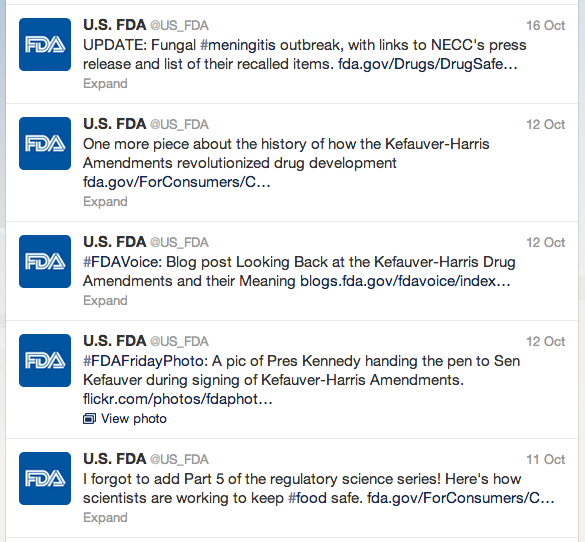
  • The first response agencies have done or nearly nothing with social media (compared to the London police, which updated people about the status of the riots via Twitter).
    • The Indiana Department of Homeland Security (IDHS)* has a Twitter feed, but has not updated it since August 8th. Their Twitter feed reads more like a list of press release announcements.
    • Mayor Greg Ballard’s Twitter feed has basic announcements every 30 minutes.
    • The Indiana State Police never even mentioned the tragedy, and the Indianapolis Metro Police Department haven’t updated since June 5.
    • The Indianapolis Department of Public Safety (@IndianapolisDPS) was providing basic information via their Twitter feed.
    • Other than @MayorBallard, there was nothing from official channels.

    While I don’t expect these groups to give us a minute-by-minute update via Twitter, if they are involved, they should be communicating with the public, even if it’s to tell people to tune in to local news for more information. If they’re not involved, they should at least refer people to the proper agency.

  • The first rule of crisis communication is to “Be first. Be right. Be credible.” The very agencies that people are depending on for this information were not. And now that social media has become more prevalent, the days of depending on emailed press releases written by committees and regularly rescheduled press conferences are way over (a press conference was originally scheduled for midnight, and then rescheduled to 1:30 am. But they could have kept the news media up to date with occasional tweets and quick blog posts).
  • I’m struck by the irony of the authorities asking people to use social media to give updates while they barely use it themselves. Hopefully this will convince the first response authorities start to use it themselves.
  • When I was in crisis communication, one of our roles was to respond to and squelch rumors and bad information. Not only was there not any of this happening from official sources, like IDHS, Indiana State Police, or even the Indianapolis Police, it was the Twitter users who were correcting information. This represents a major shift from who is the trusted source of news: social media has just shown that it’s the people, not the authorities.
  • The crisis communicators responding to crises like these need to start including social media in their own responses. Not only can they get news out to the public, they can respond to rumors and bad information immediately, squelching it, and getting out good information instead.
  • The news media would be smart to start streaming their news programs on their websites during emergencies like this. I was communicating with people in Chicago, Alabama, and even Toronto about the incident. All I’ve been able to do is send them to stories on sites, but they could watch this live if the stations would stream their emergency news broadcasts.
  • People on Twitter are affecting the news coverage, or at least are being heard. At one point, WTHR had shown the collapse of the stage (via a cell phone video) more than 14 times in 10 minutes. Shawn Plew tweeted this fact, and @WTHRcom responded and said they would mention it to the producers.
  • One of the reporters from WISHTV (the CBS affiliate) downloaded different videos from YouTube to his computer, so he could play them on screen with a double-click, rather than worrying about streaming from YouTube itself. He’s using a large screen TV so we can see the videos more easily.

If you’ve ever had any doubt about the need for a smartphone, or the power that citizen journalists wield, know this: all of the footage and images that all the newscasts are showing, and the ones that the national news outlets will be playing over and over, came from people and their smartphones. Not news cameras recording the aftermath of an event, but real action shot by real people who were on the scene.

Most of the information people were getting via Twitter was coming from anyone who was discussing the event, watching it on TV and passing word along, or even listening to the live stream of the scanner traffic online.

Once again, social media has broken the news, and gotten images out before the news broadcasts could. That’s not an indictment of the mainstream news, it’s a testament to the power of social media and citizen journalism. But it should show government agencies and corporations that they can no longer rely on traditional media to break the news or even discuss the story.

*The IDHS coordinates the efforts of the Indiana Police Department, emergency managers, fire departments, and other first responders. They would sometimes be involved in a large-scale event like this, even in an advisory capacity.

Author :  •  Content Location : Indianapolis, IN  •  Headline : Social Media Crisis Communication Lessons Learned from Indiana State Fair Stage Collapse  •  Keywords : social media, crisis communication, Indiana State Fair, first responders, government  • 

Five Tools Every Crisis Communications Professional Needs

Crisis communications professionals, especially those dealing with environmental and man-made disasters, will often find themselves in a position where they need to relay information to the public fast. The great thing about social media is that it lets us communicate a lot of information immediately. And for the crisis communications pro, speed is often of the essence.

When I was the Risk Communications Director for the Indiana State Department of Health (ISDH), we needed to communicate a lot of our information as quickly as possible. But the technology — at least the technology we had access to — meant being tethered down to a desk or finding a coffee shop that had passable wifi. And in 2006 – 2007, those were harder to find than they are now.

But the technology has caught up with the citizen journalists, surpassed the traditional media, and lets many crisis communicators become the direct source of the news, rather than waiting for the mainstream news people to catch up.

Here are five tools, both online and offline, that crisis communications professionals need to communicate quickly:

1. A smartphone

If you said “duh!” you’ve obviously never worked in government. In 2006, I was handed a Blackberry with the thumbwheel and keyboard. That was five years ago, and most of the agency people I know are still using them. The ones who have upgraded have upgraded to another Blackberry. The problem is, the good communication apps are being developed for the iPhone and Android. The Droid will let you take photos, videos, send tweets, and tap directly into your blog with apps from Posterous or WordPress, and they often cost as much or even less than Blackberry. Yes, the Blackberry will do all of that too, but it has fallen behind in the mobile communication arena, and may soon go the way of the dodo.

Mobile phones are now mini-computers that can make a phone call, not a phone that takes pictures and sends text messages. Sticking your crisis communications pros with flip phones or less-than-current technology hampers your crisis communications efforts severely.

2. Twitter & Facebook accounts

The problem with mainstream media is that you’re bound to their schedule and their filters. Not only do you have to wait until the 5:00 and/or 11:00 news to get your message out, they only spent 60 seconds on your story, and they missed three important points. Meanwhile, people are on Facebook and Twitter talking about the big emergency, and are asking questions that are either going unanswered, or being answered with bad information.

On the other hand, social media platforms like Twitter and Facebook are updated constantly. People ask questions, and you answer them. You provide people links to the most up-to-date news and numbers, shoot down rumors and misinformation, and get news out to the public without waiting until the media airs it several hours later.

3. A Posterous blog

This may not be your “official” blog, but Posterous is a great distribution channel. You can email photos, videos, and critical information to your Posterous blog, and have it automatically create a new blog post from all the content. Plus everything gets distributed to Flickr or Picasa (photos), YouTube or Vimeo (video), and your official blog. It can automatically notify Twitter, Facebook, and LinkedIn when there’s a new post up (or you can shut that off, and let your regular blog do that for you).

Writing a new blog post is a snap. Just open up Gmail or your smartphone’s email program, type in the subject line (that becomes the headline), attach the photos or videos, type in a few lines of text and you’ve got a blog post. Rather than waiting until you can get to your laptop and spending several minutes getting it up and running, you can do this on your smartphone in five minutes or less.

4. A WordPress blog on an external server

If you’re in a crisis communications position, you need a blog that is never, ever subjected to the whims, downtimes, and issues that a 3rd-party provider like WordPress.com or Blogger.com would face. It’s also important that your blog’s server exist outside your city, or even state. When I was at ISDH, one of the things we trained for was a nuclear attack aimed at the center of downtown Indianapolis, less than 50 yards from my office. If that happened, our subsequent replacements would need a way to continue to share information, since the melted slag of metal that was once our server was not an option. So our emergency backup was somewhere else far, far away.

I recommend a WordPress.org blog on your server because there are so many plugins and add-ons to increase the functionality of your blog — functionality that WordPress.com and Blogger.com just don’t have. Of course, you need someone who knows how to do all this, or at least an IT department who won’t insist that the blog needs to reside on the server in their building, just down the hall from your office (see Attack, Nuclear: Devastating Effects of). If they won’t help you, then go with WordPress.com or Blogger.com (or even your Posterous blog), until you get someone helpful in IT. Don’t let a bottleneck delay you; find a way to work around them until the bottleneck clears.

5. Mi-fi

Mi-fi is the portable wifi hotspot that fits in your pocket. It’s smaller than a deck of cards, and will support up to 5 users. It’s always on, and extremely secure. For crisis communications pros who rely on their laptops, but don’t always have access to a coffee shop or McDonald’s, this is a must. It’s also easy to recharge, and can plug into any wall or car’s cigarette lighter, which means you can communicate while you’re on the road.

A Mi-fi is also useful when combined with a digital camera and an Eye-Fi card, a wifi-equipped photo storage card. Set it up to automatically upload all photos to your agency’s Flickr or Picasa account, and you can keep people up to date with what’s happening via these two photo sharing sites.

There are a lot of other online and offline tools a crisis communications professional should have, but these are the five I wish I’d had when I was in state government. They would have made life so much easier, and we could have gotten information out a lot more quickly.

Now, if someone can only find a cure for bureaucracy, then life would be perfect, and I would even consider going back in to public service.

Author :  •  Content Location : Indianapolis, IN  •  Headline : Five Tools Every Crisis Communications Professional Needs - Professional Blog Service  •  Keywords : blog writing, blogging, crisis communication, facebook, Posterous, PR, Public Relations, twitter  • 

Five Reasons to Use Posterous as a Social Media Distribution Point

Posterous.com Screenshot

I’ve been enjoying playing with Posterous for about a year now, and while I don’t recommend it for everyone, it can be a great tool for some people. You should consider using Posterous if you are a:

  • Beginning blogger
  • Social media specialist
  • Mobile blogger
  • Crisis communicator

Posterous is an email submission blog. You send your post as an email to your own Posterous.com address, treat the subject line as the headline, and any attachments you send are incorporated into the post itself. It’s not pretty at times, but if you need something fast, this is it. Plus, you can go in and edit stuff to make it look better later.

Posterous.com Screenshot

My Posterous.com blog

I’ve often said, “Using a blog interface is a lot like sending an email.” Now, thanks to Posterous, it really is sending an email.

Here are five reasons to use Posterous as a blog platform and social media distribution point:

  1. It’s ideal for mobile phone users. If you’re constantly on the go, and want to blog about the things you see, Posterous allows you to upload photos or videos to your site, along with any accompanying text. Posterous takes advantage of the overall computing power of today’s mobile phones. When I need to demonstrate Posterous during a talk, a few minutes before I go on, I’ll snap a picture of the gathering audience on my mobile phone, attach it to an email, and type in a couple of lines. Before my talk begins, I tell the audience, “I’m going to hit send on this email right now. You’ll see why it’s important in 10 minutes.” Then, when I get to that point in my talk, I show them my Posterous page, which has the picture of them. If you’re a crisis communicator or a mobile blogger, this is an ideal tool for communicating with the public on the fly.
  2. Posterous will automatically send videos and photos to other sites. I have tied my Flickr, Picasa, and YouTube accounts to my Posterous account; it also sends videos to Vimeo. Whenever I take photos or videos, and send them to Posterous, they are automatically uploaded to the appropriate networks. I don’t have to upload them first, and then download the embed code. The downside for anyone who is concerned about search engine optimization is that your digital properties are on Posterous, not on YouTube or Flickr, so you lose any search engine juice that would normally come from a well-optimized video or photo that links to your site. There are workarounds for this, but they take some extra time after your post has been uploaded. If you’re a social media specialist, you’ll love this feature.
  3. Posterous will automatically repopulate content to other blog platforms. You can tell Posterous to re-send your content on to your WordPress, Blogger, Drupal, TypePad, LiveJournal, Xanga, or Tumblr site. Publish a post on Posterous, republish it on your “official” blog. Yes, there are plugins and apps that let you email your posts in to these platforms, but they won’t necessarily upload your video and photos to YouTube and Flickr. Again, crisis communicators or mobile bloggers who need to get information out to several networks will love this feature.
  4. Tell Posterous NOT to post to certain networks. The default setting for Posterous is to repost everything to every network you want it to (i.e. email my post to post@posterous.com. But what if you have a photo you don’t want to send to Flickr, or you don’t want a post to show up on your WordPress blog? By using a specific email address — for example facebook+youtube+blog+twitter@posterous.com — I can tell Posterous to post to my different properties, but leave out a specific network. In this example, I’m leaving out Flickr.
  5. Posterous can automatically notify Twitter, Facebook, Google Buzz, etc. about new blog posts. Tie your Posterous blog into your different social networks, and notify your followers when a new post is up.
Author :  •  Content Location : Indianapolis, IN  •  Headline : Five Reasons to Use Posterous as a Social Media Distribution Point  •  Keywords : blog writing, blogging, crisis communication, Flickr, photos, Posterous, video, WordPress, YouTube  • 

New ebook Available: Social Media and Crisis Communication for Government Communicators

I just published a new ebook, Social Media and Crisis Communication for Government Communicators. I wrote it after giving a presentation to a public health conference, and realizing that many of them did not even have access to the different social media tools.

So I based it on several blog posts I’ve posted here, as well as some new information. The ebook is free, and there is both a PDF version and a Kindle version available.

Author :  •  Content Location : Indianapolis, IN  •  Headline : New ebook Available: Social Media and Crisis Communication for Government Communicators - Professional Blog Service  •  Keywords : Crisis Communication, ebook, government agencies, Social Media  • 

Four Ways Government Agencies Should Use Social Media

While I’m a frequent speaker about whether government agencies should use social media for crisis communication (they should), I was recently asked whether agencies should use it for non-crisis communication.

Of course they should.

Having worked in public affairs (that’s government talk for “public relations”), I have seen the frustration many agencies experience in trying to get their messages out to the mainstream media, or media representing their particular niche.

The Indiana Board of Animal Health and the Indiana Department of Agriculture have great relationships with the different farm newspapers and radio stations in the state. The Indiana Arts Commission has a tie-in with many of the arts media in the state. And the Indiana Office of Tourism Development’s Visit Indiana initiative works closely with the travel media in the region. (Full disclosure: I am a blogger for Visit Indiana.)

And many of these agencies are using social media, but they’re using it as a broadcast tool, rather than a communication tool. However, I have to applaud these agencies for using social media at all. There are still several agencies within my own state government that are relying on fax machines and emails to send press releases to mainstream media. I’m not saying they should completely drop that method of communication, but rather, they should add social media to their efforts. Part of the problem is the decision makers within these agencies who don’t understand social media, and therefore assume the public doesn’t use it. The other part of the problem is the IT departments who are worried that allowing people to access YouTube or Twitter will open a huge Pandora’s box of ills. (But will never switch to Firefox to combat this problem…)

So if an agency is on the fence about using social media or not, here are five ways they could use it for great benefit.

  • Use a blog to promote different programs, news releases, announce grants, release official statements, post job openings, and solicit feedback from the public. A blog is the easiest way to communicate with the public, because it’s created specifically for that purpose. No more asking your IT department or web developer to add a new page on your website. Just click the New Post (or New Page button, if you’re lucky enough to have WordPress on your server), add in the appropriate text and photos, click Submit, and voila! you created a new post/page. No programming, no delays, no excuses of “I’ve been backed up with a bunch of requests from other departments.
  • Create videos to educate the public about your different programs. Government agencies are notorious for starting programs, but often have no way to promote them. With a $200 Flip camera, or even someone’s point-and-shoot digital camera, you can create basic videos that can be uploaded to YouTube, Vimeo, and Viddler. You can even embed your videos in new blog posts.
  • Use social media as part of your media relation efforts. Post videos of press conferences to YouTube and your blog. Post press releases to the blog, and then announce them on Twitter. Encourage citizen journalists and bloggers to use your content in their own blogs, which will help promote your media efforts.
  • Maintain a network of professionals or citizens who are associated with your agency. If you’re in public health, maintain a Twitter account of public health professionals. Keep in contact with those professionals and follow what they’re doing. If you’re in agriculture, create a social network of farmers, animal producers, extension agents, and associated vendors. Let them provide support, answer questions, and create new opportunities with each other. If you’re in tourism, create a blog for potential visitors to learn about what your area has to offer.

What are some ways you think government agencies could use social media? How have you seen it done, or how has your agency used it? Leave a comment in the comments section and let us know what you think.

Author :  •  Content Location : Indianapolis, IN  •  Headline : Four Ways Government Agencies Should Use Social Media  •  Keywords : Crisis Communication, government agencies, Social Media  • 

The Growing Need for Bloggers as Citizen Journalists

Haiti

Two bits of interesting news this past month for bloggers who consider themselves journalists:

I’ve been preaching for a while that bloggers are citizen journalists. And now we get confirmation that 52% of us believe it to be true, and that 61% of Americans are possible readers. Plus — and this is a big one — the last-reported numbers from Technorati are that 77% of all Internet users read a blog of some kind.

The time is ripe for bloggers to begin thinking of themselves as citizen journalists. Social media is making it so much easier for us to not only see the news, but report it as well.

Social media is breaking the news before the news.

We’ve seen several instances where social media broke news stories before mainstream media picked it up. The three most notable examples have been:

  1. The first images coming out of Haiti were on Twitter, because mainstream media couldn’t get on the ground. People with cell phones and spotty wifi were sending photos to Twitter and Facebook, and we were spreading them around like wildfire. My family was particularly interested in one set of missionaries in Port-au-Print, and @TroyLiveSay was providing information that we weren’t getting anywhere else.
  2. Moments after the terrorist attacks in Mumbai, India, news was spreading on Twitter before the shots had even stopped.
  3. When the US Airways flight landed in the Hudson last year, news had broken on Twitter 15 minutes before the first news reports hit the airwaves.

While none of these examples show a failing of the mainstream media, they show that in many cases, people reporting on incidents that happened nearby ended up being first just because of the widespread nature of the tools.

I’ve been playing with Posterous as a possible blogging platform for rapid response and crisis communication professionals. You email your blogs to your email address (it’s actually just post@posterous.com), your subject line is your headline, you attach any photos, type and format your content in your text box, and voila! You’ve got a blog post sent from your smart phone.

And I totally geeked out a few days ago, when Chris Brogan showed how you can take photos on your digital camera, and immediately have them uploaded to your favorite file sharing service, with something the size of a quarter and something else the size of a pocket calculator.

My advice? If you have even the slightest inclination of being a citizen journalist, start taking your blogging seriously. You don’t have to change the scope of your blog, your writing style, or even the quality of your writing.

Just do it with intentionality. As hard as it may be to explain (this is the 6th time I’ve written this paragraph), report your news for posterity. Do it with a sense of responsibility and gravitas. When you see something happening, take photos and upload them to Flickr or Picasa. Send tweets. Email news to your blog. Be a source of information to your community. Don’t just repeat what you’ve seen, report on it.

Even something as simple as reporting a small incident you just witnessed can sometimes lead to national or even international stories, or you may be the lone voice that speaks for someone who can’t do it themselves.

While I’m not suggesting we all change our focus and become word slingers, I am suggesting we adopt the mindset that we’re just as good as the professionals who, I’m sorry to say, just aren’t as quick as the “ordinary citizens” armed with nothing more than cell phones and a serious case of Twitter-thumbs.

Related posts:
Rules for Being a Media Blogger
Defining Two Types of Crisis Communication
Five Things Newspapers Can Teach Us About Blogging
What Stylebook Should Bloggers Use?

Accountable Person : Erik Deckers  •  Author :  •  Content Location : Indianapolis, IN  •  Content Rating : G  •  Copyright Holder : Professional Blog Service  •  Copyright Year : 2010  •  Creator : Erik Deckers  •  Editor : Erik Deckers  •  Genre : Non-fiction  •  Headline : The Growing Need for Bloggers as Citizen Journalists  •  Keywords : blogging, citizen journalism, citizen journalists, crisis communication, earthquake, Haiti, news, photo sharing, Chris Brogan  •  Publisher : Professional Blog Service  •  Version : 1.0  • 

Defining Two Types of Crisis Communication

Crisis communication has two different, distinct meanings. They require different approaches, different ideas, and completely different types of plans. And not knowing the differences between the two can create some problems if you try to use one approach in the wrong place.

There’s corporate crisis communication (CCC), and there’s CERC.

CERC — Crisis and Emergency Risk Communication — is what the government calls communication during a massive emergency, such as swine flu, a terrorist attack, or large-scale natural disaster. (And you can tell the government came up with it, since it’s so much longer and has more words than are truly necessary.)

Both are often called “oh shit PR,” but the difference is that in a CERC situation, a lot of people could die. With CCC, a lot of money could be lost. One type of emergency gives emergency first responders sharp chest pains and indigestion, the other makes the corporate lawyers pull out their hair. But they both say the same two words when something goes down.

Although these two forms have a lot of similarities, there are some important differences. And if you’re talking about social media for crisis communication, you need to know them, because they affect your strategy.

Corporate crisis communication

I’d like to say that it’s important to always tell the truth and to be as open and honest as possible. But the sad truth is that being completely open and honest can ruin a company. I’ve hassled corporate legal departments over their “wrecking” crisis communications, but they’re a necessary part of any response. They just shouldn’t control it. In CCC:

  • Transparency tends to go out the window. The emergency is usually something that will make the corporation (or individual) look bad, so the first instinct is to hunker down and contain the bad news. This often means trying to keep it under wraps. This hardly ever works.
  • The negative end result of a corporate crisis is a loss of money. It could be a hit to their reputation, credibility, or branding, but those will all effect the bottom line. And since that can be in the millions or billions, crisis communication is not something that should be taken lightly. Entire companies, like Chi-Chi’s restaurants, have been lost to bad communications. But it’s the attempt to avoid losing money that leads to bad communications.
  • Communication is about containment. Many corporate crisis PR professionals are focused on keeping their client from being found guilty or negligent. They’re not worried about whether people like them, they just want to win the pending lawsuits. So they’ll put out information that, while is not a lie,
  • The message is the biggest part of the response. There’s other stuff going on behind the scenes — product recall, legal preparations, brand managment — but the communication is what’s going to affect the public’s perception, and thus, their reaction, lawsuits, vendor relationships, etc. Information may be easy to get if you’re in crisis communication, but it’s not always easy to share.

Social media strategy: Guarded, but present. Correct misinformation, use Tweets and Facebook to communicate with customers in a brand management manner. Put on your best face, but don’t lie. Monitor the gossip sites, but don’t engage.

Crisis and Emergency Risk Communication

This is the area I came from. We wanted as much open communication as we could get. More was better, and there was no such thing as too honest. Our goal was to “prevent panic,” and make sure everyone knew what was going on. With CERC:

  • Transparency is crucial. This is information people need to know. Information about where to go for safety, supplies, or medication.
  • The negative end result of a public crisis is a loss of life. When I was at the Indiana State Department of Health, we trained for things like medication distribution during an anthrax attack. The goal was to tell as many people as possible where medication was available. Information has to be gotten out quickly and to as many people as possible.
  • Communication is widespread. The point of CERC is to get as much information out as possible, and to correct misinformation. There is nothing that should be contained or covered up.
  • The message supports the rest of the response. It’s the other stuff that’s going on — law enforcement, public health response, rescue/recovery, clean-up — that’s going to affect the public, and communication lets the public know what’s going on. If there’s medicine to be distributed, communication will tell the public where to get it, but it’s the Point of Distribution that will give it out. The problem with this approach is that the public information officers (PIOs) are trying to get information from the busiest people, which means it’s not always readily available or being put out as quickly as possible. This is one reason the PIOs have direct access to the Incident Commander, the person in charge.

Social media strategy: Strong social media strategy. More people are getting their news on Twitter and Facebook than they are in their regular media. Put information out on social media at the same time you give it to the mainstream media. Correct misinformation directly, rather than through mainstream media. Monitor the citizen journalists, and engage when it’s appropriate.

Photo: Slworking2

Five Essential Tools Any Crisis Communication Pro Needs

Social media is becoming more and more important to an organization’s response to a crisis. While my own crisis communication experience is with public health emergencies, like pan flu epidemics and the threat of anthrax attacks, other crisis comm pros are dealing with reputation management, negative publicity, liability lawsuits, product recalls, etc.

Thanks to social media tools, there is no reason a crisis communication pro shouldn’t have these tools in his or her toolbox, ready to respond to an emergency within minutes, rather than hours, or even days.

Whether you’re a government agency dealing with a massive emergency, or a famous athlete caught with his pants down, you need to be able to respond quickly and truthfully. You need to get ahead of the speculators and talking heads whose grinding of the rumor mill can do more harm than the actual truth.

Many organizations, especially government agencies, are still using old-school media to get their news out. The problem is they’re trying to reach a newspaper audience with timely news, but it’s changed in the last 30 minutes. Or they’re trying to reach the TV news by 3:00 p.m. for a 5:00 broadcast, while most people are still in their cars. And in many cases, broadcast media only spends seconds on your story, and the newspapers are only devoting a few precious inches to your side of the story.

With social media, you can bypass the media filters, reach the greatest number of people, and in many cases, get the news out before the mainstream media. This is especially useful if you have time-sensitive information, like medication dispensing points, product recalls, hours of operation, etc.

I’m not saying you should ignore the mainstream media (MSM), or quit using the old methods. Rather, consider adding social media to your arsenal.

    1. Blog: A blog is a great way to publish an entire news story. In many cases, the MSM will use your blog as a source. If you’ve done most of the legwork for them, they’re more inclined to use the information you provided. I had one newspaper in Indiana that would reprint my press releases verbatim, I thought about changing my name to “Staff Wire Report” just so I could get the credit.
      Strategy: Appoint a blog writer you trust, and give him or her carte blanche in reporting the latest news.


    1. Twitter: Twitter lets you reach people quickly and easily. Create lists of important people who will need to hear your news: journalists, fans, customers, vendors, etc. Don’t just use Twitter for barfing out news though. You can use Twitter to talk with people and establish relationships. If people like you, they’re likely to want to hear your news, making you a trusted news source.
      Strategy: Have conversations, provide information, correct misinformation, and answer questions.


    1. Facebook fan page: If you’re a B2C company, nonprofit, or government agency, you need a fan page. If you’re B2B, the debate still rages on. People get their news from different sources, and they get their social media from different tools. So you need to match their information-gathering habits. Since Facebook boasts over 350 million world-wide users, a lot of people are getting their news here.
      Strategy: Run your blog and Twitter feeds through your fan page. Follow the conversations people are having on the page, and participate in them.


    1. Analytics: You need to measure your results and see what works. If nothing else, put Google Analytics on your blog, and set up some Google News Alerts. They only updates every 24 hours (Google News can email stories as they appear), but it’s free, and ideal if you’re not trying to monitor events in real time. StatCounter.com is free and up-to-the-minute, although it will only record 500 hits in a day (you can upgrade to the paid version if you need it). We use Yahoo Analytics (paid subscription), because it has real-time updates, and we can graph everything out. To see what people are saying in the social media stream, try something like Radian6 or ScoutLabs.
      Strategy: Adopt at least one analytics package, and use it to monitor the success of your social media strategy. Compare it to your traditional methods, and see which tools are bringing you the best results. Plow more time and energy into the successful ones, and see if it’s possible to roll the less-successful ones into your new strategies.


    1. A laptop and wifi network card: I know, this one seems so painfully obvious, it’s ridiculous to even include it. But you’d be amazed at the number of organizations still running on desktops, or laptops without wifi. It’s great to be able to visit any location with free wifi, and logging in — I’m sitting at a Subway restaurant as I’m writing this — but what if you’re in an emergency and you’re in an area without wifi. What do you do if you’re responding to a local emergency, and the fastest Internet connection in town is the dial-up credit card machine at the gas station?
      Strategy: Bug your boss until you get a laptop and wifi card (Verizon has the MiFi, a mobile wifi hotspot you carry), and then learn how to use it; these other four tools are useless if you’re ever caught without a laptop and wifi. Use the mobile setup until it’s second nature. If you’re ever caught out during an emergency, you don’t have to pull out the manual just to figure out how to use the wifi card.


There are more tools available than you could ever hope to master, most of them supporting one of these five basics, but these are the ones you can build an entire crisis communication plan around. If you can figure these out, you’ll be miles ahead of those organizations and agencies who are still trying to figure out the fastest way to fax a one-page press release to 500 different newspapers in less than six hours.

Photo: Fire Monkey Fish

The Role of New Media in a National Toy Recall

Never doubt the power of a few well-connected people, or a confluence of timing, technology, and information, to have a huge impact on events around the world. I got to witness one of these events firsthand, and even played a very small role in it. You may remember it. It turned out to be one of the biggest lead-contaminated toy recalls in 2006, and one of the first in a long series of Chinese toy recalls that year.

In June 2006, I was working at the Indiana State Department of Health as the Risk Communication Director. Basically, I was in charge of crisis communication, or as I called it, “oh shit” PR.

That’s because whenever some emergency or crisis came up, those were the first two words any of us usually said. We all did, the public affairs staff, the epidemiologists, even the Emergency Response department. Whether it was a Hepatitis A scare at a Pizza Hut in Fort Wayne, salmonella in a Wal-Mart in Johnson County, or a national outbreak of salmonella in peanut butter, we all had the same response when we first heard the news of the latest public health crisis.

I had been working on the job for about three weeks, when I was called down to Legal because “we have a problem.” My first “problem,” in fact. When I showed up, there were eight people sitting around a conference table. They filled me in.

As part of a summer reading program, the Monroe County Library in Bloomington had been giving away bendable children’s toys which were discovered to be dangerously contaminated with lead. The children’s librarian and the lead prevention nurse at Monroe County Hospital had sent samples a couple months earlier to the Consumer Protection Agency, but no one had responded beyond an initial phone call.

Rather than giving up, they then contacted the State Health Department, hoping that someone, anyone, would pay attention to the fact that they had just given out a bunch of lead-contaminated toys, and could we please help them get the word out to their community?

Happily, I didn’t utter my little mantra out loud.

Turns out, another library in another county had also been giving away these toys, which made this a statewide issue. So we decided to send out a press release to all the state media outlets, and see what happened. That afternoon, I answered a few reporters’ questions, and then forgot all about it.

Three days later, I received a call from the director of the New Jersey State Library Association.

It turns out the Muncie Star-Press had run our story, which was then picked up by a librarian blogger. The director read the blog and nearly freaked: they had been giving those toys to a statewide children’s reading program all summer.

Guess what I said, out loud, over the phone.

“You’re telling me,” he said. “What should we do?”

“I don’t know, I’ve been doing this job for three freaking weeks!” I wanted to shout. “This is my first real crisis.”

Instead, I ran through the talking points we had given out to the media, and gave him a few recommendations.

“Could you email that to me?” he asked. “I belong to a listserv group of librarians around the country. I think several of us have been giving out these toys. I can pass it on to them.”

I emailed the talking points and recommendations off to the guy, and then forgot all about it again. Two days later, I received another phone call from the Orange County Register.

The reporter said that several of California’s libraries had been giving away some toys that were found to be contaminated with lead, and since we were the ones who had started this whole thing, did we have any information we could give them?

I explained how the whole thing had started with the nurse and librarian in Monroe County, and how this was apparently being felt in a couple of states now.

“Oh, it’s more than a couple now,” said the Times reporter.

As the days went by, I would go online to see who else had been recalling these children’s toys. Within 24 hours of the OC Register call, the story exploded. Several librarians on the librarian listserv had called their local media with the same story. In a couple cases, someone in one city would read the story and tell their librarian friends in another city, who would then find the listserv information, and call their media outlets.

The tipping point came when the Associated Press sent a national story over the newswire, and local reporters called their local libraries to see if they had those toys. The librarians would go pale and whisper my two words. A quick check always revealed the very same toys for the very same children’s reading program.

A few weeks later, a check of Google News showed something I had never expected: a recall of 385,000 lead-contaminated toys from all 50 states, and more than 530 news stories in the United States, Canada, Germany, England, Italy, India, and Taiwan. And two field agents from the Consumer Protection Agency were suddenly very interested in some bendable toys they had received several months earlier from two women in Bloomington, Indiana.

As I look back on this story, I am struck by one very important lesson: this did not become a national recall just because of traditional media. They had help. What really kicked it off is that a blogger saw an article in her local paper and wrote about it. Then a guy on an email listserv sent it out to the other members. Old-school media played an important part, but it was the new media that really pushed it in the right direction.

All because a librarian blogger was connected to a guy on a librarian listserv. But more importantly, because a nurse and a children’s librarian decided that they needed to speak up about an issue in their hometown, and didn’t quit until someone heard them.

Author :  •  Content Location : Indianapolis, IN  •  Headline : The Role of New Media in a National Toy Recall  •  Keywords : Crisis Communication, Indiana State Department of Health, lead-contaminated toys, new media, Social Media  •