Three Secrets to Make Your Video Go Viral – A Warning to Corporations

I’ve been digging into a lot of social media case studies lately, especially those that involve a little guy going up against a large corporation and winning the battle of public sentiment. A lot of these studies involve videos, and I think I’ve figured out the secrets to why they’re going viral, and why large companies need to watch out for these situations.

One of the most memorable videos is Dave Carroll’s “United Breaks Guitars,” which he released after United Airlines mishandled his $3,000 Taylor guitar. Carroll released a song and video about his efforts in filing a claim against United and all the hoops he jumped through for a year before anyone would even listen to him.

Ten million views and three videos later, Dave not only got his satisfaction from United, but Taylor guitars gave him two new guitars. His efforts also netted enough negative press against United to give an entire PR department heart failure.

Other videos have had similar success getting the attention of the corporate giants, and getting them to take notice and fix their problem. The same is true with blogs, tweets, and other times people have gotten punked by . And I’ve identified a few things they have in common.

    • Viral videos are not straightforward rants. There needs to be an unusual hook, or something that makes it different/better than someone staring at the camera and talking about their complaint or issue. That’s why videos that involve music or acting gain a lot more traction than that talking head video you wanted to do.
    • Viral videos include something humorous. Dave Carroll’s video was musical and funny. Other complaint videos are also funny, or have a humorous element to them. People love to be entertained, and anything that’s humorous will gain more attention than something that’s serious. (Of course, this doesn’t work about serious issues — just ask Groupon — so choose your humor carefully. And if you have to resort to humor that is guaranteed to offend part of your audience, don’t use it. You don’t want your audience hating you.)
    • Viral complaint videos are always about David going up against Goliath. This is the big secret. I have yet to see a viral complaint video about two Davids fighting it out, or two Goliaths duking it out. It’s always the little guy going up against the big guy. Whether it’s Dave Carroll (a real David) fighting against the uncaring, careless United Airlines, or Dooce complaining about her Maytag (not a video, but a great example of the little guy fighting the big guy), people always cheer for the little guy. If there’s any indication that the big guy is screwing someone, we’ll watch the video, read the blog post, and retweet the tweet in order to help get the word out about the “epic struggle.”

This last point is what corporations need to beware of. All it takes is one irate customer with some creativity and a Flip camera to make your PR people sweat blood trying to overcome the tens of thousands of views of that video and subsequent complaints, plus any negative press that came about from their video. Dave Carroll’s epic struggle was picked up by the global press, making sure the United name got plenty of mentions in the press.

Even for companies who don’t want to be on social media, they need to at least have a presence so they can monitor customer complaints. They shouldn’t be caught off guard by videos, because they’re already behind the 8-ball when it comes to social media. The little guy is ready to complain about the big guy, and everyone else is ready to support them and carry their torch for them.

How Social Media Veterans Succeed Where Others Fail

Lately I’ve been writing and talking about the importance of businesses working with or hiring social media veterans instead of social media rookies to manage their social media campaigns. I’ve talked about why social media is not an entry level position, and why it’s important for companies to hire people with several years of work experience to manage their entire social media campaign.

The State of Social Media for Business 2010

Last November, SmartBlog on Social Media released a report called “The State of Social Media for Business,” asking whether social media veterans or rookies — companies that have been using social media for several years compared to a few months — are doing a better job of social media.

While the report is about companies that use social media, not individuals, the same ideas apply to people — especially those who have used it for a few years for clients — versus the people who have only used it for a few months, but think their 100 hours playing Farmville and leaving cookie haikus on the Oreo Facebook page somehow qualifies them to be a social media consultant.

For their report, SmartBlog surveyed readers from a variety of industries and companies, and editor Jesse Stanchak pulled some of the best results from the report. (Disclosure: Yesterday, SmartBlog published my article about six social media tools to monitor your personal brand, and Jesse was my editor on the piece.)

SmartBlog found that companies with more than three years of social media experience — compared to companies with less than six months — are more likely to:

  • Say they have a fully developed or well-developed social-media strategy (65.7% of veterans compared with 13% of rookies)
  • Measure the return on investment of their social-media efforts (36.1% of veterans compared with 9.6% of rookies)
  • Say they would not be able to operate without a strong presence in social media (27.9% of veterans compared with 3.6% of rookies)

(It’s this last sin — operating without a strong presence in social media — that many marketing agencies and PR firms commit when they offer social media services to their clients without practicing it themselves. They claim they can manage clients’ social media campaigns, but have 300 Twitter followers and still run their entire website on Flash, which can’t be indexed by search engines.)

Stanchak attributes these differences in veterans’ performance to five key areas, veterans invest more in social media, have support from their leadership, diversify their tools, and use social media for more than just marketing.

But it’s the fifth point that really caught my eye: Veterans are more likely to listen.

Stanchak said that while both groups are almost as likely to use social media to put out news releases and maintain fan pages, it’s the veterans who are more likely to listen, experiment, and measure. (Stanchak didn’t say measure; I threw that one in myself. But he would have, because he’s smart that way.)

Social media veterans will listen to their networks, their customers, and their colleagues in the industry. They’ll experiment with new tools and new campaigns. Then they’ll measure the results, and make the necessary adjustments and measure again. They’ll make sure it’s the right thing to do, and they’ll use it the right way.

The problem most social media veterans face is the influx of rookies who read a book on social media and get hired by companies who believe social media is for young people.

While I don’t have a problem with social media rookies — after all, everyone has to start somewhere. We were even rookies once — my concern is that too many companies accept their advice. Then, when things go wrong, the companies blame social media and say it was a mistake to ever get started, while the rookie walks away from the problem and finds a new client or employer.

On the other hand, the smart rookie will figure out the problem by listening, experimenting, and measuring, making the necessary changes on the way. The smart rookie has identified mentors and teachers who will show them how to become smart veterans.

For businesses who are looking to hire a social media agency or employee, whether it’s for business blogging or social media management, check their pedigree and history. Ask them how long they’ve been doing social media. Ask them about past campaigns and how they dealt with problems. Ask them about their past failures. (And if they say they’ve never had any, they’re either lying to you, or they’re too new in the business to have any real experience.)

What about you? What have you seen from a social media veteran or rookie? What lessons have you learned? What are you hoping to learn? And if you’re a rookie, am I way off base? How are you making sure you don’t make the same mistakes of your predecessors?

My book, Branding Yourself: How to Use Social Media to Invent or Reinvent Yourself How Social Media Veterans Succeed Where Others Fail (affiliate link), is available on Amazon.com, as well as at Barnes & Noble and Borders bookstores. I wrote it with my good friend, Kyle Lacy.

Five Online Reputation Management Tactics

Your 15 minutes of fame will last a lifetime on the Internet.

Former Indiana deputy Attorney General found this out a couple weeks ago, when he was fired for posting tweets that called for the use of live ammunition against the Wisconsin protesters. I had the chance to appear on WISH TV the day Cox was fired to talk about the importance of managing one’s personal brand on social media.

Screen shot 2011 02 23 at 8.12.17 PM Five Online Reputation Management Tactics

Tweet from Indiana deputy Attorney General Jeff Cox

I told WISH anchor Debby Knox, “Unfortunately, this sort of thing will follow him around forever. When someone, like a new employer, Googles his name — even 10 years from now — this story will forever be associated with it.”

The problem is, as a lot of people are learning the hard way, what you say on the Internet, even something as small as a 140-character tweet or keg-stand photo, will be around forever. And if the wrong people find it, you’ll be crucified with it. Whether that’s a potential employer or someone from the media, you can be guaranteed you’ll be found out.

Here are five online reputation management tactics you need if you’re concerned about your personal brand.

1. Know What The Internet Is Saying About You

We worked with one guy whose name was nearly identical to someone convicted of real estate fraud in the same state. The felon’s name would always appear first in a Google search if you just typed in our guy’s name. Anyone who knew him knew the difference, but when it came to potential clients, they would probably worry that they were going to hire a convicted felon.

Anyone who is named Jeffrey Cox is going to have a similar problem. A quick Google search showed that there are a lot of guys named Jeffrey Cox, even here in Indiana. Imagine the problems they’re going to have for the next several months or few years when people try to find them…

To know what people are saying about you, sign up for Google News Alerts, and have an alert set for your own name, your company name, and even your Twitter handle. Monitor this closely, and pay attention to any mention of your name that’s not on your own blog or website.

2. Know Your Influence

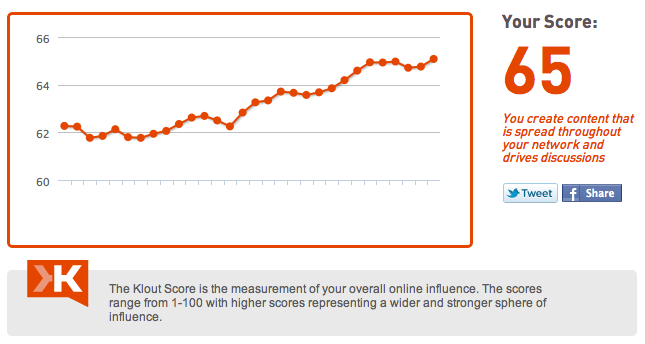
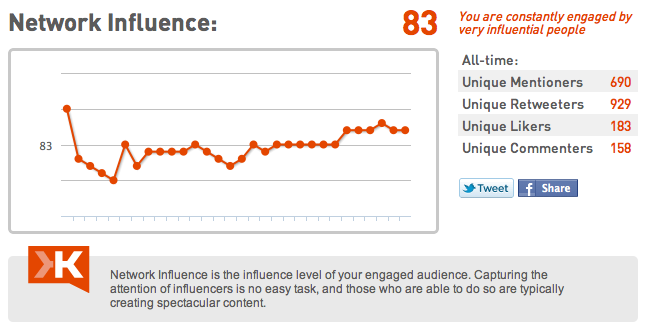
Whether you prefer Klout or Twitalyzer, or any of the myriad of other influence analysis tools out there, you need to know how many people are paying attention to you. If you want to positively manage your reputation, then you need to have that number as high as you can possibly get it. I prefer Klout, only because that’s what everyone is using, and so it’s easier to compare my reach by using the same stats as everyone else.

3. Practice Search Engine Optimization

Normally this is a website-/blog-only technique. If you want to get your blog or website to the top of the search engines, you need to optimize it so Google and the other search engines know exactly what your blog (and each individual post) is about.

This becomes more important if you want to knock something off Google’s front page. If you made a mistake and something is appearing at the top of Google, you need to focus on a couple of properties, like a blog, and optimize it so it sits at the top of the search rankings.

This practice is called reverse search engine optimization, and it’s becoming more important as companies and individuals realize they either made one mistake they don’t want following them around, or in a few cases, someone shares a name with a convicted felon (see below).

4. Use YouTube and Flickr/Picasa

Photos and videos are an excellent SEO tool. Not only do they boost your search rankings, but your photos and videos will often show up in your search results. If you have another result you need to boot off Google, photos and videos can help. Sign up for (and use!) YouTube and either Flickr or Picasa.

I prefer Picasa only because Google owns it, and it’s easier to integrate with my other Google properties, but Flickr is by far the more popular photo sharing site.

The best way to use photos and videos is to embed the code into a blog post, rather than uploading the photo or video to your own blog. Not only does it take up server space, but you don’t get as much search engine juice for an uploaded video as you do for an embedded one.

5. Join a Niche Social Network

If you’re trying to find a new job or establish your expertise in an industry, join a social network that’s specific to that industry. Or join one geared toward your local community. I first started connecting with people on Smaller Indiana, an Indiana-based network for people who live and work in the state. Even now, when my name appears in Google searches, there are a few results from Smaller Indiana that appear in the results.

Additionally, participating in that network will make you more visible to the other people on it. If you’re trying to make your name known in an industry, contributing a lot of valuable content to the network will accomplish this for you. Answer questions, write valuable information, and forward interesting articles to your fellow network members, and they’ll come to rely on you as someone valuable and worth working with or even hiring.

How are you managing your online reputation? Any tools or tricks we should know about? Leave a comment and let us know.

My book, Branding Yourself: How to Use Social Media to Invent or Reinvent Yourself Five Online Reputation Management Tactics (affiliate link), is available on Amazon.com, as well as at Barnes & Noble and Borders bookstores. I wrote it with my good friend, Kyle Lacy.

Indiana Deputy AG Learns Hard Lesson About Social Media & Job Security

Tweet from Indiana deputy Attorney General Jeff Cox

You wouldn’t think someone would be fired for 3 words.

But Jeffrey Cox, Indiana deputy Attorney General, was terminated by the Indiana Attorney General for a number of offensive tweets he sent out on February 19th.

We were surprised in the Indianapolis community, not only by the quickness of the developments — Cox was investigated on the morning of Feb. 23, and fired that same afternoon — but also because such a public figure as a deputy AG would make such publicly heinous statements.

According to an article on the Mother Jones website, Cox tweeted that he believed Madison police should “use live ammunition” when dealing with protesters at Wisconsin’s state capitol.

Screen shot 2011 02 23 at 8.12.17 PM Indiana Deputy AG Learns Hard Lesson About Social Media & Job Security

Tweet from Indiana deputy Attorney General Jeff Cox

What Cox failed to understand is that social media is public and permanent. If you put out good stuff, and are helpful and supportive, it can prove valuable later on. But if you say something hateful and nasty, it may come back to haunt you, sooner rather than later.

It can hurt your reputation, you can lose your job, and in some cases, you could badly damage, or even end, your career. Even if you try to keep a wall between your personal life and your professional life, social media has broken it down. Something you say in private can become a problem for your work life, and vice versa.

In short, be true to who you are, but if that you is a jerk, then you don’t need change your online behavior. You need to rethink your whole approach to life.

The fact is, social media has tripped up people making rather awful statements, exposing what people think are private jokes or “only a little mean.” What you might see as snarky, or even a bad attempt at dark humor, can end badly. It can be something as minor as public embarrassment, or something as major as being fired in as public a manner as possible, and being a story on the 11:00 news, as well as making headlines in the London Daily Mail.

I was interviewed by WISH TV and Debby Knox (@Debby_Knox) last night for the 11:00 news, and asked about the potential damage Cox did to himself because of his public missteps.

“Unfortunately, this sort of thing will follow him around forever,” I said. “When someone, like a new employer, Googles his name — even 10 years from now — this story will forever be associated with it.”

I don’t know if this is irony or just an odd coincidence, but nearly 10 hours earlier, I had spoken to the Young Professionals of Central Indiana — including several attorneys — about the reasons they need to be on social media, personal branding being the biggest reason of all.

Social Media Affects Personal Branding

What that means for anyone who uses social media is that we need to remember that recruiters are searching for us online. If they find you tweeted about how police should shoot fellow citizens, you can guarantee you’ll be dropped from the candidate pool immediately. If you post your “Spring Break” photos on Facebook, they’ll be held against you. If you write blog post after blog post calling the other political party a bunch of Socialists or Fascists, people won’t want to work with you.

Social media does not let people whisper dirty jokes or make offensive statements among friends. Social media blasts out everyone’s messages, and exposes character flaws and moments of indiscretion.

Cox says this is a matter of his First Amendment rights being quashed. And that this was satire, and he “wanted to make people think.” While that may be the case, it’s also a matter of his reputation, now horribly stained and tarnished. Sure, you’re free to say these sorts of things, but when you’re a public servant in a visible agency and position, you should be held to a higher standard.

The lesson here is be careful of what you say online. A career you spent ten years growing can be undone in mere seconds. Things you meant for a few people can become widespread in a matter of hours, or even minutes. In Cox’s case, 3 words, and the subsequent deeper-hole-digging tweets, became an international story, and resulted in him losing his job in the most embarrassing manner possible.

The things that make social media awesome also make it dangerous. It’s a double-edged sword, so handle it with care.

My book, Branding Yourself: How to Use Social Media to Invent or Reinvent Yourself Indiana Deputy AG Learns Hard Lesson About Social Media & Job Security (affiliate link), is available on Amazon.com, as well as at Barnes & Noble and Borders bookstores. I wrote it with my good friend, Kyle Lacy.

How To Turbocharge Your LinkedIn Profile

li-tutorial.png

Web pages are useless without traffic, and the same is true about LinkedIn profiles. It doesn’t matter if you are looking for new customers, a job or just more connections, no traffic = no opportunity. Here’s a simple strategy I used to increase the traffic to my LinkedIn profile page from 3-4 people per day to 70-80 people per day (that means 27,000+ visits in a year). Feel free to make it your own:

Step 1: Figure out what your goal is with your LinkedIn Profile.

This isn’t that hard. Your LinkedIn profile is a resume with a couple of places you get to be creative, and there are really only a few practical uses for LinkedIn. Most likely your goal is one of these four: [Read more...]

How Lawyers Can Avoid Violating Attorney-Client Privilege on Social Media

A concern we hear from attorneys who are nervous about social media is about whether they would violate attorney-client privilege through it. There’s one simple way to avoid violating privilege through social media:

Don’t violate attorney-client privilege through social media.

It’s not hard to do. Just don’t do it. Think of all the ways you can’t violate privilege now. You can’t share privileged information on the phone, via email, fax, letter, or in person. There are a myriad of places where you could violate it, but because you’re smart people (you graduated from law school, after all), you know not to.

Social media is just another communication tool. You talk to people, they talk back to you. You share information, they receive it. But just like your phone, fax, email, and in-person conversations, you know not to violate privilege at all ever no matter what.

So, if you won’t talk about privileged information on those channels, don’t talk about it on the new channels. There’s nothing magic about social media that will make it easier to violate privilege. It’s all down to your discretion and commitment to the laws that bind you and your profession.

Five Blogging Secrets for Lawyers

We speak to a lot of lawyers about how they can use blogging to help promote their practice without violating their state’s marketing guidelines. Many attorneys are realizing that social media is a great legal marketing tool, and many of them are trying to learn how to use it.

The problem a lot of attorneys have in their marketing is that they are not allowed to use “competitive” language — we’re the best, we’re better, or ranked number one in our field — and they can’t offer guarantees. This means they have to tread carefully on their TV and phone book ads. That’s why you hear/read things like “tell them you mean business,” “we fight for you,” and “we don’t handle anything except personal injury.”

We’ve found that many attorneys are wary about blogging, but that it’s the smaller firms who are quick to embrace it. The larger, older firms are still not too sure whether they want to get mixed up in it, which means the small firms are getting there first, and finding great success in leaving the larger firms behind.

The biggest reasons for lawyers to blog are to show up higher in search engines (many people are turning away from Yellow Pages and doing searches for things like attorneys via Google), and to demonstrate to clients that they have the ability and knowledge to handle their particular needs. (We’ll discuss why attorneys need to blog at a later date.)

Here are five ways lawyers can blog without violating their state’s marketing rules

  • Talk about legal news. Talk about things happening in your state or other states. This helps you keep up with what’s going on in your community
  • Talk about developments in your field. If you work in intellectual property, talk about intellectual property news. If you work in personal injury, talk about personal injury law. This shows that you keep up with developments in your field, showing potential clients that you’re working to stay up-to-date with important information.
  • Write case studies. Check out important cases in the news (not your own, since you have to worry about attorney-client privilege), and do an analysis of the ramifications of that case. This is especially important as you discuss cases in your field.
  • Review basic laws for potential clients. We do this for one client — we talk about local and state laws that might affect citizens of that state, like how local vandalism laws might affect their Halloween pranks, tailgating laws in time for football season, and what to do if you want to start a business.
  • Answer legal questions from readers. Address some interesting or unknown points, teach people a little about the law, and give basic guidance to people so they understand how to pursue their legal questions further. I understand you can’t give legal advice, so it will be important to point out that this is not advice, but is used for educational purposes.

Facebook is NOT a Google Killer

“Nobody Googles,” said the tweet.

“Huh?” I said, shaking my head, making sure I wasn’t imagining things.

“Nobody Googles,” it still said. I was reading a live Twitter stream from a conference I was going to visit later, and the keynote speaker said that, at least for his industry, nobody Googles to try to find people in his job. (I don’t want to pick on the guy, so I won’t say who he is, or what industry he works in.)

I caught up with the guy later at the conference, before I was supposed to speak.

“What are you talking about? Google reports 34,000 searches per second. That works out to 3 BILLION searches a day. How is that ‘nobody?’”

“For my particular industry, according to a study we have, 3% of the respondents found [this job/title] on Google, but 64% found them through their sphere of influence — referrals from friends, Facebook, and social networks.”

That made sense. That particular job is one that is usually found through referral, and not search. There’s trust involved, after all.

“But, that doesn’t mean NOBODY Googles,” I said. “Ten million people search each month for [a commonly-used phrase] in your industry. That’s not ‘nobody.’”

“That’s not the point,” said the guy. “The point is social search is going to replace Google. In fact, Google is going to be gone in five years, because everyone will be searching Facebook and social media for information.” He believed that Facebook was going to kill Google. Not just for his industry, but all around the world.

The long and short of his assertion is that Facebook will be able to answer all my questions via social search, including questions like “Did the Ancient Greeks really burn their boats before a battle?” or “What year was Nils Bohr born?” (Yes, and 1885).

Sure, social search is going to be good for a lot of things. Where is a good place to eat in Cincinnati? Should I go see the new Harry Potter movie or wait for the DVD? Does anyone have extra tickets to Dave Matthews Band? Think of social search as “emotional search.” Things that go to my pursuit of happiness would be emotional search.

But compare that to “intellectual search,” which we use Google for now, like Nils Bohr’s birthday (October 7, 1885). Sure, some of my Facebook friends might know that. But — and this is a big but — that assumes that the friends who know when Nils Bohr was born are actually looking at Facebook during the time that I ask it. If they’re not looking at it, and my question whizzes past them in their news stream, I’ll never get the answer.

In the meantime, Google, Yahoo, and Bing are all there for me, 24/7. They’re here for me at 11:45 pm (as I write this) when I have to actually find out when he was born. It took 3 seconds, thanks to the new Google Instant search. But a similar query on Facebook was less than helpful: one friend’s answer arrived within 3 minutes — “October something, late 1800′s???” Someone else responded with the correct answer after about 7 minutes, but she admitted she had to look it up. On Google.

In other words, Google knows Nils Bohr’s birthday in 3 seconds. My friends, at 11:45 pm, do not. So what do I do if I need to search out information at 2:00 in the morning, and my friends are all asleep? What if I want to know the symptoms of pneumonia in children, but Google is dead, gone and buried by Facebook’s social search?

Ain’t gonna happen. Google may have just been beaten by Facebook for Time on Site for August, but we’re talking a very small margin — about 2 million minutes. A very small margin of victory for Facebook does not signal a death knell for Google any more than an Indy Car driver getting beat by .001 seconds means he should retire from racing.

I don’t want to be a Google cheerleader, because it’s not like I get anything out of it (attention Google: I wear a XXL t-shirt, and I’m sure you guys can find my address in your giant database. Also, I like Morton’s Steakhouse, if you’re sending out gift cards). But when someone says something rather outrageous like “traditional search will be gone in five years and replaced by Facebook,” I have to call bullshit. Because that’s not going to happen.

Not Every Social Media Consultant Knows What They’re Doing

Dana Nelson tweet

I was tweeting with my friend and fellow social media consultant, Dana Nelson, a couple nights ago about a business presentation she was sitting in, when she quoted this piece of advice from the presenter.

“Posting your business on other business sites is lame – tagging business/ cross marketing does not work.”

Screen shot 2010 08 18 at 12.46.39 AM Not Every Social Media Consultant Knows What Theyre Doing

Wait, what? Who said that, the business professor from Back to School?

Cross-posting doesn’t work? Creating visible partnerships is lame? Creating a referral network is ineffectual?

Look, there are a lot, a lot, a loooooooot of social media consultants out there. And they don’t all know what they’re talking about. It worries me that these people are spreading poor information out there. It’s like a volunteer sheriff’s deputy telling people you can’t be arrested for drunk driving if you’re wearing your seat belt. (Caution: You can be arrested for drunk driving, even if you are wearing your seat belt.)

And this 16-word piece of misinformation is a doozy, and so wrong in so many ways.

  • It’s a widely accepted fact in search engine optimization circles that promoting a business site on another site is going to give me some big search engine juice. Anyone who understands basic SEO knows that backlinks are what give your site a high search engine ranking.
  • Coke and McDonald’s would disagree with your views on cross-marketing. As would Pizza Hut and Pepsi. Or any movie studio with Happy Meal Toys and Burger King Kids’ Meal Toys. Or BarnesandNoble.com and Amazon. And any sponsors of any NASCAR or Indy Car racing team.
  • People buy from people they like, and accept recommendations from people they trust. If Dana recommends a good restaurant to visit, I’m going to believe her. Why? Because I like her and trust her. It’s the same with businesses. If a business I trust recommends the services of another business, I’m going to believe them. The smart thing for small businesses to do is to team up with allied businesses.
  • There are more business networking experts than there are social media experts (as hard as that is to believe). Nearly all of them will shout the praises of networking, referral sharing, and cross-promoting. And I’ll believe business networking experts who measure their experience in years and decades, not weeks and months.

This is just one of many reasons why you need to screen your so-called social media “expert” before you hire them. Especially if they blather on with inane bits of advice like this.

Why I Trust User Comments More Than Marketing Copy

I love my Moleskine notebooks.

I’ve been using them for over five years, have gone through at least 10 of them, am a regular visitor at Moleskinerie.com and Moleskiners.com, and know that it’s pronounced Mole-eh-skeen-eh(no, seriously).

 Why I Trust User Comments More Than Marketing Copy

Pilot G-2 .05 mm pen with my Moleskine notebook

When I got my first Moleskine, I knew I had a special notebook, so I wanted to get a special pen to write in it. I did a quick Google search for “best pen for Moleskine notebook,” and the top result was a discussion on the Moleskinerie website (in fact, that’s how I discovered the site in the first place).

The number of comments that all touted the Pilot G-2 outnumbered all the other pens other people were recommending, so I took a leap of faith, and bought a small pack of Pilot G-2s, without ever testing a single one.

The writing was so smooth and the pen just glided across the page. I was immediately hooked. It felt like I was writing on butter with more butter. Since then, I have used nothing but Moleskine pens for all my writing. In fact, the one in the picture is the same pen I’ve carried for three years, I’ve just refilled it several times with barrels by cannibalizing a box of other G-2s.

My point is that I bought this pen based on user recommendations, not marketing copy, not magazine ads, not even the Pilot website. (Although, ironically, I bought the notebook because I liked the description on the little card about the history of the Moleskine.) I trusted the opinion of several strangers more than I trusted the opinion of a professional who is paid to tell me what is so awesome about their pen.

That’s what social media has done for us. It has changed marketing so that we no longer believe the professionals as much as we believe our own friends, or even strangers. I’ve had other people buy Moleskines just because I use them. And I was evangelizing about my pen to a friend of mine yesterday morning, and she probably had her own set by the afternoon.

So for those travel destinations, restaurants, and specialty brands who are still relying on traditional marketing to tell your story, divert just a little bit of your marketing budget to social media. Create a place where your fans can talk about how awesome you are, and can share those good experiences with their friends. Let other people do your marketing for you.

How about you? What makes you decide what to buy, where to eat, where to go on vacation? Do you visit the website or look at review sites like Yelp and UrbanSpoon? How much of a factor are user recommendations?