The Need for Social Media Experts Grows

People are starting to trust their peers less and less, according to a report — Who Do You Trust?— from MarketingPower.com.

2774160820 b9005db0b4 The Need for Social Media Experts Grows

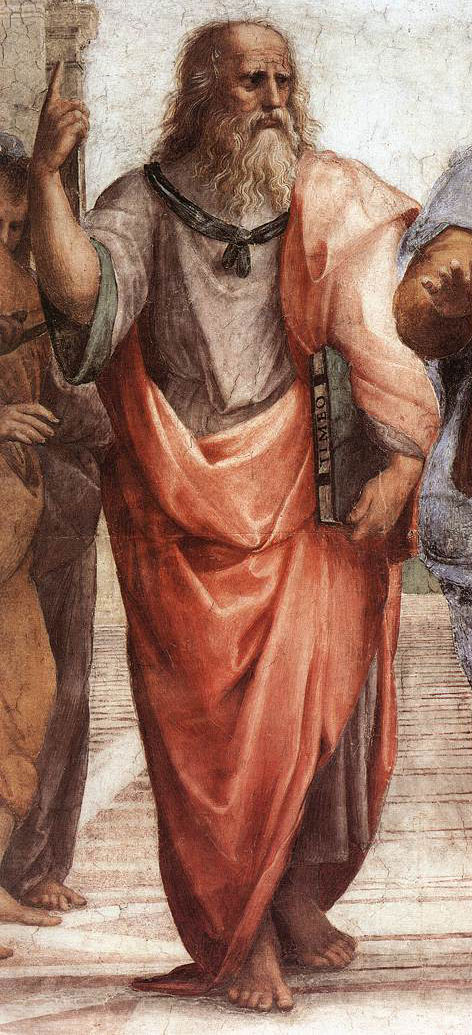
A lab coat does not automatically make you an expert. But it helps.

Researchers attribute this drop to overfriending. We see it all the time with people on Facebook with a few thousand friends, most of whom were gathered to build an army in Castle Age (guilty!). But all these friends telling us we “should” do this, we “ought” to try that. We can’t really trust anyone anymore.

This means, says MarketingPower.com, that people are starting to trust professionals a little more:

There’s been a decline in trust in a “person like myself.” A “person like yourself” fell from 47% in the 2009 study to 43% in 2011; this represents a steep decline from 2006 levels of 68%. In addition, a regular employee increased in credibility from 32% in 2009 to 34% in 2011. When it comes to the credibility of information, respondents trusted academics or experts [emphasis added — Erik] the most (70%), followed by a technical expert within the company (64%), a financial or industry analyst (53%) and a CEO (50%).

What does this have to do with social media? Basically, it means the need for social media experts is growing, and people don’t want professionals who use goofy titles to avoid the whole social media expert controversy. They want to be able to trust people who are credible and have the information they need — 70% of us want the experts.

  • If you’re a consumer-level trainer, like Patric Welch (aka Mr. Noobie), you’re highly sought out by noobies who are looking for basic answers on how to use Facebook and Twitter, how to write blogs, or how to research, buy, and use digital cameras and laptops. These beginners want someone they can trust, because that person has high credibility. They don’t want ninjas, gurus, superheroes, or surgeons, they want experts. In short, if you’re not an expert, or your Memaw’s favorite grandson who knows a lot about “Facespace,” they’re not going to hire you.
  • Although the data points to individual trust, this kind of thinking is also starting to find its way into the workplace. People are beginning to look to colleagues and associates within their professional networks. We’ve already seen the growth of the use of LinkedIn, reading industry blogs, or looking to their Twitter feed for professional advice, and the use of “real” experts is starting to grow. If you’re still playing at being a social media guru or shaman, companies are not going to call you.
  • Websites and print publications want experts to write for them, conferences want experts to speak to them. They need people who know what they’re doing, and have demonstrated their knowledge and understanding of the issues. This is not the time and place to use goofy titles. While it will work within our industry, when you talk to people outside the industry, they don’t get our cute little quirks and they don’t understand the whole expert/not-an-expert debate.

Trust is becoming more important to people, especially in the business world. Social media as a whole is all about user-generated content. We form opinions and make buying decisions by reading reviews and comments from our friends, and even strangers. But this may give way to, ever so slightly, to the need for independent experts who have a lot of information, and are willing to share it.

Photo credit: Fawksy (Flickr)

New Twitter Tool, Twylah, Promises Huge Things for Social Media

Twylah screenshot for Erik Deckers

Last Friday I tweeted: “I’m easily impressed. I’m not easily flabbergasted. @kabaim just flabbergasted me. Follow him and ask how he did it.”

Screen shot 2011 02 03 at 11.39.48 PM 300x192 New Twitter Tool, Twylah, Promises Huge Things for Social Media

Screenshot of my Twylah page. Click to see a bigger version.

@kabaim is Eric Kim, founder and CEO of Twylah, the new Twitter tool that Eric says is going to change the way we use Twitter. Twylah (@Twylah)does all these amazing things. So many of them, in fact, that I’ve probably forgotten a few them here.

Imagine going to a website that’s laid out like a magazine theme for a blog. On that page are your tweets, categorized by the topics you tweet about most. There, a visitor can see those categories, and read more tweets within each of them. The layout page will pull out any photos you’ve included with your tweets, and then organize the rest in reverse chronological order.

This does a number of things for you, for the reader, even for search engine optimization.

    • It lets visitors experience your tweets visually, rather than seeing an entire timeline. Don’t like one particular category, like your 90 minute ongoing discussion with your project team about where to have lunch? Replace it with one you prefer. Want to highlight a Twitter topic from two months ago? Drop a less interesting one and replace it with the old topic.

Twylah screenshot of BrandingYourself 300x203 New Twitter Tool, Twylah, Promises Huge Things for Social Media

  • It can pull in tweets from weeks, or even months ago. This gives life to your tweets, beyond the typical 1-hour life expectancy that our tweets usually have.
  • Each Twylah page is a real web page. The links on them are shortened using bit.ly, which means they’re not only trackable, but they even count as backlinks to your real site. This will be a big help for anyone who needs an SEO boost.
  • You can direct people to your Twylah page instead of your Twitter profile page, giving people an expanded view of your bio. Now people can see if you’re a real person, and if you talk about what you claim to talk about.
  • People can even follow you directly from Twylah, rather than jumping back to your Twitter page to follow you.


These are all pretty cool features, and based on my scribbled notes, there’s a lot of amazing stuff that Twylah is going to do.

But, there are three things that social media marketers and practitioners need to take note of, because these things are going to be H-U-G-Efor social media professionals. Of course, these will not be included in the initial rollout of Twylah, but Eric expects them to be available around 6 weeks later. (I hope I didn’t just jinx that.)

Twylah Screenshot 2 300x202 New Twitter Tool, Twylah, Promises Huge Things for Social Media

Further down my Twylah page.

  • Users will be able to subscribe to a person’s categories of tweets. For example, if you’re following Douglas Karr, but only want to read his tweets about the Marketing Technology Blog radio show, you can subscribe to that category. Here’s the even cooler part: Those tweets will be emailed to you as a newsletter. Subscribe to several people and their categories for a bigger newsletter, and read their interesting tweets at your leisure.
  • Twylah will have an analytics package. Not only can you see how many times your stuff was retweeted, or how often you tweeted about certain topics/categories, but you can see how many people engaged with your tweets — retweeting, clicking links, etc. For example, if you tweet about the Android phone, you can also see the engagement with those tweets has gone up. If you also tweet about the latest Twitter meme, you may see that your engagement went down for that topic. Translation: You can adjust the topics, and even time, of your tweets accordingly, based on the engagement of your tweets by your followers.
  • Twylah’s analytics will also tell you what you need to tweet about and when, to help your engagement improve. Twylah will actually help you figure out when most of your network is actually using Twitter, and what sort of tweets interest them the most. What’s cool: This is especially useful for people who are very particular about following people with certain backgrounds, such as book marketers trying to build a following of independent bookstores.
  • Twylah will eventually aggregate the total engagement of different topics. Imagine being able to know which of Twitter’s trending topics are actually engaging the readers. Maybe the new iPhone 5 is one of the trending topics in July, and 20% of the people are engaging with those tweets. As an iPhone marketer, you would then know that you need to tweet more about the iPhone with links to important information, like nearest retail location.

A lot of these way cool Twylah features are still in the Alpha stage, while Eric and his wife, Kelly, are working feverishly to roll the beta out in the middle of February. If you want to be a part of the beta, go to Twylah.com and register. Also, ask Eric for a personal demonstration of Twylah.

You’ll be flabbergasted. I know I was.

I’ll Read Your Ad for $250. My New Pay-For-View Pricing

Kim Kardashian annoyed more than a few Twitter users when it was leaked that Kardashian commands $10,000 to send a promotional tweet out to her then-2.7 million followers (now 5+ million).

(Kardashian denies that she receives that much money. Rather, she says she just tweets about products she likes.)

While I don’t follow her, I’m sure that her 5 million followers (minus the ones who aren’t spam bots and people who abandoned Twitter after a month) are looking forward to reading something interesting and not very vapid or shallow. (Yeah, good luck with that.)

How disappointing is it for her fans to learn that their favorite non-celebrity celebrity is only telling you she likes her shoes because someone forked over 10 grand to say so? While marketers think a so-called celebrity’s time and endorsement are valuable, they are also showing they think my time or interest isn’t.

So I have a new offer to marketers who want me to read celebrity endorsements and social media marketing messages: I will read anyone’s tweet, watch their commercial, or read their marketing copy for a fee.

That’s right. You can pay me to absolutely look at, read, watch, and consider your product. Think of it as a personal endorsement. After all, my time is valuable. Time I could spend working or being with my family is instead interrupted by you and your spokespeople trying to get me to buy something. And I do my best to ignore it, hide from it, or block it completely. So you come up with something new and creative, which means I have to do something new and creative to avoid it.

So how about you pay me instead? If you pay me, I will read whatever you put in front of me (except for that damn Kay Jewelers ad where the brain-addled woman is afraid of a thunderstorm). Rather than spending $10K on someone who is famous without actually doing anything useful, spend the money on me, and I will read or watch to your heart’s content.

According to my new Pay-For-View pricing schedule, I will:

  • Read any celebrity advertising tweet for $75. Any non-celebrity advertising tweet is only $25. (Hey, if you’re forking out $10,000 because someone is famous, chances are I find them annoying. So the extra $50 is for the wear and tear on my soul.)
  • Visit any company website for $150, and spend 10 minutes on the site, plus additional charges for any of the following:
  • Watch any video less than 5 minutes in length for $200. For videos longer than 5 minutes, it’s an additional $75 per minute.
  • Read any marketing copy, up to 750 words in length, for $150. Since I can read 750 words faster than you can say it in a video, I’ll cut you guys a break on the cost.
  • Also, any marketing surveys, registration forms, or instances where I have to give you my personal information is $100 plus a $25 per minute processing charge (minimum 5 minutes). I had originally considered charging a flat fee per information field (i.e. mailing address, phone number, etc.), but the rate sheet ended up being three pages long and still required a lengthy explanation.

Now, these prices are actually fairly reasonable, and I feel completely justified in charging them. After all, my time and consideration are valuable. I have a job, a family, and disposable income. I’m not easily swayed by celebrity endorsements, and will go out of my way to avoid most commercials and marketing messages. In short, you’re spending all that money to get celebrities to reach me, and I’m going to support you (and them) by spending my money. The least you can do is support me for spending my time thinking about you.

Kim Kardashian may be on to something, and I have to give her credit for helping me stumble upon the idea. As a thank you, I will read her next three promotional tweets for free.

No guarantees I’m buying anything though.

Five Ways to Get Me to Follow You on Twitter

My Twitter follower count has been on the rise the last few weeks, which has been a great boost for my ego.

But I’m finding that I’m returning the favor for fewer and fewer people. That’s because people are either putting less effort into Twitter, they see it as a lazy way to market to a bunch of people, or they’re spammers who are trying to trick people into follow them. Here are five do’s and don’ts to get people to follow you on Twitter.

2853418424 63ac3c5692 Five Ways to Get Me to Follow You on Twitter

The Pied Piper of Hamelin

1. Do not mention money in your bio.

I don’t want financial freedom. I don’t want help in reaching my business goals. I don’t want to know how I can make more deals online. Actually, I do, but I want to get those things with someone I trust. Not someone who just joined Twitter five minutes ago. I block people like you.

2. Put something in your bio.

The only thing worse is to put nothing in your bio. At the very least, let me know what you do. I turned off the “New Follower” email notification, and only check that column in my TweetDeck. And all that shows me is your bio, which is where I make most of my follow decisions. If you don’t have anything in there, I don’t know anything about you, and I just won’t follow you.

3. Put a real picture for your avatar.

Not your logo, not a photo of your kid, or you as a kid. Put your photo in there so I know what you look like. If you put in a company logo, then I assume you want to sell me something. I want a relationship with a real person. Not your company, not your kid, not you 20 years ago (or 30 or 40). And I definitely won’t follow anyone who still has the damn Twitter egg as their avatar. You’re either lazy or don’t understand what “Upload Photo” means. In either case, I don’t think you’re going to be much help to me.

4. Use your real name.

Okay, okay, I may follow you if you’ve created a business account on Twitter. I like organizations like @ComcastCares and @BilericoProject, and will follow them. But if you’re using the name of your money making system in your Twitter handle, I’ll block you. I have never had good luck with people named @Money247 or @NuBizOnline. Maybe it’s a bias on my part, maybe the person was unluckily named by odd parents, but so far, I haven’t been proved wrong. If you want people to take you seriously, use your real name in your Twitter username, or at the very least, a variation of it.

5. You need to have real conversations in your Twitter stream, not news headlines or motivational quotes.

If you pass the first four steps, I’ll either follow you, or I’ll click over to your Twitter page. If I do that, and find that your Twitter stream is filled with motivational quotes or news headlines, I won’t follow you. I need to see that you’re having actual conversations with people, not just tweeting out garbage. Also, conversations does not mean retweet after retweet. Talk to people. I want to see back and forth, not just blah blah blah. Remember, people joined Twitter to have conversations with real people, not have commercials blasted at them. When you send nothing but headlines, you’re not doing anything useful. You may think you have a lot of followers, but trust me, no one is paying attention to you. Want to be sure? Go check your Klout score.

Unfortunately, Twitter has become another spam channel, which threatens to reduce its usefulness. And while I would love to build up my network to some staggering numbers, I’m not willing to do that at the sacrifice of effectiveness and real reach. So I’ll take a few seconds to look at each new follower and decide whether I want to follow them. For the most part, I’ll give people the benefit of the doubt, unless they’re blatantly trying to sell some money-making system (which, if it really worked, you wouldn’t be online pimping it out to me; you’d be on your own island somewhere in the Caribbean).

So if you want people to at least pay attention to you, put a little thought and effort into actually communicating with people, rather than trying to trick them.

My book, Branding Yourself: How to Use Social Media to Invent or Reinvent Yourself Five Ways to Get Me to Follow You on Twitter (affiliate link), is available for pre-order on Amazon.com. I wrote it with my good friend, Kyle Lacy, who I also helped write Twitter Marketing For Dummies Five Ways to Get Me to Follow You on Twitter (another affiliate link).

Photo credit: ®DS (Flickr)

5 Stupid Things That Should Get You Banned From Twitter

Yesterday, I posted my strategy for boosting my Klout score (for those of you who didn’t read closely, it was really a strategy for being a good Twitter user). But there are some pretty stupid things that people do that, frankly, should just get them banned from Twitter for being a complete twit and spammer. Here are five of the most egregious Twitter sins.82371497 4ca567f813 5 Stupid Things That Should Get You Banned From Twitter

1. Following and unfollowing a bunch of people

Twitter imposed a follower-to-following cap at +10% of your total followers. That is, if 5,000 people are following you, you can follow up to 5,500 people. But you’ll reach a point that, especially if you’re new, if you’re not tweeting out valuable information, you just can’t get more followers.

A common black hat strategy is to follow a bunch of people, and wait about 24 – 48 hours (if that long), then go back and unfollow them using one of the different network management tools, like FriendOrFollow. Since Twitter doesn’t notify us when we’re unfollowed, these charlatans will count on our willingness to follow these people, not realizing they’re not following us anymore. They can run up their follower count without ever contributing anything of value.

2. Putting words like “money,” “income,” or “revenue” in your Twitter name.

Unless your name really is Money, Income, or Revenue, don’t do that. I don’t want to know how to make money fast using your sleazy, and quite possibly illegal, system. Unfortunately, tricks like these work, as evidenced by the proliferation of email spam, despite the fact that we think “people know better.” If they did, then spam wouldn’t work, and it would die.

So they rely on our greed and stupidity, and think we’ll say “ooh, a way to make a lot of money from home? Sign me up!” The great thing about these people using one of the verboten terms is that I can spot them in my New Followers column in TweetDeck, and I can just block them without visiting their Twitter page. You people could save me even more time if you would just block yourself for me.

3. Using a picture of an attractive, bikini-clad woman as your avatar to get me to click through.

If you’re an attractive woman, and you want to put your OWN photo in your avatar, that’s fine. But if your Twitter account says your name is Ken, Dave, or Steve, I ain’t buying it. (And yes, I have seen more than one spam account that has a woman’s photo and a dude’s name.)

4. Sending me a contest or giveaway message without following me.

Occasionally I get a random tweet telling me I could enter a contest or try out a free item just for clicking a link. Rather than clicking the suspicious-looking link, I visit the person’s Twitter page, where I see a raft of identical tweets, each to a different person. The accounts are invariably following a few people, have sent out fewer than 30 tweets, and are less than 3 hours old. They’re usually suspended for suspicious activities a few hours later.

5. Following 2,000 people without sending a single tweet.

When I joined Twitter, it took me a few months to reach 2,000 people, because I was still trying to figure out who to follow. Even a great majority of Twitter users have fewer than 100 people they follow. When you have a brand new account following 2,000 people, but haven’t tweeted a single thing, I believe you’re trying to build up this account so you can start spamming me later. Unfortunately, I can’t report you for spam, since you haven’t actually tweeted anything. But I don’t plan on sticking around to find out either.

Basically, if you do any of these five things, you deserve to be blocked, reported, and banned. I know I’m fighting a losing battle, but it truly isn’t that hard to click Block on my TweetDeck and keep you out of my stream, and hopefully keep you from inflicting yourself on other Twitter users. Just go back to peddling your useless money-making crap to people with AOL email addresses.

My book, Branding Yourself: How to Use Social Media to Invent or Reinvent Yourself 5 Stupid Things That Should Get You Banned From Twitter (affiliate link), is available for pre-order on Amazon.com. I wrote it with my good friend, Kyle Lacy, who I also helped write Twitter Marketing For Dummies 5 Stupid Things That Should Get You Banned From Twitter (another affiliate link).

Photo credit: Abardwell (Flickr)

Measuring Social Media vs. Traditional Media

The one advantage social media marketing has over traditional marketing is accurate measurement.

With tools like Google Analytics, Google Webmasters, SEOMoz, and even bit.ly, you can see how well your corporate social media campaigns are working. (Doug Karr has a great post, Your Analytics is Missing the Mark, on the different social media tools you can use.) I can use these tools to measure my social media performance, down to the visitor, the second, and the penny. TapeMeasure Measuring Social Media vs. Traditional Media

But you can’t do that with traditional marketing.

Why Can’t You Predict the ROI of Social Media?

Last week, I talked about why it’s important that — at least in early discussions — you ignore the question of “what’s the ROI of social media?”. That’s because, as Scott Stratten said, you can substitute words like “Twitter” with “talking.” Then you’re asking questions like “what’s the ROI of ‘talking?’” “why should we be ‘talking’ with our customers?”

Part of the reason is that social media is so new, it’s difficult to say what your ROI is going to be. For example, we have one client that has $20 million in sales each year, and we helped him grow his sales by 6% through social media. We have another client whose business is big enough to employ four people, and she tripled her sales — that’s 300% growth — through social media.

So, our range of success is 6% to 300%. That’s a pretty big range. We could split the two and say “on average, you can expect 153% growth,” but that wouldn’t be accurate or honest. And we could say “you can expect anywhere from 6% – 300% growth,” but that would also be misleading.

However, what we can tell you is that we can accurately measure every step of your social media efforts, from the number of people who visit your blog, how they got there, which stories they read, how long they read it, whether they read another story, and did they follow your sales funnel?

But you can’t do that with traditional marketing.

Traditional marketing can’t do that

The reason the ROI question for social media is rather silly is because traditional marketing can’t measure those same numbers with the same amount of accuracy. To be fair, traditional marketing has a long history of measurement, and they can give you basic numbers, like “the industry ROI on direct mail is 2%,” or “100,000 people usually watch this station locally on Sunday nights.” But they’re still missing a big piece of the pie.

  • Cable TV stations like to tell you how many homes get their channel, not how many people watch it. The Golf Channel boasts their channel is received by 110 million homes, but they don’t tell people that their daily viewership averages around 77,000.
  • Magazines and newspapers will tout their readership, but they can’t tell you how many people read a particular story on a particular day, or how many people saw your ad.
  • Billboard companies can give you an approximation of how many people drive by, but they can’t tell you whether they actually looked at the billboard, or how many times people have seen it.

And bottom line, none of these marketing channels can tell you which of your ads compelled people to buy, or which one contributed to increased sales.

The closest you can come to measuring these channels is by putting channel-specific phone numbers and websites on the ads. If someone calls that number or visits that website, you can assume they responded to your ad. But you still don’t know how many people saw it or how many times they saw it, and you can’t monitor overall traffic.

Profit is the most important measurement

Of course, the only thing that really ultimately matters is your profit. It’s not just increased sales (although that’s important), it’s also reduced costs in customer service, travel, and even printing. If social media can help you answer customer questions while reducing phone hours, improve networking to help grow relationships without traveling, and disseminate marketing information without printing out brochures.

The analytics tools that exist can show you all of these things. And by tying those figures in with your customer service, sales, and marketing departments, you can easily figure out how social media is making or saving you money.

But you can’t do that with traditional marketing.

Photo credit: Wikimedia

Ignore the ROI of Social Media

That’s right. Ignore it completely.

It’s stupid. It’s a stall tactic. “What’s the ROI?” is often a cop-out question asked by people who don’t really want to do or understand social media. If you’re asked this question when you first start talking to someone about social media, distract them. Jingle your keys in front of them or something.

I heard Scott Stratten (@unmarketing) speak at the Social Media Club Chicago this past week, and he said something that made me want to pump my fist and shout “F— YEAH!!!”

420px Patrick Roy 1999 Ignore the ROI of Social Media

No, no, I meant R-O-I, not Patrick Roy (wah).

“The next someone asks you about the ROI of Twitter,” Scott said, “substitute Twitter with the word ‘talking.’

“What’s the ROI of ‘talking?’ How much money do you make with this new ‘talking’ business? I don’t understand why you’re ‘talking’ to customers all the time.”

F— YEAH!!! </fistpump>

Twitter, Facebook, LinkedIn, blogging — they’re all tools for communication, just like talking. But we don’t measure the ROI of talking. We measure total results, usually as a sales figure.

I love networking. I go to networking meetings, and I talk to people. I meet those people later for coffee, and talk some more. My cost is the driving, the time, and the coffee (medium decaf mocha, extra hot, please). The ROI — which I have never been asked about — comes when I close a deal, get a speaking gig, get a referral for a new client, or even get a book deal. That’s something I can measure after the fact. But I can never figure it out beforehand.

An example: the first time I ever met my good friend and writing partner, Kyle Lacy (@kyleplacy), for coffee was nearly three years ago. I think I bought my own coffee, but I could be wrong. (I probably am.)

Total cost? $4.20 (mochas ain’t cheap, Chester).

But what did I get out of it? Over the last three years, several speaking opportunities, collaborating on a couple projects, a little business passed back and forth, and two book deals. And he’s bought lunch a couple times. So the ROI is pretty damn high, especially if he did buy the coffee. [Update: I checked with Kyle. He bought the coffee. He always buys coffee for first meetings. Looks like I owe him a cup.]

I’ve never had to justify the ROI of talking. No one does. So why should we justify the ROI of Twitter and Facebook? They’re tools that let us talk. If we have to explain their ROI, then show me the ROI of your cell phone. Or your desk phone. Or your laptop and email. Show me the ROI on a handshake.

Otherwise, stop asking me about it until you start using it. Then we’ll figure it out.

(Note: This is NOT to say that social media should not be measured. It absolutely should. But if you ask about ROI at the beginning of your efforts, you’re setting up for failure, because you don’t know what you’re trying to measure. Instead, try it, use it, jump into it. Get good at it. Then measure how much money you’ve made on it. I’ll talk more about how — and why — to measure the ROI of social media next week.)

Social Media is NOT an Entry Level Position

I’m shocked at the number of companies who let interns and entry-level employees manage their social media efforts.

They do it because they believe social media is a young person’s game, and not for the geezers in management. That’s got to be one of the worst hiring decisions a company could make.

I was reading a February 2010 post from Chris Kieff on the ROI of Social Media. Chris looked at what happens when social media is handed over to an intern, who is usually working for class credit and no pay.4530769073 71eab3a0ae Social Media is NOT an Entry Level Position

VP, “Why is everyone doing spending so much time on social networks? We need more productivity!”

Manager, “We are learning about how to use them and starting to see some positive results.”

VP, “What’s the ROI of the time we’ve spent so far?”

Manager, “We’ve… ummm… got the training wheels on and are just starting to understand how to use social media. We don’t have a formal ROI measurement system in place yet.”

VP, “Well it’s clear that all this social media crap is overblown B.S. I’m telling IT to shut down Facebook and Twitter so people can get back to work.”

It’s real simple: managing social media is not for kids. It’s not for rookies. It’s not for 20-year-olds who remembered to delete their drunken Facebook photos two weeks before the interview that landed them their internship.

Don’t get me wrong. I’m not saying that interns and entry-level employees should not do social media. I’m not even saying they’re bad people. They just shouldn’t be in charge of it. Think of it this way:

  • You don’t let the new PR associate do media interviews during a company crisis.
  • The marketing intern does not oversee your entire marketing campaign, or even a new product launch.
  • The corporate attorney defending your company in a civil suit didn’t finish law school three months ago.
  • The new HR staffer is not responsible for finding and implement the new employee insurance program.
  • And you certainly don’t let the VP of Finance’s niece, fresh out of business school, make C-level decisions.

So why on earth would you let a 22-year-old college grad handle one of the most public-facing communication channels your corporation is going to have? Other than PR and traditional marketing, there is no other channel that reaches so many people so permanently as social media. And you want to give it to some rookie who can’t use the phrase “in my experience” without cracking everyone else up?

At least with corporate PR and marketing, your professionals have the benefit of years of experience and knowledge. But when you appoint a recent college grad to manage your social media, you’re handing the megaphone to someone with no real work experience or a sense of corporate responsibility, and letting them speak to the entire online community (and beyond) in real-time.

Someone asks a question on your Facebook with 10,000 followers, the social media coordinator answers. The questioner gets a little snotty, so the SMC takes her response up a notch, and the whole thing turns into a pissing match in about 5 minutes, and hits the blogosphere two days later, and the mainstream media a week after that. Do you really want to hand that megaphone to someone who doesn’t even understand message creation, let alone how to handle an angry customer or avoid turning it into an embarrassing gaffe that you can hear about on NPR as you drive into work? (Don’t think it won’t happen, because it has happened several times to other corporations in the last two years.)

I think it’s a big mistake when any business, but especially the large corporations, hires anyone with less than five years of real-world, full-time work experience to manage all of their social media efforts. To be fair, I know some truly brilliant young 20-somethings who could make a corporate social media marketing campaign succeed, but they’re few and far between. The really good ones have their own agencies and are making more money there than they would working for you. So you get to choose from everyone else.

Social media is not just for young people. Social media is not only for the hip and the technologically-advanced. It’s for people who understand how to speak to your company’s customers and shareholders. It’s for people who have gravitas and professionalism. It’s for people who know that social media is an important channel of communication that can reach thousands or even millions. It’s for people who truly understand marketing and PR.

If you’re thinking about social media for your company, and one of your first thoughts is you need someone young to manage it, stop right there. You’re better off avoiding social media altogether than risking a bigger backlash by hiring someone who stares at you blankly when you make an OJ Simpson comment.

So am I offbase? Any workplace veterans — especially marketers and PR folks — who think you should give the newbies the keys to the social media car? Any interns or entry-level professionals who think I’m full of it, and that you have the experience and professionalism to handle your corporation’s social media campaign? Leave a comment and let’s continue the discussion.

Photo credit: Allio (Flickr)

“My Customers Don’t Use Social Media” and Other Lame Excuses

Fellow social media pro Jay Baer, and author of The Now Revolution, is busting some social media myths with his latest post, Destroying the 7 Myths of B2B Social Media. jaybaermpu My Customers Dont Use Social Media and Other Lame Excuses

My favorite busted myth was “My Customers Don’t Use Social Media”. I hear that one a lot from businesspeople.

“That’s interesting,” I said to a business person once. “How do you know?”

“Well, because I don’t use it,” said this otherwise-intelligent business owner.

I wanted to say, “You drive a sedan. Does that mean all your customers buy sedans? You have two kids. Do all your customers have two kids?” But I didn’t, because I’m a nice guy.

However, had I known what Jay knows, I would have instead offered some pretty interesting statistics instead:

According to the recent Social Technographics® report from Forrrester, 81% of U.S. adults with an Internet connection use social media in some form or function. Further, last year’s Forrester study of B2B technology buyers found that they use social media nearly twice as much as U.S. adults overall.

In other words, if 67% of US homes have broadband access,, 81% of them are on a social network, or 54.27% of people with broadband access are on a social network.

That’s half your customers, half your vendors, half your competitors. And if social media is so cheap to use, and your competitors are already on there, they’re reaching your vendors and your customers more efficiently, more frequently, and more effectively than you are.

Don’t assume that just because you don’t use social media means that the rest of your customers are waiting to join social networks until you do. Just because you do or don’t do something doesn’t mean your customers will follow suit.

If you want more proof, Jay recommended that you take your customer email list, and see which of them are active on different social media accounts by using Flowtown or Gist.

Another way to see whether your customers are using social media is to do the following:

  1. Create a new Gmail account with your company name or your name. (You should do this if you’re trying Flowtown or Gist too.)
  2. Upload your entire customer list to Gmail. (Don’t worry, your original is still safe.) Merge any duplicates.
  3. Create a Twitter account (Twitter.com) or LinkedIn account.
  4. You’ll be prompted to import your email list to see which of your contacts are on that network. Follow those instructions and connect your Gmail account.
  5. Start connecting with/following anyone in your list.

Those are the people who are using Twitter and LinkedIn. My guess is that at least 25% of your list will be found on those two networks, and possibly more.

So why aren’t you communicating with your customers on this channel? It’s cheaper than any advertising or trade shows. It’s more effective than traditional marketing. It targets your audience better than direct mail. It’s new enough that people are still paying attention to it. And it’s got enough acceptance that it’s not going away.

Basically, if you think your customers don’t use this because you don’t like it, you’re making a big mistake. Social media is not going to go away, and it’s only going to get bigger. People said the same thing about the Internet, computers in the workplace, fax machines, and telephones. But newer, more technologically-daring companies are willing to try these things, and they’re going to leave you in the dust.

Social Media is Flat for Small Business Adoption

The recent survey from Marketing Profs (Small Biz Report: Social Media Adoption Levels Off) makes me wonder if corporations are starting to catch up to small businesses in the area of social media, or if small businesses are slacking off. (Disclosure: Marketing Profs’ Ann Handley is writing the forward to Kyle Lacy’s and my book, Branding Yourself).

The wave of social media adoption has tapered off: 24% of small businesses now use social media, the same level recorded six months earlier. Among them, 82% use Facebook, 38% use LinkedIn, and 30% use Twitter.

Among small business owners who use social media, 73% have a company page (down from 75% six months earlier), 65% post status updates (down from 69%), and 51% monitor comments made about their businesses on social sites (down from 54%).

While news like this is usually the cue for the link bait vultures to start shrieking, “Small business social media is dying!!” or something like “nobody’s doing social media anymore,” the less hysterical of us choose to see this as a the beginning of an interesting trend. And it poses a couple of interesting questions for those of us in social media:

  • What’s causing the drop in things like monitoring comments (3% drop), posting status updates (4%), or having a company page (2%)?
  • Can this drop be attributed to social media fatigue, or is it an indicator that people are willing to try the shiny new object, but will abandon it if it’s not producing any results?
  • Or are small businesses trying social media, but then get distracted by their regular work, and lose interest in the system?
  • Could this even be attributed to companies that hire interns and entry-level employees, hand them the keys to the social media car, but lose all their efforts when the interns and entry-level people move on?

And most importantly, does this drop represent new opportunities or lost ones for social media professionals? Can they revive the interest in the businesses that abandoned their efforts? Or are these cases where the professionals could have helped, but the businesses are soured on social media?

What have you been seeing in your own work? Are clients giving up social media or embracing it? Are they easily distracted by the latest social tool, or do they focus on the ones they’re using?

——
My book, Branding Yourself: How to Use Social Media to Invent or Reinvent Yourself Social Media is Flat for Small Business Adoption (affiliate link), is available for pre-order on Amazon.com. I wrote it with my good friend, Kyle Lacy, who I also helped write Twitter Marketing For Dummies Social Media is Flat for Small Business Adoption (another affiliate link).