You Don’t Get Social Media ROI Yet? C’mon, Man!

Social media ROI is not that hard to understand. There's a simple formula, a simple process, and some simple tools to do it all.

I was feeling good about social media ROI, and how/whether people understand it. I figured, at least my people — marketers — get it. They understand how to measure social media, or at least the principles behind it.

Apparently not.

eMarketer dashed those hopes to the ground with their December 20, 2011 article When Will Social Media Measurement Mature?.

Marketers know that counting fans, “likes” and followers is not the best way to measure success in social media marketing. Yet these metrics are often the top benchmarks for performance. It’s not surprising, then, that marketers consider calculating return on investment to be the biggest challenge of using social media, and that a majority of them believe they cannot measure social media campaigns effectively.

How to Calculate Social Media ROI

Calculating the ROI of anything is easy. Subtract how much you spent from how much you made, and that’s your answer. If you spent $10,000 on a social media marketing campaign, and you made $50,000, your social media ROI is $40,000.

Simple, right?

$50,000 – $10,000 = $40,000.

So how do you know whether sales are coming from your social media efforts?

I’m not going to delve into the step-by-step process, but I’ll give you the tools and concepts you’re going to need to get started.

  1. Set up Google Analytics, and install the code on every page on your website. If you have a blog, it only needs to be part of the code. If it’s on a website with pre-built pages, it needs to be on every page.
  2. Set up a Bitly account. Bitly is a URL shortener that also lets you do some basic analytics on the number of people that have clicked your link.
  3. Create a Google Analytics tracking campaign for any and all major links you’re sending out. This is how you’re going to measure a particular blog post, tweet, Facebook status update, etc. If it’s just a basic link to the website, a campaign code is optional. But if it’s a blog post about a particular marketing campaign, set up the Google Analytics campaign.
  4. Put a hyperlinked call to action in your blog posts that take people directly to a sales page or order page. Make sure that the hyperlink is given a unique campaign code.

Here’s what will happen:

  • You’ll send out a link to a blog post via Twitter, Facebook, etc. Let’s say that 10,000 people see that link on your various accounts.
  • 1,000 people visit your page and read that blog post, all within a 6-hour span.
  • Of that 1,000 people, 100 people actually make a purchase with a total of $10,000 in sales.
  • Those 100 people also fill out their contact information, which gets placed into your CRM.

By looking at these numbers, you can determine a number of things.

  • 1,000 visitors out of 10,000 social media followers, fans, and friends means you have a 10% click-through rate.
  • 100 sales out of 1,000 visitors is a 10% close rate; out of a 10,000-person network, that’s a 1% close rate.
  • By looking at the entrance and exit paths of that particular 6-hour period, or particular day, you can see that a majority of people were moved enough by the blog post to go directly to the order page. Compare that to another blog post that only lead to 30 sales out of 1,000 visitors, and you know it wasn’t as effective in moving people to act.
  • You can then subtract the cost of that particular campaign from the amount of money you made to calculate the total ROI for the day/week/month.

Calculating social media ROI is not that difficult. It’s just a matter of having the right tools and knowing basic analytics and campaign creation. There are literally hundreds of articles and several books on each step I first described. It’s just a matter of reading, and then trying out what you’ve learned. With some trial and error, and constant measuring, you’ll soon learn what works and what you can stop doing.

Or you could just hire a social media professional to do it all for you.

Author :  •  Content Location : Indianapolis, IN  •  Copyright Holder : Professional Blog Service  •  Copyright Year : 2011  •  Headline : You Don't Get Social Media ROI Yet? C'mon, Man!  •  Keywords : social media ROI, social networking, social media marketing, marketing, ROI  • 

Quantify the Value of Social Media for a Music or Arts Festival

Let’s say you work for a large country music festival in Prince Edward Island, Canada, and you want to quantify the value of your social network so you can get sponsors for it.

Okay, this may only apply to one of you in the entire world, but the ideas are transferable to anyone who wants to determine the value of their social network, so you can sell it to sponsors and advertisers.

Kim Doyle (@Kim_Doyle) works for the Cavendish Beach Music Festival, which is held every July. I emailed a response to her and then figured it would make a good blog post, especially since I love going to music and art festivals, and am hoping one of them will arrange an onsite consulting gig at the festival. (I’m just sayin’.)

What is the Value of a Social Network?

Basically, the statement you want to be able to make to your sponsors is “our network will have X value to you.”

Pemberton Music Festival

Pemberton Music Festival

This is a little tough for a new network, because it has no “value,” since it’s still unproven. But an established network has more value, because you know how big it can get, you’ve already seen what it can do, and you’ve been delivering clicks and eyeballs to your other social properties.

We can’t say for certain what value the network will be until AFTER the festival happens. Next year, you can demonstrate last year’s numbers. And if you’ve been doing it for a few years, you can show growth. But it’s hard to say, our network will deliver X visitors.

That’s because you need to be able to trace the interactions and transactions from your network to the sponsor’s properties, and they need to trace what happens from there. But if they’re not doing any monitoring or measuring themselves, then they have no idea what those visitors are worth. You can only show them raw numbers, but it’s up to them to demonstrate the value.

Measuring the Social Media Traffic

1) Show them how you can track all the visitors to your website, all the members of your social network, and measure the amount of time they spend interacting with the site and with each other.

You’ll do this through Google Analytics (# of visitors, time on site, # of pages visited), Klout score (especially your influence and reach), Facebook analytics, and Bitly (# of links clicked).

Include links on your blog (“Please visit our sponsors who make this possible. The more you visit, the more they support us.“), and count the number of times people click those links. Post links to their sites via Twitter (“we want to thank Floaty Bits Bottled Water for supporting Cavendish Beach Music. Visit them here.”)

If you can show those numbers, you can show sponsors what you can deliver. If this is a new venture, start measuring the size of your network, plot its growth, and see if you can start driving traffic to your site in order to show potential.

2) Show them the demographics of who they will be reaching. If you can know a few demographics of the people who come to your festival, you can show sponsors why you’re going to reach them better than traditional mass media.

For example, if a big part of your audience falls within Generation Y, you can find articles and studies that show a lot of Generation Y doesn’t watch TV, they Tivo it and skip commercials, or they watch a lot of YouTube videos on their mobile phones. So create promotional videos, put them on YouTube with a sponsor’s logo in the bottom right corner just like on TV.

See how many different ways you can drive traffic to the video, and measure each channel to see what drove the most traffic (use different Bitly links per source, 1 for Twitter, 1 for Facebook, 1 for the blog, etc.) Measuring that traffic will give a sponsor an idea of the kind of traffic you’ll be able to drive for them.

3) Remind them that they are going to be reaching a niche audience in a way that no one else can: they will reach a large group of people who are passionate about your festival and that music/art. But unlike the festival-only sponsors, they’ll be reaching them long before and long after the festival ends.

And not in the “your logo will be on the t-shirt” way of reaching them.

But if you’re sending out tweets that point to videos with a sponsor’s logo on it, and those fans watch the videos to see who will be playing, or to see a recap of the last festival, those sponsors get more exposure than the ones who were only visible during the festival itself. And any links from the YouTube page to the sponsor’s page can have a major positive impact on their search engine placement.

Consider doing a daily/nightly recap of the festival each day. Treat it like a little newscast where a “reporter” is on scene (film it with a high-def digital camera, not a mobile phone), interviewing artists and fans, showing a few seconds of the artist playing, and then putting it all into a YouTube video (complete with sponsor logo). Tweet that out a few times the next day, let people access it via QR code, and put it on Facebook for the fans who couldn’t make it, and count the traffic there too.

These are just a few ways music and arts festivals can find a sponsor specifically for their social media marketing and social networking efforts. These kinds of affinity groups can be a marketing goldmine for marketers because they’re reaching a dedicated niche audience who has an affinity for that festival, and are more inclined to support people who support something they love.

Photo credit: theburied.life

Author :  •  Content Location : Indianapolis, IN  •  Copyright Year : 2011  •  Headline : Quantify the Value of Social Media for a Music or Arts Festival  •  Keywords : social network, social media marketing, music festival, arts festival  • 

Businesses Don’t Care About the Social Media Expert Debate

After reading a few of the different posts about social media experts, including ours, our partner and founder, Mike Seidle (@IndyMike), wrote this response:

First, I am not a social media expert. I do sit on the board for a company that has several people that I would classify as experts on the payroll. Anyone who is saying “there are no social media experts” falls into one of two groups:

  • People who can’t accept that others may have more experience/deeper understanding than they do. This argument boils down to “since I don’t understand it, or can’t keep up, you can’t.”
  • People who do not have the resume to actually be an expert that are trying to get a job or gig that is for an expert. These people will claim that no experts can exist because of massive recent change that obsoletes past experience.

In the end, anyone who claims that social media experts are like the tooth fairy, Santa Claus or the Easter bunny ends up looking pretty silly:

Executive: So, you are here for the social media director position. I see here you’ve been using social media for two years. What makes you an expert?

Social Media Not Expert: There are not experts in social media. We are all explorers at sail on an undefined sea filled with incredible wonders and indescribable dangers. You see, no one can possibly be an expert on social media since it changes so fast. What I learned last year has no application to the future, and the tools we use and strategies we build often are rendered obsolete in the blink of an eye.

Executive: So, if it’s not possible to be an expert, then why are companies shelling out bucks on social media people?

Social Media Not Expert: Well, social media can get incredible results. Most social media campaigns fail because they are not well planned and are mismanged. On top of that it’s impossible to measre the ROI on social media… so do not count on predictable ROI or even expect a return you can measure. But social media will greatly enhance your brand. That’s why most companies are doing social media.

Executive: So, most social media campaigns fail for lack of management or knowege. I can’t expect any ROI, and you are not an expert. Right?

Social Media Not Expert: Well, when you put it that way… it doesn’t sound right. I would say that I’m not an expert, but I have experience and can guide your company around making mistakes that will make your social media campign fail. While we can’t …

Executive (Redfaced, Cuts off Social Media Not Expert): The door. Use it. Use it now.

Measure the Three Most Important Business Metrics With Social Media

Jason Falls rocks his talk about social media measurement at #ESMToledo

Jason Falls is currently rocking the Exploring Social Media Business Summit in Toledo, Ohio, talking about measuring social media marketing, and making sure that businesses are making money from it. There are three Very Important Questions every business manager will ask of their social media manager, and you’d better be able to answer them.

  1. How much did we make?
  2. How much did we save?
  3. Are our customers happy?

Jason Falls rocks his talk about social media measurement at #ESMToledo

That’s right, social media hippies. Social media, just like every other part of marketing, is about making money. It’s not about conversations, friends, followers, Likes, fans, connections, comments, or Google ranking. It’s about sales and conversions, and customer service and satisfaction.

This is why social media monitoring and analytics is so crucial. You need to be able to show your boss that your social media campaign was not $20,000 thrown down the toilet, because you thought it would be cool to sell your bulldozers on Facebook.

Use Google Analytics to Measure How Much You Make

Google Analytics can tell you how people came to your website, what pages they visited, and whether they went to your sales page and placed an order. If 300 people visit your website because of a tweet, 30 people went to your sales information page, and 3 people placed an order, you have a close rate of 1%. If your social media campaign costs $1,000 per month, but those 3 sales are worth $4,500, your ROI is $3,500.

Use Your Accountant to Tell You How Much You Saved.

Social media is a great way to handle customer service complaints, reducing the amount of troubleshooting calls that take 20 minutes, reduce technician visits, or even the total number of calls coming in to your service center. Ask your accountant to tell you how much you saved from month-to-month. Calculate the average cost of troubleshooting calls, technician visits, and the monthly salary of a call center rep. Get with your Google Analytics person and social media monitoring person (#3) to see if you have seen an increase in social media activity. Chances are, the latter had an effect on the former, so count these savings as a win. If you spent $1,000, but saved $3,000 in a month, your ROI is $2,000.

Or, more importantly, if we combine the two, you spent $1,000, and made/saved $6,500, your ROI is $5,500.

Use Social Media Monitoring Services to Measure How Happy Your Customers Are

Radian6, Lithium Technologies, Sysomos, are some of the biggest social media monitoring services around (they’re all subscription-based services, so expect to pay a fee), and if you’re a larger brand, it’s worth doing. If you have a small company, set up a free listening post with tools like a Twitter search (like a TweetDeck column), SocialMention.com and/or Google Analytics to see what people are saying about you. Quickly respond to any complaints or queries, and make sure you’re keeping people happy (see #2 above).

Happy customers are returning customers. Measure the sales of returning customers, especially those who have complained in the past, but you managed to keep by solving their problems, and compare that to the amount you paid for the social media monitoring service, and you’ve got your ROI.

We’re hopefully moving beyond the “social media is all about the conversations” way of thinking, at least in the business world. While this was cool and froody back in 2008, businesses are starting to use this as a new marketing channel. For those companies who want to make money this way, it’s real simple: just measure how much you made, how much you saved, and whether your customers like you.

If you can’t answer these questions, quit playing Farmville and go find someone who can answer it for you.

A Social Media Strategy for Non-Marquee Sports & Athletes

Visual diagram of a social media campaign, with blogging at the center

I’ve had the pleasure of getting to know Dan Clarke (@speedydanclarke), an Indy Lights racer from England who lives in Indianapolis, and learning about his struggles this off-season. He’s looking for corporate sponsors so he can race in the upcoming season.

Dan Clarke at Carb Day 2010

Dan Clarke at Carb Day 2010

If you don’t know what Indy Lights racing is, then you’re starting to see Dan’s problem. Indy Lights is the developmental racing league for IndyCar — Indianapolis 500 — racing. In a sport with fewer US fans than the NHL, he’s in the minor leagues.

Think of your favorite baseball team. Can you name its AAA minor league affiliate? Can you name their players? Do you know who their best hitter was last year, or their best pitcher?

Now you understand Dan’s problem. He’s looking for sponsors for a sport outside the big three — NFL, NBA, MLB — trying to convince them that the developmental league is a great place for them to be seen.

This is where social media can help. A personal branding campaign, even for athletes, can help build their brand, find new fans, and hopefully, bring in the big sponsors. It doesn’t matter if you’re an IndyLights driver, a minor league baseball player, or even the veteran right guard for the New Orleans Saints. If people don’t know who you are, they’re not going to care, and you’re going to have a tough time getting them to notice you. But by doing some basic personal branding, you can use that network to bring in new opportunities that contribute to your total success.

Start with Twitter

Twitter is one of the easiest places to start. This is where you can immediately see your fan base (# of followers), interact with them, and even measure the impact you’re having. Turn followers into fans, turn fans into evangelists. And as more people follow you, demonstrate to potential sponsors that you carry a lot of weight with your network.

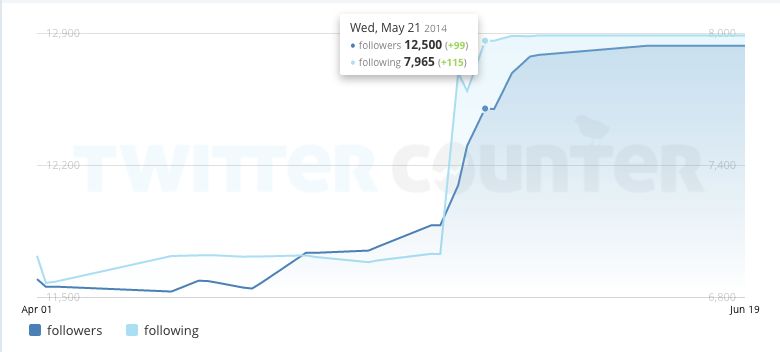
Most athletes ignore their fan base on Twitter, choosing instead to communicate with each other publicly about private issues. For example, most IndyCar drivers have only a few thousand followers and only follow a few dozen people. Helio Castroneves, one of the most famous drivers in the world today, only has 31,000 followers, Ryan Briscoe has 8,600+, and Penske Racing (“one of the most successful teams in sports history with 330 race wins”) has 9,900 followers. To put that in perspective, I have 7,200 followers, I write blogs for a living, and the last thing I won was “Best Comedy Script” in a theater script competition in 2005.

If you don’t follow people, they won’t follow you. When you’re in a small-market sport, you can’t afford to be picky about who you follow. If you’re worried about privacy, don’t tweet your personal life. If you’re worried about managing a large Twitter network, get TweetDeck and use Twitter lists. But don’t make yourself seem unapproachable. Twitter is the one place you can interact with fans and still keep them at arm’s length.

Tip: Use Klout or Twitalyzer to measure the influence you have. Show sponsors that a positive word from you can influence buying behavior among your fans.

Create a blog

The blog is really the hub of your personal branding campaign. The point of being on those networks is to drive traffic to your blog; the point of your blog is to get people to join you on the other networks.

Visual diagram of a social media campaign, with blogging at the center

Your personal branding campaign is a wheel, with the blog at the center.

A blog is a place where you can share a behind-the-scenes look at what you’re doing. Share your exploits on and off the field/court/track, post photos, post videos, and tell stories. Fans love feeling like they’re connecting with their favorite athlete and learning stuff the casual observer or fair-weather fan doesn’t know. This is why celebrity news is so popular. People get to learn something about their favorite stars. But since small-market athletes don’t get the rave coverage that the Peyton Mannings and LeBron James of the world, you have to make your own news.

Blogs are becoming more important and popular among the PR crowd, especially crisis communicators, because they avoid the whole filter of mainstream media. For athletes, this avoids the filter of the sports media, which only gives a scant amount of attention to your sport anyway, and even then, only to the victories of the marquee stars and screwups of everyone else.

Tip: Use Google Analytics or Yahoo Analytics to measure web traffic. Demonstrate to sponsors that you 1) can get traffic to your blog, and 2) can send that traffic to sponsors’ websites.

Social Media PR

Adopt a strategy of sharing with other bloggers in your sport. Even though I’m not a big open wheel racing blogger (I’ll get to blog from the media center of the Indy 500 for the 3rd year running, but won’t be going to any other races), I can name at least five other race bloggers who all have a decent readership. And they’ll gladly share some digital ink with anyone from the sport who will talk to them.

So, talk to them. Tell them stories, give them exclusive news, and grant interviews. In short, treat them like real journalists, and they’ll pay you back with space, exposure, and kindness. Let a few bloggers break the news about your new team, your plans for the year, or even your struggles. They’ll become your fans, and tell their fans all about you, which will make them your fans too.

I’ve been listening to Wall Street Journal sports writer Stefan Fatsis‘ book, A Few Seconds of Panic (affiliate link), about his weeks spent in training camp with the Denver Broncos as a kicker. While I have never been a Denver Bronco’s fan, Fatsis’ look at the danger and drudgery of training camp and football has me looking at the Broncos in a whole new way, and I may have to cheer for them a few times this year (something I would never have done until this week). Can you find bloggers to do that for you? What about bloggers outside the sport? When less than 1% of the country knows who you are or what you do, non-industry bloggers are a rich, untapped vein. (Just don’t blanket every blogger out there. You’ll be labeled a PR spammer.)

Tip: Let other bloggers tell your story. If they make it compelling enough, they’ll win your fans for you. If you connect solidly with 10 bloggers and they each have 1,000 readers, you’ll reach 10,000 people. Now, compare that to the effort you would need to put out to reach 10,000 people yourself.

Build a Facebook Brand Page

You may already have a Facebook page, but that should be kept private. Try not to connect with your fans on your personal Facebook profile, since that’s where you’re also connecting with family and friends. Instead, create a Brand Page, and connect with people there.

However, it’s crucial that you actually use this page regularly; don’t ignore it. Promote your blog posts there. Post status updates when you publish your tweets (but don’t feed your Twitter stream into Facebook; it’s annoying. Just rewrite them to be more Facebook friendly.)

Tip: Republish your videos and photos to your Facebook page too. Ask your fans to share them with your friends. It’s a well-known adage in social media circles that we consumers trust recommendations by our friends. Let your fans evangelize to their friends about you.

There are a whole lot of other strategies I could recommend — posting videos to YouTube and photos to Picasa/Flickr — but that’s for another post. Use these strategies as a place to start and start building your personal branding campaign as a way to get sponsors, build name recognition among fans, and add new fans.

Do you have any strategy suggestions? Anything you’ve done as an athlete, or anything you wish an athlete would do? Share your wisdom in the comments section and let’s learn from each other.

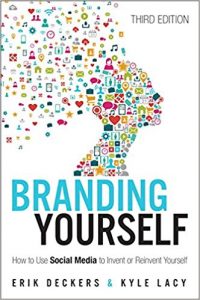
My book, Branding Yourself: How to Use Social Media to Invent or Reinvent Yourself (affiliate link), is available on Amazon.com, as well as at Barnes & Noble and Borders bookstores. I wrote it with my good friend, Kyle Lacy.

Photo credit: Just_Bryan (Flickr)

The Need for Social Media Experts Grows

People are starting to trust their peers less and less, according to a report — Who Do You Trust? — from MarketingPower.com.

Photo of a scientist puzzling over a math book

A lab coat does not automatically make you an expert. But it helps.

Researchers attribute this drop to overfriending. We see it all the time with people on Facebook with a few thousand friends, most of whom were gathered to build an army in Castle Age (guilty!). But all these friends telling us we “should” do this, we “ought” to try that. We can’t really trust anyone anymore.

This means, says MarketingPower.com, that people are starting to trust professionals a little more:

There’s been a decline in trust in a “person like myself.” A “person like yourself” fell from 47% in the 2009 study to 43% in 2011; this represents a steep decline from 2006 levels of 68%. In addition, a regular employee increased in credibility from 32% in 2009 to 34% in 2011. When it comes to the credibility of information, respondents trusted academics or experts [emphasis added — Erik] the most (70%), followed by a technical expert within the company (64%), a financial or industry analyst (53%) and a CEO (50%).

What does this have to do with social media? Basically, it means the need for social media experts is growing, and people don’t want professionals who use goofy titles to avoid the whole social media expert controversy. They want to be able to trust people who are credible and have the information they need — 70% of us want the experts.

  • If you’re a consumer-level trainer, like Patric Welch (aka Mr. Noobie), you’re highly sought out by noobies who are looking for basic answers on how to use Facebook and Twitter, how to write blogs, or how to research, buy, and use digital cameras and laptops. These beginners want someone they can trust, because that person has high credibility. They don’t want ninjas, gurus, superheroes, or surgeons, they want experts. In short, if you’re not an expert, or your Memaw’s favorite grandson who knows a lot about “Facespace,” they’re not going to hire you.
  • Although the data points to individual trust, this kind of thinking is also starting to find its way into the workplace. People are beginning to look to colleagues and associates within their professional networks. We’ve already seen the growth of the use of LinkedIn, reading industry blogs, or looking to their Twitter feed for professional advice, and the use of “real” experts is starting to grow. If you’re still playing at being a social media guru or shaman, companies are not going to call you.
  • Websites and print publications want experts to write for them, conferences want experts to speak to them. They need people who know what they’re doing, and have demonstrated their knowledge and understanding of the issues. This is not the time and place to use goofy titles. While it will work within our industry, when you talk to people outside the industry, they don’t get our cute little quirks and they don’t understand the whole expert/not-an-expert debate.

Trust is becoming more important to people, especially in the business world. Social media as a whole is all about user-generated content. We form opinions and make buying decisions by reading reviews and comments from our friends, and even strangers. But this may give way to, ever so slightly, to the need for independent experts who have a lot of information, and are willing to share it.

Photo credit: Fawksy (Flickr)

New Twitter Tool, Twylah, Promises Huge Things for Social Media

Twylah screenshot for Erik Deckers

Last Friday I tweeted: “I’m easily impressed. I’m not easily flabbergasted. @kabaim just flabbergasted me. Follow him and ask how he did it.”

Twylah screenshot for Erik Deckers

Screenshot of my Twylah page. Click to see a bigger version.

@kabaim is Eric Kim, founder and CEO of Twylah, the new Twitter tool that Eric says is going to change the way we use Twitter. Twylah (@Twylah)does all these amazing things. So many of them, in fact, that I’ve probably forgotten a few them here.

Imagine going to a website that’s laid out like a magazine theme for a blog. On that page are your tweets, categorized by the topics you tweet about most. There, a visitor can see those categories, and read more tweets within each of them. The layout page will pull out any photos you’ve included with your tweets, and then organize the rest in reverse chronological order.

This does a number of things for you, for the reader, even for search engine optimization.

  • It lets visitors experience your tweets visually, rather than seeing an entire timeline. Don’t like one particular category, like your 90 minute ongoing discussion with your project team about where to have lunch? Replace it with one you prefer. Want to highlight a Twitter topic from two months ago? Drop a less interesting one and replace it with the old topic.
  • Screenshot of Twylah tool for keyword Branding Yourself.

  • It can pull in tweets from weeks, or even months ago. This gives life to your tweets, beyond the typical 1-hour life expectancy that our tweets usually have.
  • Each Twylah page is a real web page. The links on them are shortened using bit.ly, which means they’re not only trackable, but they even count as backlinks to your real site. This will be a big help for anyone who needs an SEO boost.
  • You can direct people to your Twylah page instead of your Twitter profile page, giving people an expanded view of your bio. Now people can see if you’re a real person, and if you talk about what you claim to talk about.
  • People can even follow you directly from Twylah, rather than jumping back to your Twitter page to follow you.

These are all pretty cool features, and based on my scribbled notes, there’s a lot of amazing stuff that Twylah is going to do.

But, there are three things that social media marketers and practitioners need to take note of, because these things are going to be H-U-G-E for social media professionals. Of course, these will not be included in the initial rollout of Twylah, but Eric expects them to be available around 6 weeks later. (I hope I didn’t just jinx that.)

Another look at the Twylah layout

Further down my Twylah page.

  • Users will be able to subscribe to a person’s categories of tweets. For example, if you’re following Douglas Karr, but only want to read his tweets about the Marketing Technology Blog radio show, you can subscribe to that category. Here’s the even cooler part: Those tweets will be emailed to you as a newsletter. Subscribe to several people and their categories for a bigger newsletter, and read their interesting tweets at your leisure.
  • Twylah will have an analytics package. Not only can you see how many times your stuff was retweeted, or how often you tweeted about certain topics/categories, but you can see how many people engaged with your tweets — retweeting, clicking links, etc. For example, if you tweet about the Android phone, you can also see the engagement with those tweets has gone up. If you also tweet about the latest Twitter meme, you may see that your engagement went down for that topic. Translation: You can adjust the topics, and even time, of your tweets accordingly, based on the engagement of your tweets by your followers.
  • Twylah’s analytics will also tell you what you need to tweet about and when, to help your engagement improve. Twylah will actually help you figure out when most of your network is actually using Twitter, and what sort of tweets interest them the most. What’s cool: This is especially useful for people who are very particular about following people with certain backgrounds, such as book marketers trying to build a following of independent bookstores.
  • Twylah will eventually aggregate the total engagement of different topics. Imagine being able to know which of Twitter’s trending topics are actually engaging the readers. Maybe the new iPhone 5 is one of the trending topics in July, and 20% of the people are engaging with those tweets. As an iPhone marketer, you would then know that you need to tweet more about the iPhone with links to important information, like nearest retail location.

A lot of these way cool Twylah features are still in the Alpha stage, while Eric and his wife, Kelly, are working feverishly to roll the beta out in the middle of February. If you want to be a part of the beta, go to Twylah.com and register. Also, ask Eric for a personal demonstration of Twylah.

You’ll be flabbergasted. I know I was.

I’ll Read Your Ad for $250. My New Pay-For-View Pricing

Kim Kardashian annoyed more than a few Twitter users when it was leaked that Kardashian commands $10,000 to send a promotional tweet out to her then-2.7 million followers (now 5+ million).

(Kardashian denies that she receives that much money. Rather, she says she just tweets about products she likes.)Kim Kardashian supposedly receives $10,000 for each marketing tweet she sends.

While I don’t follow her, I’m sure that her 5 million followers (minus the ones who aren’t spam bots and people who abandoned Twitter after a month) are looking forward to reading something interesting and not very vapid or shallow. (Yeah, good luck with that.)

How disappointing is it for her fans to learn that their favorite non-celebrity celebrity is only telling you she likes her shoes because someone forked over 10 grand to say so? While marketers think a so-called celebrity’s time and endorsement are valuable, they are also showing they think my time or interest isn’t.

So I have a new offer to marketers who want me to read celebrity endorsements and social media marketing messages: I will read anyone’s tweet, watch their commercial, or read their marketing copy for a fee.

That’s right. You can pay me to absolutely look at, read, watch, and consider your product. Think of it as a personal endorsement. After all, my time is valuable. Time I could spend working or being with my family is instead interrupted by you and your spokespeople trying to get me to buy something. And I do my best to ignore it, hide from it, or block it completely. So you come up with something new and creative, which means I have to do something new and creative to avoid it.

So how about you pay me instead? If you pay me, I will read whatever you put in front of me (except for that damn Kay Jewelers ad where the brain-addled woman is afraid of a thunderstorm). Rather than spending $10K on someone who is famous without actually doing anything useful, spend the money on me, and I will read or watch to your heart’s content.

According to my new Pay-For-View pricing schedule, I will:

  • Read any celebrity advertising tweet for $75. Any non-celebrity advertising tweet is only $25. (Hey, if you’re forking out $10,000 because someone is famous, chances are I find them annoying. So the extra $50 is for the wear and tear on my soul.)
  • Visit any company website for $150, and spend 10 minutes on the site, plus additional charges for any of the following:
  • Watch any video less than 5 minutes in length for $200. For videos longer than 5 minutes, it’s an additional $75 per minute.
  • Read any marketing copy, up to 750 words in length, for $150. Since I can read 750 words faster than you can say it in a video, I’ll cut you guys a break on the cost.
  • Also, any marketing surveys, registration forms, or instances where I have to give you my personal information is $100 plus a $25 per minute processing charge (minimum 5 minutes). I had originally considered charging a flat fee per information field (i.e. mailing address, phone number, etc.), but the rate sheet ended up being three pages long and still required a lengthy explanation.

Now, these prices are actually fairly reasonable, and I feel completely justified in charging them. After all, my time and consideration are valuable. I have a job, a family, and disposable income. I’m not easily swayed by celebrity endorsements, and will go out of my way to avoid most commercials and marketing messages. In short, you’re spending all that money to get celebrities to reach me, and I’m going to support you (and them) by spending my money. The least you can do is support me for spending my time thinking about you.

Kim Kardashian may be on to something, and I have to give her credit for helping me stumble upon the idea. As a thank you, I will read her next three promotional tweets for free.

No guarantees I’m buying anything though.

Five Ways to Get Me to Follow You on Twitter

My Twitter follower count has been on the rise the last few weeks, which has been a great boost for my ego.

But I’m finding that I’m returning the favor for fewer and fewer people. That’s because people are either putting less effort into Twitter, they see it as a lazy way to market to a bunch of people, or they’re spammers who are trying to trick people into follow them. Here are five do’s and don’ts to get people to follow you on Twitter.

The Pied Piper of Hamelin

The Pied Piper of Hamelin

1. Do not mention money in your bio.

I don’t want financial freedom. I don’t want help in reaching my business goals. I don’t want to know how I can make more deals online. Actually, I do, but I want to get those things with someone I trust. Not someone who just joined Twitter five minutes ago. I block people like you.

2. Put something in your bio.

The only thing worse is to put nothing in your bio. At the very least, let me know what you do. I turned off the “New Follower” email notification, and only check that column in my TweetDeck. And all that shows me is your bio, which is where I make most of my follow decisions. If you don’t have anything in there, I don’t know anything about you, and I just won’t follow you.

3. Put a real picture for your avatar.

Not your logo, not a photo of your kid, or you as a kid. Put your photo in there so I know what you look like. If you put in a company logo, then I assume you want to sell me something. I want a relationship with a real person. Not your company, not your kid, not you 20 years ago (or 30 or 40). And I definitely won’t follow anyone who still has the damn Twitter egg as their avatar. You’re either lazy or don’t understand what “Upload Photo” means. In either case, I don’t think you’re going to be much help to me.

4. Use your real name.

Okay, okay, I may follow you if you’ve created a business account on Twitter. I like organizations like @ComcastCares and @BilericoProject, and will follow them. But if you’re using the name of your money making system in your Twitter handle, I’ll block you. I have never had good luck with people named @Money247 or @NuBizOnline. Maybe it’s a bias on my part, maybe the person was unluckily named by odd parents, but so far, I haven’t been proved wrong. If you want people to take you seriously, use your real name in your Twitter username, or at the very least, a variation of it.

5. You need to have real conversations in your Twitter stream, not news headlines or motivational quotes.

If you pass the first four steps, I’ll either follow you, or I’ll click over to your Twitter page. If I do that, and find that your Twitter stream is filled with motivational quotes or news headlines, I won’t follow you. I need to see that you’re having actual conversations with people, not just tweeting out garbage. Also, conversations does not mean retweet after retweet. Talk to people. I want to see back and forth, not just blah blah blah. Remember, people joined Twitter to have conversations with real people, not have commercials blasted at them. When you send nothing but headlines, you’re not doing anything useful. You may think you have a lot of followers, but trust me, no one is paying attention to you. Want to be sure? Go check your Klout score.

Unfortunately, Twitter has become another spam channel, which threatens to reduce its usefulness. And while I would love to build up my network to some staggering numbers, I’m not willing to do that at the sacrifice of effectiveness and real reach. So I’ll take a few seconds to look at each new follower and decide whether I want to follow them. For the most part, I’ll give people the benefit of the doubt, unless they’re blatantly trying to sell some money-making system (which, if it really worked, you wouldn’t be online pimping it out to me; you’d be on your own island somewhere in the Caribbean).

So if you want people to at least pay attention to you, put a little thought and effort into actually communicating with people, rather than trying to trick them.

My book, Branding Yourself: How to Use Social Media to Invent or Reinvent Yourself (affiliate link), is available for pre-order on Amazon.com. I wrote it with my good friend, Kyle Lacy, who I also helped write Twitter Marketing For Dummies (another affiliate link).

Photo credit: ®DS (Flickr)

5 Stupid Things That Should Get You Banned From Twitter

Yesterday, I posted my strategy for boosting my Klout score (for those of you who didn’t read closely, it was really a strategy for being a good Twitter user). But there are some pretty stupid things that people do that, frankly, should just get them banned from Twitter for being a complete twit and spammer. Here are five of the most egregious Twitter sins.

1. Following and unfollowing a bunch of people

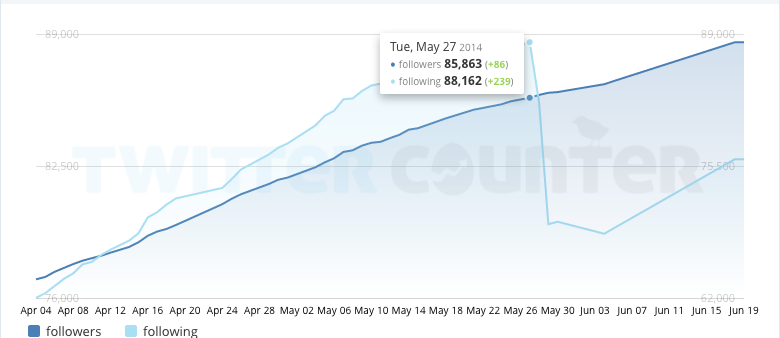
Twitter imposed a follower-to-following cap at +10% of your total followers. That is, if 5,000 people are following you, you can follow up to 5,500 people. But you’ll reach a point that, especially if you’re new, if you’re not tweeting out valuable information, you just can’t get more followers.

A common black hat strategy is to follow a bunch of people, and wait about 24 – 48 hours (if that long), then go back and unfollow them using one of the different network management tools, like FriendOrFollow. Since Twitter doesn’t notify us when we’re unfollowed, these charlatans will count on our willingness to follow these people, not realizing they’re not following us anymore. They can run up their follower count without ever contributing anything of value.

2. Putting words like “money,” “income,” or “revenue” in your Twitter name.

Unless your name really is Money, Income, or Revenue, don’t do that. I don’t want to know how to make money fast using your sleazy, and quite possibly illegal, system. Unfortunately, tricks like these work, as evidenced by the proliferation of email spam, despite the fact that we think “people know better.” If they did, then spam wouldn’t work, and it would die.

So they rely on our greed and stupidity, and think we’ll say “ooh, a way to make a lot of money from home? Sign me up!” The great thing about these people using one of the verboten terms is that I can spot them in my New Followers column in TweetDeck, and I can just block them without visiting their Twitter page. You people could save me even more time if you would just block yourself for me.

3. Using a picture of an attractive, bikini-clad woman as your avatar to get me to click through.

If you’re an attractive woman, and you want to put your OWN photo in your avatar, that’s fine. But if your Twitter account says your name is Ken, Dave, or Steve, I ain’t buying it. (And yes, I have seen more than one spam account that has a woman’s photo and a dude’s name.)

4. Sending me a contest or giveaway message without following me.

Occasionally I get a random tweet telling me I could enter a contest or try out a free item just for clicking a link. Rather than clicking the suspicious-looking link, I visit the person’s Twitter page, where I see a raft of identical tweets, each to a different person. The accounts are invariably following a few people, have sent out fewer than 30 tweets, and are less than 3 hours old. They’re usually suspended for suspicious activities a few hours later.

5. Following 2,000 people without sending a single tweet.

When I joined Twitter, it took me a few months to reach 2,000 people, because I was still trying to figure out who to follow. Even a great majority of Twitter users have fewer than 100 people they follow. When you have a brand new account following 2,000 people, but haven’t tweeted a single thing, I believe you’re trying to build up this account so you can start spamming me later. Unfortunately, I can’t report you for spam, since you haven’t actually tweeted anything. But I don’t plan on sticking around to find out either.

Basically, if you do any of these five things, you deserve to be blocked, reported, and banned. I know I’m fighting a losing battle, but it truly isn’t that hard to click Block on my TweetDeck and keep you out of my stream, and hopefully keep you from inflicting yourself on other Twitter users. Just go back to peddling your useless money-making crap to people with AOL email addresses.

My book, Branding Yourself: How to Use Social Media to Invent or Reinvent Yourself (affiliate link), is available for pre-order on Amazon.com. I wrote it with my good friend, Kyle Lacy, who I also helped write Twitter Marketing For Dummies (another affiliate link).

Photo credit: Abardwell (Flickr)