Ten Commandments of Hiring Freelancers

1. You may not pay less than a living wage. What’s the living wage? Figure out what a professional supporting a family of four in your part of the country needs to make per year. Divide that number by 1,000. That’s the freelancer’s hourly rate. If that number is your budget for the entire project, don’t call them until you can afford them.

476365013 68c32117e1 z Ten Commandments of Hiring Freelancers

Moses and the Ten Commandments

2. Always set — and have — clear expectations. Make sure you know up front what the freelancer is going to do and not do. If you’re hiring a website designer, make sure you know who’s going to provide the written content. If you’re hiring a printer, make sure you know who’s proofreading everything first.

3. You may not ask a freelancer to do project work on spec to see if you like it, and then pay her if you accept it. You wouldn’t do it with your dentist, a plumber, or a mechanic. You hire them based on their past work and their vision. You work with them to make sure they give you what they want. But you pay them for it.

4. You may not refuse to pay a freelancer just because you decide not to use their work. If you decide to go in a different direction, or abandon the project, tough. He did the work, you have to pay him. You wouldn’t do that to an employee whose project you canceled. (Exception: If their work just downright sucks, you can cancel payment, but you cannot salvage their work and use it anyway.)

5. Pay for “feature creep.” If you hire a company to write copy for a marketing brochure, and you want them to lay it out too, be prepared to pay for that. If you’re getting a new logo created, and you decide you want your business cards to have a new look, that’s going to cost extra.

7. You may not compare the work they do to your nephew’s and expect the same fee scale. Don’t say, “but my nephew who just graduated from college can do the same thing for $500.” If he really can, hire your damn nephew. The fact that you’re having this conversation with a professional means you don’t actually think your nephew can do the work. Otherwise, you’d have called him. You’re talking to a professional because you want pro level work, so be prepared to pay pro level prices. Don’t expect a pro to compete with your inexperienced family members.

7. Trust your freelancers’ understanding of their technology. If you’re hiring an SEO specialist, don’t make him follow the SEO rules you learned in 2005. If you’re hiring a web designer, and they say “no Flash,” don’t make them use Flash. In most cases, your freelancers know more about the technology they’re working with than you do (e.g. There is no “clean up button” like you see on Law & Order). If you’re asking for something they say can’t be done, it can’t be done.

8. You may not dismiss what freelancers do as a commodity. Freelancers have devoted years of their life to honing their skill so they excel at it. Writers do nothing but write, designers do nothing but design. They don’t go to weekly staff meetings and committee meetings, and they don’t file TPS reports. If you think this is something that any schlub can do, hire your nephew. You leave your home’s plumbing and electrical work to trained professionals, rather than hiring your nephew, right? Treat your outsourced work with the same seriousness.

9. Always pay on time. You wouldn’t delay paying your employees or withhold their paycheck because you’re worried about cash flow. Don’t delay payment for your freelancers. You — hopefully — pay all of your other bills on time, pay freelancers on time. Believe me, freelancers give drop-everything service to their best clients. Clients who think payment is optional get when-I-have-time service.

10. Always approve the final product. Make sure you read and okay everything. Test it out. Make sure it works. Freelancers will always send you the final product, but that doesn’t mean it’s done. You have to pay careful attention to all the details, because you know more about the subject than anyone else.

Photo credit: Functoruser (Flickr, Creative Commons)
Maybe Social Media Marketing SHOULD Replace Traditional Marketing

Toolbox

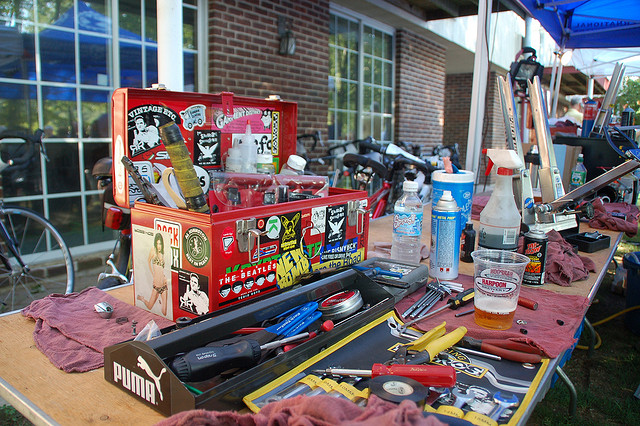
Whenever I give a talk on social media marketing, I always point out, “we don’t actually recommend that you replace traditional marketing with social media. Rather, it should be another tool in your marketing toolbox.”

Why? Why can’t social media marketing replace traditional marketing? In a lot of cases, the traditional marketing has outlived its usefulness, and is just a waste of money. Not every time for every marketer. But many marketers are spending money on something that’s not working anymore.Toolbox 300x199 Maybe Social Media Marketing SHOULD Replace Traditional Marketing

I can think of five reasons why you should replace traditional marketing with social media or content marketing.

1. You Aren’t Getting a Positive ROI

You ned to spend money to make money. But you need to make more than you spend, in order to make it worthwhile. You can’t just throw money away on a marketing channel and call it “branding.”

Because unless you’re Nike, you don’t have branding-level money, you have “this had better f—ing work” money. So spend the money in a place where you know you’re going to make more money than you spend.

One client stopped spending $60,000 per year on trade show marketing because they weren’t getting anything out of it.

“We’ve measured it, and we don’t make any money on the shows,” they told me. “We just go because we’ve always gone.”

The company switched that entire budget over to content marketing, and in the first six months, they got two new clients that grossed more than their entire annual trade show budget.

2. You’re Overspending

A common trick of the Yellow Pages companies is to break everything out into a monthly price, so all their features and add-ons seem small. “It’s only $5.99 more per month.” “That’s only $3.99 more per month.” “Oh, and that’s a paltry $6.99 per month.” Before you know it, you’re spending a lot more than you intended.

On top of that, your prices will increase even more the following year. Your vendor will often send you a contract renewal with some barely noticeable rate creep, hoping you’ll sign it without too many questions. Soon, any prices you were paying are greatly increased from when you originally signed it.

Combine that with the fact that you weren’t getting a positive ROI in the first place, and it’s either time to renegotiate or drop the channel completely. Your vendor’s salespeople should be able to show you how to measure your ROI (they can’t do it for you, but they can show you how). If they can’t, cancel.

Social media isn’t free, but it is controllable. If you hire an in-house person to do it, you can control the costs. If you outsource to a third-party, they can show you the ROI and prove their value.

3. Your Audience Isn’t Using Traditional Media

Are you relying on newspapers to reach 20-somethings? Are you advertising your home decor products on ESPN? Or you’re still rocking the Yellow Pages ads even though you’re trying to reach smartphone users.

This is where it pays to do target market research. Find out where your target market is likely to see (and not see) your advertising. If they don’t read newspapers, stop advertising in them. If they don’t watch ESPN, quit buying TV spots.

Next, figure out where they do spend a lot of their time, and how they gather news and information. For many people under the age of 30, that’s on social media. Quit spending money on advertising outlets that aren’t yielding anything, and start focusing on content marketing and social media marketing.

4. You Need to Reach a Target Audience

Who’s your target audience? And don’t say “everyone.” Because unless you’re Target, “everyone” isn’t an audience.

Who are the typical buyers of your product? Men over 40? Moms? Single 20-somethings?

How would you typically reach them? TV advertising comes close, but there are so many viewers who aren’t in your target market that you’re wasting money. TV costs are based on total viewers, not targeted viewers. You’re paying for people who will never buy your product to see your commercial.

Radio? Same problem as TV. Plus, there’s more than one station your target audience listens to, so you have to double or triple up.

Direct mail? You can target your audience, but you don’t know who opened your mail, or what they did with it.

With social media marketing, you can target a specific group. Whether it’s advertising to certain demographics on Facebook, or running a content marketing/local SEO campaign for search engines, you can specifically target only those people interested in your product, and ignore everyone else.

5. You Don’t Have a Big Budget

Like I said, social media isn’t free. But it’s relatively cheap, when compared to traditional marketing. TV and radio ads can cost many thousands of dollars. Billboards on highways often cost $10,000 or more per month. And on and on.

Social media marketing is a fraction of that cost. It can easily reach your target audience, and won’t cost as much to do it.

Think of it this way: It can cost less than $100 per day ($3,000 per month) to advertise on a single cable station, but you’re going to spend $30,000 or more (sometimes much more) to create a high-quality spot. A six month ad run is going to cost you $48,000. Then you need another six-month ad. Or a two month seasonal ad. Or more than one commercial.

(And let’s not even talk about how you’re spending a lot to not reach your target audience, or how difficult it is to track ROI.)

Social media pricing varies, but an outside agency can manage social media anywhere from $1,000 – $5,000. It may seem like a lot, but it beats the $96,000 per year you’re spending to create and run two TV commercials on one cable TV station.

Can we completely replace traditional marketing with social media marketing? Not yet. But every day, traditional marketing’s effectiveness is slipping into obscurity. It’s not dead, but it’s certainly coughing a lot.

For some companies, however, they need to stop spending money on traditional marketing and advertising and make the switch to social media marketing instead. It’s where your customers are spending most of their time, it costs a lot less, and it’s easier to reach your target audience.

Photo credit: jasonwg (Flickr, Creative Commons)

Top 10 Grammatical Mistakes you are making on Your Blog

It can be extremely embarrassing when it comes to making grammar mistakes, especially when writing a blog. Your writing skills are on display for everyone to see, which makes it crucial to avoid any errors at all cost. It is always important when editing your blog to understand grammar and the most common grammatical error that are made. Here are the Top 10 grammatical mistakes to learn from.

Writing Numbers: many people often can’t make a decide when to spell out a number or to write it as a figure. The rule of thumb is to write out any number under 10, if the number is greater use figures.

Pore, pour, and poor: All of these words sound exactly a like, but each have a different meaning all on their own. Below you will find examples to help you to determine which one to use.

  • Pore- has two completely different meanings; a small opening in the skin and to examine something closely.
  • Pour -means to transmit liquid from one container to another.
  • Poor- (spelled with double o) means low income, deprived, underprivileged.

Usage of commas: when editing your blog, keep in mind how you use commas. Let’s look at this example, the sentence (Let’s eat grandpa.) implies you are suggesting in eating your grandpa. Pretty funny! Now put a comma in the sentence. (Let’s eat, Grandpa.) This sentence implies you are inviting your grandpa to eat, much better don’t you think?

To vs. Too: think about it many people use these two words incorrectly most of the time. The simplest way to remember the word “too” is to relate to the word “also,” for example, “He went to the store too?”

Overlooked Capitalization: the most overlooked capitalization is when you are stating directions as a section of a country for instance: North, South, East and West but not as compass direction, for example: The storm headed to the Northeast. She lives 10 miles south from Hopkins.

Misuse of Apostrophe: You only use apostrophe two ways; for contractions: (hasn’t for has not) and the second way is: possession (Sarah’s pencil means the pencil belongs to Sarah)

Forth and fourth: These two words sounds exactly alike when pronounced, but are totally different. There is an easy way for you to remember the difference. The word forth has the word “for” in it which relates to the meaning of “forward,” example “Come forth to accept your reward.” The word “fourth” has the word “four” like the number; hence the word fourth is numerical.

Misuse of Colons: The main purpose why you use colons is too introduce whatever follows. For example: Sarah carries the following attributes: sincerity, wittiness, and generosity.

Mishandling of Brackets: Some people like to think you may place brackets around wherever they may like, but that is not the case. Brackets are used to surround an afterthought. For example: Linda (my mother-in-law) is having Thanksgiving at her house this year.

These are just some of the many grammatical mistakes bloggers can make. Be sure you are not one of them. You can prevent making errors by obtaining the help of an editing service. Happy blogging.

Co-Citation Will Replace Anchor Text, Make My Life Harder

Hungarian football match between Videoton FC and FC Basel

SEO professionals are about to lose another search signal in their optimization work, only to have it replaced by something that requires more work by content marketers, but will ultimately make Google better.

According to Rand Fishkin in a recent Whiteboard Friday, we’re about to lose anchor text.

Anchor text is a string of text that links a word or phrase to another page. In the previous paragraph, Whiteboard Friday is the anchor text.

Videoton FC vs. FC Basel 300x139 Co Citation Will Replace Anchor Text, Make My Life Harder

I never thought I’d write about how Hungarian football relates to blogging.

It’s long been an SEO practice to backlink to a website by linking a keyword or phrase. For example, Pro Blog Service’s president, Paul Lorinczi, runs a Hungarian football (soccer) website. If he wants to promote the site with anchor text inside a backlink, the html code would look like this:

<a href=”http://www.hungarianfootball.com/”>Hungarian football</a>

This tells Google “this link, HungarianFootball.com, is about ‘Hungarian football.’”

Problem is, all that is dying. Stupid spammers.

Spammers Ruined It For The Rest Of Us

For all good things that SEO did and was, the spammers screwed it up for the rest of us. They’re the ones who created the link farms that had thousands of backlinks on hundreds of pages. Pages completely unrelated to whatever the links pointed to. A link to a site about jewelry from a page about construction equipment.

Fishkin says anchor text will nearly die — it won’t die completely — and instead be replaced by co-citation.

Co-citation is a new method where Google looks at important words on a page, not just official keywords, and draws a relationship between them. Then it determines what the page is talking about — e.g., does it refer to another page or brand? — and makes the association that “these words and these words go together. And they’re referring to the topic of this website over here. So we’re going to assume that the two go together, and we’ll give the website a little boost.”

In other words, instead of backlinking to a page about Hungarian football with Paul’s name, Google now has an entry in its giant massive database where the two have been linked just by being mentioned on the same page.

Another Co-Citation Example

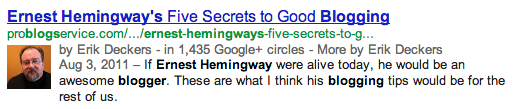
hemingway scrittoio 300x249 Co Citation Will Replace Anchor Text, Make My Life HarderI write a lot about Ernest Hemingway and blogging, including one post about whether he would be a good blogger or not. I’ve written about the two topics so much that when I do a Google search on “Ernest Hemingway blogging,” my tag page on Ernest Hemingway shows up (a compilation page of all posts I’ve tagged with Hemingway’s name).

(In fact, it’s ranked 6th on Google, which would be cool if anyone actually ever did a search for that term.)

Next, let’s say I had another website called ErnestHemingwayBloggingTips.com. Google would be able to make the association between my blog posts on “Hemingway and blogging” and this new website. Google would essentially say, “Here’s a blog post about Ernest Hemingway and blogging, and — ooh! — here’s a whole website devoted to that topic! SCORE!

What would further cement the relationship is if my name appeared on both pages, like, say, in an author bio. Then, Google has another link in that chain, and whenever someone did a search for “Ernest Hemingway blogging,” my new website has a better chance of ranking very high because of the co-citation between Ernest and blogs.

Ernest Hemingway blogging Google search1 Co Citation Will Replace Anchor Text, Make My Life Harder

This tells us some important things about co-citation:

  • I don’t use Hemingway’s name in every headline, just the one post, but Google still picks up on the keyword “Ernest Hemingway” in all of the posts. It understands, because of the tag and the body copy itself, that Papa is integral to the text. That means while headlines may be useful, your posts aren’t going to be ranked only on headline keywords.
  • The tag page is a dynamic page created by WordPress. If I add another post with “Ernest Hemingway” as the tag, like this one, the page will change. That means tags are important to Google, so use your tags properly. Don’t abuse them. Otherwise, Google’s going to take those away too.
  • Google is indexing synonyms. It’s not only looking for the word “blogging,” it’s also keying in on the word “blogger.” How long will it be before exact keywords are no longer important, because Google will understand what we mean, and not just what we said.
  • Freaking out about keywords and trying to find the exactly-perfect-bestest one is (almost) unnecessary. It used to be you had to limit your headline and topic to a single keyword, and you scoured Google AdWords and WebCEO to find just the right one. Now you’re going to get some Google juice for different keywords and their synonyms, not just the one in your headline.

Like all things Google is doing, co-citation is going to make life both harder and easier for content marketers. It’s going to drastically change our strategy, and make us have to work harder. Because, as you can see in Fishkin’s video below, co-citation doesn’t always help your page, unless it’s on someone else’s page. That’s what anchor text and backlinks did for us; we linked back to our sites using the right anchor text.

And since Google is focusing on quality content — because crappy content farms were decimated by Google Panda, and Penguin foreclosed on the link farms — that means we need people to talk about us and our keywords on their sites.

That leaves us with two strategies, both of which will take a lot of work, but will have a huge SEO payoff.

  1. Blogger outreach. This has been a public relations function. Now PR has to work with SEO in order to boost rankings. This means PR flaks who have already been doing blogger outreach will be at an advantage. They’ll be ahead of the game once co-citation becomes a real thing.
  2. Create extra content in offsite blogs. Can’t get other people to talk about you? Start another blog on another site. But you can’t put up crappy content that’s been run through an article spinner. You have to write real, effective, valuable content that real people are going to read. Google Panda killed the low-value schlock that some black hat SEOs were using, so your offsite blogging has to be just as good as your onsite blogging. And since a lot of people are already struggling with their actual blogging, this extra work is going to be a killer. Advantage: good bloggers and guest bloggers.

I can’t decide if I’m happy or annoyed by co-citation. We were already doing some of this at Pro Blog Service, which means we’re in a position to take advantage of it. But now that it’s going to become a real thing, it means we have to do more of it.


“Write Good Content” is a Stupid Strategy

It doesn’t matter which article on “Five Pieces of Blogging Advice You Need RIGHT NOW” you read, including mine, they all have the same tired cliché:

Write good content

I’ve decided that this is a stupid strategy.

In fact, it should not be a strategy at all.

This is the foundation of what you do, the very essence of your success. Your raison d’être, which is French for “reason for existence.”

To call “write good content” a strategy means that the default position, the strategy you would have done is to write bad content.

That’s like telling people that one of the five keys to being successful in life is “don’t kill people.” We’ve pretty much got that one nailed down, and we understand it. Which is why you never see it addressed in Emily Post or Ann Landers.

Writing good content — hell, creating good anything — needs to be our default position. It shouldn’t be a happy accident that comes after years and years of practice, or being inspired after slipping in the shower and hitting your head and having a vision of the flux capacitor.

Let’s stop telling people to create good anything. They want to. People really and truly want to do a good job. They don’t intentionally want to suck at anything, so telling them to do a good job is more like, as Douglas Adams once said, exercising our lips. If we don’t do it, “(our) brains start working.”

No one tells Albert Pujols “get a hit.” No one tells a bull fighter “don’t get gored.” Telling someone to write good content is like telling a football team to go out and win, rather than just going out to play.

So for those who keep on telling us to “write good content,” I have a few words for you:

Content Marketing Tip: Don’t Put Everything You Know Into One Blog Post

That 3,000 word blog post you spent hours researching, writing, editing, and polishing?

Yeah, I’m going to need you to go ahead and delete that.

Why? Because no one’s going to read it.

Think about it, unless you’re a big fan of #longreads or ESPN’s long-form sports writing site, Grantland, very few people want to read 3,000 word blog posts, no matter how good they are.

A lot of bloggers try to cover everything they can in a single post, thinking they only have one shot with their readers to show as much knowledge as possible.

Don’t do this.

5412726993 250ff5a5a5 Content Marketing Tip: Dont Put Everything You Know Into One Blog Post

I’m sure there’s a clever metaphor in here somewhere.

If you want your content marketing efforts to be effective, don’t try to cover everything at once.

600 Words Max. Seriously.

Last week, I wrote a blog post, Five True Gems of Blogging Advice, where one of my tips was “don’t plumb the depths of your knowledge in a single blog post.”

That is, don’t explore everything you know about a single blog topic in one post. Break it up into little bitty, bite-sized chunks, and explore each tiny facet of the issue in an individual post.

For example, one of my keynote talks, Ten Secrets I Learned In 24 Years of Writing would make a great blog post. And to keep from boring the reader with a massive crush of words, I could write 2 – 4 sentences about each point. But that wouldn’t give me time to fully explain what each secret means, how you can apply it, or why it’s even important.

What would make it better is to break it up and explore each secret further, and more in-depth, spending 400 – 500 words on a single secret — 600 words maximum, and that’s pushing it — finally resulting in ten separate blog posts.

Splitting up your blog posts into smaller chunks will do a number of things for you:

  • You have more to write about. A few weeks ago, I wrote about Google AuthorRank and how to take advantage of it. I could have written one long blog post about what it was and how to use it. And the whole thing would have been a few thousand words long. Instead, I was able to turn it into several posts, and I could spend more time on each facet.
  • It establishes your credibility. Who do you perceive as being more knowledgeable about a topic? Someone who did a one-off, or someone who writes about it frequently. The multi-post writer is going to have the advantage, because they can share new knowledge as new developments arise. The one-off writer has written the “definitive” work, making it harder to revisit.
  • It boosts your SEO. Google wants to see a lot of content about a single issue. It helps them understand what your site is about. Talk about a topic often enough, do some internal linking, and Google will associate your blog with that topic and keyword. Soon, you can outrank the bloggers who only did a single post on that same topic.
  • It brings readers back. If you can write several posts about a single topic, you become the go-to authority on that topic, and as people discover one post, they’ll check out your site to find more knowledge. That’s why it helps to have a “Related Content” plugin (like at the bottom of this post). And as people visit that related content, that also boosts your SEO.

Remember, content marketing is a marathon, not a sprint. You’re not going to win anything by churning out epic posts that should be ebooks. We’re a society of skimmers and fast readers now. You need to match your readers’ reading style, not force them to adapt to your writing preference.

Photo credit: whateyesee13 (Flickr, Creative Commons)

Want Me to Watch Your Ads? Pay Me

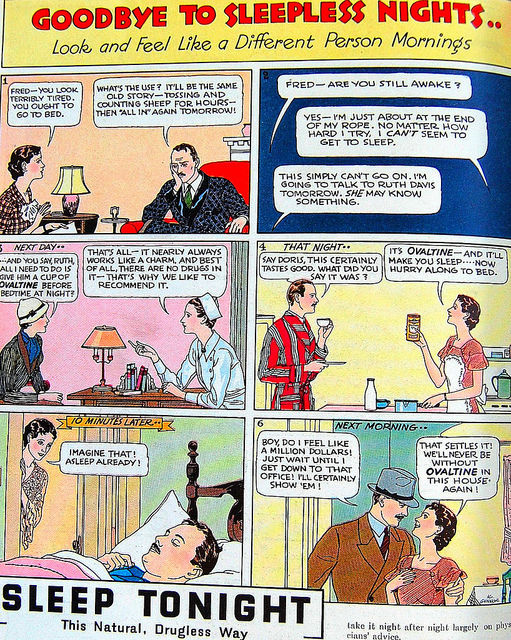
Old Ovaltine magazine ad

The one and only reason I stopped paying for Hulu+ is that I was paying $8 a month for a service that was still showing me ads.

Every other app and online service I can get offers the option to go ad free if I pay a monthly fee. So I quit paying for Hulu+ because it wasn’t worth the $96 per year to see ads I would see if I was on the free service.

“But you get to see shows that are older than five weeks!” Hulu fans say.

Or, I could just watch them before the five weeks is up. Or catch them on Netflix, which is ad free.

We’re Sick of Being Shouted At

Given that many of us are trying to escape the bombardment of advertising and marketing messages, it can sometimes be a small price to pay for just a brief respite of BUY THIS! BUY THIS! BUY THIS! messages every time we interact with the outside world.Ovaltine Ad Want Me to Watch Your Ads? Pay Me

Here’s what annoys me about marketing and my fellow marketers:

  • I pay for cable TV, and yet I’m still seeing advertisements. I am, in essence, paying someone to show me ads. These same advertisers whine and complain because people like me DVR shows and fast forward through ads.
  • Clothing companies sell t-shirts with their giant logo silk screened on the front, making me a walking billboard. It costs me $20 – $30 to be a walking shill for their company.
  • Car dealers who I just gave thousands of dollars to now want to put a sticker or license plate frame on my new car so I can tell everyone where I got it. That’s not there for my benefit. That’s free advertising to the person driving behind me.

Since when am I required to be an advertisement, and when do I do it because I truly like the product, and want to evangelize on their behalf? And why do brands presume I want to pay money so I can promote their product?

I don’t see why I have to pay for the “privilege” of advertising for a company, or pay to be advertised to. It’s my prerogative to escape advertising, and it’s my prerogative to not shill for a company when all I wanted was a t-shirt. I’m the one doing them a favor by telling people who trust me that I endorse that product.

So here’s what I’m going to start doing:

I am going to purposely avoid as much advertising as I can. I understand that I can’t escape it completely, and I’m not going to try. But here’s what I will do:

  • I will record all TV shows and fast forward through all commercials. The one exception is the Super Bowl.
  • I will never wear a shirt that has a company brand name or logo on it, unless it’s one I support. For example, a conference t-shirt or a shirt for the Cincinnati Reds or Indianapolis Colts.
  • I will never allow a sticker or license plate from to be placed on a new car I purchase. (In fact, I did this already on the last car I bought. They asked if they could, and I said I would if they gave me $1,000. They said they couldn’t go any lower on the price, and I said, “No, I mean you can give me a check for $1,000.” They said no, so I did too.)
  • I will avoid buying magazines filled with advertisements. If I do, I will purposely skip over the ads. When a lot of magazines are more ads than articles — looking at you, GQ — why should I pay for something I can find online?
  • I will pay for the ad free version of an app or product if I believe in and support it or the company. If I don’t, it means I am willing to pay the small price of being marketed to.

In short, my time, my mental bandwidth, and my careful consideration are mine to give. They are not yours to take.

Don’t assume that I want to be advertised to. Just know that if I need your product, I’ll seek you out. If I need your service, I’ll Google you.

But — and here’s my concession — I will happily look at your ad or your short infomercial, up to 30 minutes in length, for $50. You give me $50, and I will watch, read, or listen to whatever you want. $50 gets you 30 minutes of my time, and no more. It doesn’t guarantee I’ll buy your product or tell other people about it. For that, you have to impress me.

Is it fair? Am I being unreasonable? I don’t think so. Too many marketers try to take our time and attention away from something else. They try to insert themselves everywhere and into everything, trying to find that place we go to escape them, so they can take that away from us as well.

So I’m willing to meet them halfway. Instead of going to all that time and trouble to reaching me in the place I don’t want to be reached, just pay what you would have paid anyway. I will gladly sit down, review all your materials, and then we will go our separate ways.

You’ve been trying to spend all that time and energy to get me to watch your commercials (I fast forward through them), your magazine ads (I flip past them), your billboards (I keep my eyes on the road), your radio commercials (I listen to public radio or change stations), and your direct mail (I recycle it before it ever makes it into the house).

Let’s take all that money you spent and guarantee that it has been read, seen, heard, and considered. Compensate me for paying attention to you, rather than wasting money trying to trick me.

Photo credit: Crossett Library Bennington College (Flickr, Creative Commons)

Five True Gems of Blogging Advice

Schema tags

After yesterday’s post, Five Pieces of Blogging Advice I Wish You’d Stop Giving, Rogier Noort challenged me to come up with five “true gems” of blogging advice.

Oooh, now that’s a challenge. The problem is, there’s so much blogging advice out there (the first of which is always “write good content,” which inspired yesterday’s post to begin with), I was hard pressed to come up with five good ones that most people don’t know. But I accepted the challenge, so here we go.

1. Trick Out your Author Bio to Take Advantage of Google’s AuthorRank

I’ve written a lot about Google AuthorRank, and its growing importance. If you want to improve your search ranking, tie your blog’s bio to your Google+ account, and add your blog to the Contributes To of your profile.

Next, go to Google+ and upload a recent photo of you. Not you as a child. Not your child. Not your dog. Not you and your best friend. Not a picture of you at the beach, sunset at your back, from 100 yards away.

Your. Smiling. Face.

Then, whenever a blog post you wrote appears on a Google search, your face and name will appear next to your result, and people are more likely to trust it (i.e. click on it and read it).

2. SEO is Not Dead

The whole point of search engine optimization was to help Google understand what websites were about. If you wrote about Hungarian football, you would use that phrase in your title, a few times in your blog post, in your keyword tags, the meta description. And if you write about it frequently, you may even want a category with that phrase.

If you did this right, Google would assume that your site was an important one for Hungarian football. This made people do it more, because they saw it helped their pages show up higher on Google’s search results pages.

The problem, was people abused this so much, Google greatly lowered the value of the SEO efforts everyone was making. That’s what the Panda algorithm changes were all about. (Penguin was more about devaluing low-value backlinks.)

But that doesn’t mean you should stop doing SEO. It’s still valuable, it just doesn’t add to your SEO juice. Just quit thinking that you need to do it perfectly and efficiently to beat the competition.

Just remember, in order to find you, Google needs to understand what it is you do. If they understand what you do, AND you do all the other stuff right (i.e. have good time on site, low bounce rate, and high click-through rate), then Google will place you higher. But crappy content with great keyword placement will not rank higher.

Remember, you’re writing for two audiences: the reader and Google. The human reader is more important, but Google can make or break you.

3. Start Using Schemas

This is the new SEO. If you want to have a serious impact on your SEO, use schema tags like Address, City, Region (state), and postalCode (ZIP code). The reason is because Google (and Bing and Yahoo; Schemas is a joint venture among the three) is starting to recognize what lines of text mean.

Think of it this way, when I write my name — Erik Deckers — Google doesn’t know what it is. They just see an ‘E,’ an ‘r,’ an ‘i,’, and a ‘k,’ and so on. But, if I put the code around my name, then Google says “Oh, ‘Erik Deckers’ is the name of a real person. Whenever we see someone search for that name, we’re going to show the pages that tells us Erik is a real person.”

That code looks like this:

<span itemprop=”name”>Erik Deckers</span>

The same is true for addresses, especially when it comes to local searches on Google. Right now, if you do a search for our address — 5348 Tacoma Ave., Indianapolis, IN 46220 — all Google sees is a string of letters and numbers, and they’ll look for the identical string on all websites and blogs.

But if I tag it with the schema code, like this:

<div itemprop=”address” itemscope itemtype=”http://schema.org/PostalAddress”>
<span itemprop=”streetAddress”>5348 Tacoma Ave.</span>
<span itemprop=”addressLocality”>Indianapolis</span>
<span itemprop=”addressRegion”>IN</span>
<span itemprop=”postalCode”>46220</span>
</div>

then Google recognizes that as a real address, and they’ll pop it to the top of the search results, and show it on their Map.

If you still want to do SEO, then start using schemas. It’s a laborious process though, because most everything has to be done by hand. There are some plugins for it, but they’re not as effective as the actual hand coding. At the bottom of this post are some schema tags that were created by the SchemaFeed plugin, which unfortunately is no longer available.

Schema tags Five True Gems of Blogging Advice

4. Don’t Plumb the Depths of Your Knowledge in a Single Blog Post

That is, don’t explore everything you know about a single blog topic in one post. Break it up into little bitty, bite-sized chunks, and explore each tiny facet of the issue in an individual post.

For example, one of my keynote talks, Ten Secrets I Learned In 24 Years of Writing would make a great blog post. And to keep from boring the reader with a massive crush of words, I could write 2 – 4 sentences about each point. But that wouldn’t give me time to fully explain what each secret means, how you can apply it, or why it’s even important.

What would make it better is to break it up and explore each secret further, and more in-depth, spending 400 – 500 words on a single secret — 600 words maximum, and that’s pushing it — finally resulting in ten separate blog posts.

That does two things for you: 1) It gives you something to write about for several days, and 2) it really establishes your credibility as someone who is very smart about that topic. After all, if you know enough to write 20 – 30 blog posts on a single topic in 3 months, you certainly must know a lot about it, right? (Just smile and nod.)

This blog post would have also benefited from a similar treatment. But I was challenged to write five true gems, and I’m über competitive.

So, you can write that overarching post, like this one, as sort of a preview, but then break it up into separate posts, one for each point, to expand on it, broaden your topic base, and make you look like an expert.

5. Use Videos to Increase Time on Site

One of the indicators Google uses to determine whether a blog post or web page is any good is to look at how long people will spend on the page. That’s also known as Time On Site.

We already know — because it’s one of those pieces of remedial blogging advice we hear over and over — that photos and videos will increase the click-through rate on a blog post (which is another signal for the new SEO). But did you ever consider that the proper use of video will increase your time on site?

If you embed a decent video that supports your point — create one yourself, if you can’t find one — people will watch it on your site, not YouTube/Vimeo. And the longer they watch the video, the longer they spend on your site. The longer they spend, the more Google values that page.

You can accomplish the same thing by having a few photos on your site, to give people something to look at for a few more seconds. The longer they spend, the more your Time On Site goes up.

That doesn’t mean you can just load junk videos and crappy photos in the hopes that you’re going to trick people into spending time on your page. Once they realize you have nothing to offer, they’ll never come back, and your misguided attempts at trickery will backfire badly.


Those are my five true gems of blogging advice. Thanks to Rogier Noort for challenging me to write them. Does anyone have any of their own blogging gems? Leave them in the comments.

Five Pieces of Blogging Advice I Wish You’d Stop Giving

Erik's Tumblr Feed

I don’t know why I bother sometimes.

(“I don’t know why you bother ever.”)

Whenever someone writes a “five blogging secrets” post, I keep thinking, “maybe this is it. Maybe this is the one. Maybe this blog post will have at least one useful blogging tip that I can use.”

But it didn’t. It doesn’t. It never did. It was written, just like every other post on blogging, for the absolute beginner, who, given the constant bombardment of amateur advice, no longer exists in this world. We’ve polluted the Internet so much with useless, remedial blogging advice that it’s gotten into the water, and our children are born knowing the five most important steps to successful blogging.

I’ll admit, I’ve given this advice. Hell, I still give it in talks, depending on my audience and who I’m writing for. But everyone is giving it. I’m seeing it all over the goddamn place, and if I see much more of it, I’m going to scream at someone.

So, please, if not for me, then for the good of the country: stop it. Just stop it. Stop giving the same damn advice over and over and over again. Stop copying and pasting each other’s “five blogging secrets” posts.

These are the five pieces of blogging advice I want you to stop giving.

  1. Write good content: Blah, blah, blah! People say this like it’s The Most Important Advice Ever. It’s stupid, vile, and utterly useless, because everyone a) knows it, and b) thinks they do it. “I think I’ll write completely utter crap,” said no one ever. The problem is, everyone already thinks they write well, and that their work is just as good as everyone else’s. Even the conspiracy theorists who write 10,000 word treatises in a single day think what they’re producing is gold, and they’re surprised the world isn’t beating a path to their door. Telling people to write good content is like telling people to breathe or chew their food when they eat. It may be important to hear for anyone who’s brand new to blogging, but the people who know enough about the Internet to find the blog post where you shared this little piece of dreariness have already seen this more than once.
  2. Grow your social network: Really? I thought having my brother and a couple friends from work following me on a Twitter account I rarely use was a guaranteed step toward social media rock stardom. So you’re saying that the more people who read my stuff, the more success I’ll have? BRILLIANT! Give that man a Pulitzer prize for extreme cleverness! Next week, check out my new wealth creating blog post, “buy low, sell high.”
  3. Find your niche/passion: Okay, this one might not be such a Duh! piece of advice, but I’m tired of it. Anyone who has a barely detectable pulse has heard this one before, so it’s nothing new. Combine this with item #1 — write passionately about your content — and Tony Robbins will personally punch you in the nose.
  4. Eriks Tumblr Feed 300x187 Five Pieces of Blogging Advice I Wish Youd Stop Giving

    Alright, alright, fine! I have a Tumblr feed. But I have it ironically.

  5. Create value: Value is in the eyes of the beholder. And if you’re giving advice like this, there’s a whooole lot of beholders who are more than a little annoyed with you right now. Everyone perceives value in their own way. While I might think your literary comparison between Dr. Who and Mr. Ferrars from Sense and Sensibility is completely useless, there are plenty of Dr. Who/Jane Austen fans who would disagree with me loudly. No matter what you create, there will always be someone who finds some value in it, somewhere. So as a piece of advice, this is value-less.
  6. Blogging is Dead: Muh-huh. And what are you reading right now? That’s right, a blog. And what’s that place where you share all your photos and pithy little comments about your friends and their quirky hats and ironic bow ties? That’s right, your blog. What’s that? You have a Tumblog, and that’s not a blog? The hell it’s not. That’s exactly what Tumblr is, a blog for people who can’t read more than three sentences without their lips getting tired. One day, when you grow up and move out of your mom’s basement, you’ll start writing longer pieces of content, like a job application at a coffee shop. Until then, stop telling people blogging is dead. If your world view can be summed up in 140 characters and a retro photo filter, that tells me it’s not a world view worth listening to. Stick to bumper stickers on your fixed gear bike.

Just once, I would love to see someone share some useful blogging advice that did not include any variations of these five completely useless tips. While I know many people are still new to blogging, I don’t think anyone would ever knowingly violate these little “gems.” You can stop sharing them, and move on to the next lesson.

How the FDA Lost Our Trust During the Meningitis Outbreak

Tweet from the CDC about the meningitis outbreak

In the face of the meningitis outbreak, which was caused by tainted drugs, the Food and Drug Administration (FDA) should be leading the crisis communication.

But they’re not.

That responsibility has fallen to the CDC (Centers for Disease Control and Prevention).CDC Tweet 300x172 How the FDA Lost Our Trust During the Meningitis Outbreak

Why? Because we, as the public and consumers of media, trust the CDC. We don’t trust the FDA.

The FDA should be embarrassed.

Jim Garrow pointed out on his Face of the Matter blog — Building Trust is an Everyday Job — that the FDA should be in charge of this outbreak, since it was caused by tainted drugs, which fall under the FDA’s purview. The CDC oversees contagious disease outbreaks, which this is not.

Yet, according to a recent Mashable article, “. . .Twitter users searched for the Center for Disease Control and Prevention (CDC) more often than the Food and Drug Administration (FDA).” Furthermore, the CDC is regularly updating the media through conference calls about what’s being done about the outbreak, not the FDA.

Why is that?

We Trust the CDC, We Don’t Trust the FDA

Believe me, there is a distinct division between agencies. They usually don’t cooperate or communicate, even when they’re treading some of the same ground. I can only imagine there has been some jockeying for position, for credibility, and for Top Dog-ness between the two three-letter agencies.

So when the CDC, and not the FDA, started holding media conference calls, we should have gotten a clue about the problem, and gotten a good indication about who the media (and the public) trusts and who they don’t. Who has done a good job of earning our trust, and who hasn’t.

Who uses social media well, and who doesn’t.

FDA Tweets How the FDA Lost Our Trust During the Meningitis Outbreak

Irony, thy name is FDA. (I honestly wish I was making this up.)

We trust the CDC, because we see them on social media more. We trust the CDC because they communicate with the public more. And we trust the CDC, because they tend to talk to us more like people and less like little children.

The CDC has been getting some great press coverage over the last couple of years, thanks to things like the CDC’s Zombie Preparedness campaign, which actually taught people how to prepare for a viral outbreak like pan flu. (Pretty sneaky, CDC.)

While the FDA has tweeted one time — ONCE! — about the meningitis outbreak, in between tweets about Breast Cancer Awareness Month and the Kefauver-Harris Drug Amendments of the 1960s to its 13,875 followers (seriously? I have almost as many followers as the FDA?!), the @CDCemergency account has tweeted updates 6 times to its 1.375 MILLION followers.

(Pro tip: If you’re in the middle of an outbreak of a deadly disease because of tainted drugs, it’s probably not a good idea to commemorate the historical signing of an amendment to make drugs safer. Or to tweet about that more often than you tweet about the contaminated drugs that are currently killing people.)

Any wonder why we trust the CDC more?

The Fight For Credibility and Eyeballs Begins NOW

If you want people to trust you on social media (and other) channels, you have to start using them now. If you want people to know they can turn to you when there’s a real crisis, you have to start sharing information with them before the crisis hits.

The CDC has been doing this by tweeting out important information during small crises, and treating them like practice before a big event. They communicate regularly with people, they use social media to its fullest — complete with Facebook page, Twitter accounts galore, blogs, YouTube videos, and just about anything else (hell, they even have a Google+ page for their National Prevention Information Network!). Meanwhile, the FDA’s website still has a starry night background with a dancing baby animation (okay, not really; but they’re still referring to Twitter as a microblog; it quit being a microblog in 2010.).

The short of it is this: You can’t wait until the day of a crisis to launch your crisis communication plan. That thing had to be in play months in advance. And the FDA has lost all control of this crisis, and abdicated it to the CDC.

Maybe this will be a wake-up call to the FDA that they need to do better, so the next time it happens, they can actually be prepared, and we’ll be more likely to trust them.

And you can read all about their efforts on their new Friendster page.