• Skip to primary navigation
  • Skip to main content
  • Skip to primary sidebar
  • Skip to footer

Pro Blog Service

  • Business Blogging
    • Blogging and Content Marketing for Search Engine Optimization (SEO)
    • Social Media Strategy and Consulting
    • Blogging Services
    • Content Factory
    • Need a Law Blog or Legal Blog?
    • Download Our White Paper: Business Blogging: The Cost of Corporate DIY Blogs vs. Ghost Blogger
    • Pro Blog Service Books
  • Blog
  • Speaking
  • About Pro Blog Service
    • Erik Deckers
    • 4 Simple Rules for Guest Posting on Our Blog
  • Get Ghost Blogging Quote
  • Link Sharing/Contributed Articles
You are here: Home / Archives for All Posts / Marketing

Marketing

August 8, 2011 By Erik Deckers

10 Ways To Spot Bullshit In Social Media Vendors

My friend and writing partner for No Bullshit Social Media, Jason Falls, has an interesting take on what today’s social media hippies have in common with the early hippies of 1964.

In 1964, Beat Generation poet and newly-crowed author du jour Ken Kesey packed a merry band of friends into a van and led the group across the U.S. en route to the New York World’s Fair. Tripping on LSD most of the way, the Merry Pranksters sat out to enlighten America. Incredibly, though stopped by police on several occasions, according to a new documentary film about the journey called Magic Trip: Ken Kesey’s Search for a Kool Place, they were never arrested. Kesey’s friend Neal Cassady, who was the inspiration for Jack Kerouac’s On The Road protagonist Dean Moriarty, drove the bus and would fast talk his way around the law enforcement officers.

Remember, this wasn’t deep into the hippie era in the U.S. Some would argue this particular bus trip was the first real exposure to what hippies would become that much of America had ever seen. So when the police pulled the bus over, there wasn’t an automatic level of suspicion about pot or LSD or kids doing drugs. Besides, LSD was still legal then. The bus occupants were an eclectic bunch from California armed with movie cameras. “We’re making a movie,” was probably all the excuse Cassady needed to use to get around many unsuspecting law enforcement officers in that era.

Similarly, when social media’s early pioneers, only a few of whom I suspect of illegal drug use (joke), stood on their virtual pedestals and preached on and on about how the new world of marketing was all about conversation and engagement, many of us were razzle-dazzled by the potential of fulfilling the Cluetrain vision. Brands could become one again with the people. Perhaps even get on a bus, drink drug-laced Kool-Aid and enlighten the world.

While I didn’t live through the 60s, my parents were in the middle of it. Perhaps I am a direct result of them. Still, I wasn’t there. It’s hard for me to opine on what did or did not happen and why. But taking the pragmatists view that the grand bus trip that was the Beat and Hippie Generations was less about enlightenment and more about getting high, one can see the world of social media as less about enlightenment and more about playing online all day.

Okay, perhaps I’m being a bit snarky.

Like the police officers duped by Kesey’s merry band of Beats, businesses from the initial inklings of social media’s priests and prophets until recently have failed to see through the bullshit. Engagement, conversation, listening … all well and good, but where’s the other half of the equation? Where’s the money? Where’s the revenue? Where’s the business?

Certainly, there are dozens of companies who have seen the light, or gotten lucky with the opportunities, and have recorded social media successes. The Dells and Southwest Airlines of the world are to be commended for early adoption and visionary activation. But the vast majority of businesses are better trained cops. They still see social media as bullshit.

If only someone could convince business owners, small and large, marketing managers and the like that when you add the word “marketing” to the phrase “social media” it is not only about conversation and engagement, but also about business, the industry could continue to grow, perhaps more rapidly. Erik Deckers and I have (humbly) tried just that with our upcoming book No Bullshit Social Media: The All-Business, No-Hype Guide to Social Media Marketing . In it we recognize the genuine and genuinely accurate recommendations of the purists. But we also see through the fast-talk, smoke screen.

It’s not about playing online all day. It’s not a virtual commune where we all get enlightened. It can be a market. And goods and services can be bought and sold there. Companies are welcome, but if they play by the rules of the road, as it were.

For many of the puritanical themes, Erik and I spot the bullshit. In order to help you do the same with the consultants, agencies and experts you’re dealing with as you navigate the road of social media enlightenment, here are some warning signs you might have a bullshit artist at play:

10 Ways To Spot The Bullshit In Social Media Vendors

  1. It only takes them 15 seconds of the first answer to mention Twitter.
  2. They talk continually about “conversation” “listening” and “engagement” but never define what those are or what it means for your company to practice them.
  3. They fumble around, covering their tracks with ministerial-type rants about customer service when you ask them how social media can drive revenue.
  4. They talk about “the rules” of social media marketing.
  5. They only produce case studies everyone knows — Dell, Southwest Airlines, Comcast — and can’t cite local or small-business case studies readily.
  6. Their references don’t include businesses they’ve activated a social media strategy or tactic for.
  7. They talk of “building community” but focus the conversation on social networking software (Ning, Jive, etc.) rather than communications strategies that will foster community among your customers.
  8. When you ask about your website or search engine results they say neither have anything to do with social media.
  9. When you ask how they do market research they answer, “I use Google.”
  10. Just as you get to the desire to reduce customer acquisition cost, their eyes glaze over and the check their phone for messages.

We’re sure you have more ideas on how to spot the bullshit. The comments are yours.

For a free chapter of No Bullshit Social Media, jump over to the book website and download away! While you’re there, be sure to pre-order your copy at Amazon, Barnes & Noble, Books-A-Million or Que Publishing.

And order a couple extra for those bullshit-sensitive friends and clients. We’d be honored if you did.

Your pre-orders should arrive in late September.

Filed Under: No Bullshit Social Media, Social Media, Social Media Experts, Social Media Marketing, Social Networks, Twitter Tagged With: Jack Kerouac, No Bullshit Social Media, Social Media, social networking, Twitter

August 4, 2011 By Erik Deckers

Why Companies are Afraid of Social Media

“We don’t do social media, because people might say bad things about us,” the executive said. “If we have a Facebook page, people might leave negative comments on it.”

“They’re already saying bad things about you,” I said. “Whether you’re on it or not, people are complaining about you, and they’re telling as many of their friends as they can.”

The rest of the conversation went as expected. Reason after reason. Excuse after excuse. We’re not on social media because. . .  we don’t do social media because we. . . it’s only for young people. . .

In No Bullshit Social Media, we listed 28 different reasons companies are afraid of using social media: no money, no experience, no guaranteed results, we’ve never done it that way before, yada yada yada.

There are any number of reasons why companies are afraid, and there are only a few reasons why they shouldn’t be. But these reasons trump all the excuses any business can ever come up with.

1) Social media is not going away. It’s not a fad. It’s not something we’ll forget about. Social media has been brewing for the last 30 years, when Compuserve and Prodigy started as community bulletin boards. Or even before that when real computer bulletin boards were introduced in the 1970s. Companies may come and go, but real-time communication isn’t going anywhere.

2) Social media has gained wide acceptance faster than any other medium. It took radio 38 years to reach 50 million listeners; television took 13 years to get 50 million viewers. Facebook, on the other hand, added 100 million users in 9 months. Social media is only going to grow and get a stronger foothold in the way we communicate and receive information and news.

3) Social media is inexpensive. Facebook is free, Twitter is free, blogging is free, assuming you’ve got the time and knowledge to use it. If you don’t, you can hire people to manage it for you. It’s no different from hiring in-house or outsourced professionals to manage your TV ads, your websites, and your trade shows. The only difference is once you hire social media people, your overhead is mostly finished; the tools don’t cost anything to operate.

If you hire someone to produce your TV ads, there’s still the costs of actually creating them, and then buying the airtime. You can hire people to manage your trade shows, but you still have to pay the added costs of booth space and rentals, going there, working it, and coming home. Plus expenses.

4) Social media marketing can be measured. One big difference between social media marketing and regular marketing is that we can measure social media marketing through tools like Google Analytics and SocialMention.com (both free) and Radian6 and Vocus (both paid services).

How do you measure a billboard? How do you know how many people drove by, read it, and bought your product? How do you measure a TV commercial? How do you know how many people actually sat through the entire commercial and bought as a direct result? How many walked away after 20 seconds? 10 seconds? How many people never even saw it because they changed the channels?

With social media, we can tell who read a blog post, clicked a link, and then made a purchase. Mainstream media can give you estimates and guesses, but they can’t actually count. Social media can tell you how long someone watched a video or visited a website, when they clicked away, and where they went. Mainstream media can only guess at the numbers of viewers, listeners, and readers.

Social media marketing isn’t going away. And while it seems like everybody is using it, there are still hundreds of thousands of businesses that haven’t even considered it. It’s not too late to start. It’s not too late to create a Twitter account or a blog, and then talk directly to, and hear directly from, your customers. There’s nothing to be afraid of, and there are plenty of people to help you get through the rough spots.

Erik Deckers is the co-author of Branding Yourself: Using Social Media to Invent or Reinvent Yourself, and most recently, the co-author of No Bullshit Social Media: The All-Business, No-Hype Guide to Social Media Marketing. He is co-owner of Professional Blog Service, a ghost blogging and social media consulting agency in Indianapolis.

Filed Under: Blogging, Blogging Services, Broadcast Media, Marketing, No Bullshit Social Media, Social Media, Social Media Marketing, Traditional Media Tagged With: blog writing, Facebook, small business, Social Media

July 18, 2011 By Erik Deckers

No Bullshit Social Media: One Jujuflop Away from Civil Collapse

There’s a great piece of narration from the Hitchhiker’s Guide to the Galaxy that talks about how certain words, which were once distasteful and unspeakable, are now perfectly acceptable to say.

Like “jujuflop.”No Bullshit Social Media cover

In today’s modern Galaxy there is, of course, very little still held to be unspeakable. Many words and expressions which only a matter of decades ago were considered so distastefully explicit that were they merely to be breathed in public, the perpetrator would be shunned, barred from polite society, and, in extreme cases, shot through the lungs, are now thought to be very healthy and proper, and their use in everyday speech is seen as evidence of a well-adjusted, relaxed, and totally unf**ked-up personality.

So, for instance, when in a recent national speech, the financial minister of the Royal World Estate of Qualvista actually dared to say that due to one thing and another, and the fact that no one had made any food for awhile and the king seemed to have died, and that most of the population had been on holiday now for over three years, the economy had now arrived at what he called, “One whole juju-flop situation,” everyone was so pleased he felt able to come out and say it, that they quite failed to notice that their five-thousand-year-old civilisation had just collapsed overnight.

I feel that way about No Bullshit Social Media, the book I wrote with Jason Falls. I’m not embarrassed by the title. I’m only worried that this is America’s jujuflop: 1) That no one is shocked by the title because we’ve all heard and said worse, and 2) that everyone is so pleased to see it in print that they fail to notice everything else has collapsed around them.

I can’t remember whose idea the title was, but when we pitched it to our editor, Katherine Bull (@katherinebull) and her department, there wasn’t a whole lot of pushback on it. There was some concern over what some of the bookstores might say, but they were all “meh” about it, so we knew we were golden.

I’m proud of the “No Bullshit” title and I’m proud of the work. There’s no question about that (although I won’t let my kids repeat it). And I know there are still some people who, despite my best efforts, will not speak or even write out the name of the title, despite my entreaties that they should honor the literary integrity of the book’s title.

(I actually respect them for this. But that doesn’t mean I’m going to quit trying to get them to say it.)

We picked the title, because that was the only way to describe the approach we were going to take in the book. That, and because we thought Gary Vaynerchuk might want the title . . .And The Horse You Rode In On for his next book.

So, don’t worry about whether you like the title. If you don’t believe social media is right for your company, you need to read it. You don’t have to say the name, you just have to read the book. This book is for you, whether you like the title or not.

No Bullshit describes the approach and it describes the attitude. We’re not going to snow you with lilting chants about “be a part of conversations with your customers” or other tree-hugging hippie bullshit, as Jason calls it. Social media marketing is about the bottom line. About making money. About finding a way to turn this free marketing channel into one that brings in revenue.

Because the executives and business owners who pooh-pooh social media as a passing fad or merely for young people are missing out on a chance to make more money, win new customers, and ensure their company’s very survival.

And that’s no bullshit.

Filed Under: Communication, Marketing, Social Media, Social Media Experts, Social Media Marketing, Writing Tagged With: books, Jason Falls, No Bullshit Social Media, Social Media, writing

July 18, 2011 By Erik Deckers

Announcing The New No Bullshit Social Media Book with Jason Falls

I’ve always wanted to have a book cover with a dirty word on it. Nothing horrific, nothing you would find in “those” bookstores with a plain brown wrapper on it. But something a little shocking.

That’s what I’ve written with my good friend Jason Falls: No Bullshit Social Media: The All-Business, No-Hype Guide to Social Media Marketing.

We’re launching this book in October, and it will be found in “real” bookstores like Barnes & Noble, Books-A-Million, and Borders. You can also get it on Amazon.com and BN.com.

As I’ve talked to businesses over the last few years about social media marketing, I run into the same excuses for why they’re scared to they don’t want to use social media:

  • Our customers don’t use it.
  • People will talk about us.
  • Our employees won’t use it right.
  • It’s still just for young people.

And we cite statistics and show real-world examples — here are your customers on it; they’re already talking about you; the fastest growing Facebook demographic is women age 50 – 60 — and still run into the same resistance and fears that have been ruling them. The same stupid reasons they gave for the telephone, the personal computer, cell phones, and the fax machine. Customers don’t use it, staff will abuse it, yada yada yada.

No Bullshit Social Media makes the business case for small businesses and large corporations about why and how they should use social media to improve their bottom line. It’s not a strategy-development book, or a how-to book. It’s written at a mid-level view for the C-level and for the small business owner about what social media does and where other companies have used it with great success. It shows what departments you can use it in, and how you make money with it.

Jason and I also want to come to your town and deliver the No Bullshit message in person. We’re putting together a book tour and quickly adding more dates.

If you have a group, organization or business that would like to sponsor a book tour visit, we’re keeping it simple: Travel expenses and 100 books for one of us, travel expenses and 200 books for both. (We can even help you get bulk book discounts.) Give the books away to the attendees, your company, or local businesses. We’ll talk to your group, get them fired up about social media marketing, and even sign books.

I’m thrilled and honored that Jason agreed to write this book, after a late-night text this past December. He’s been great to work with, and I’m constantly amazed at the way his brain works, as well as the Pearson editorial staff’s ability to deal with it. And him.

I’m looking forward to how well you — and the hopefully thousands of business owners — receive the book. Thank you for your support.

Filed Under: Marketing, News, Social Media, Social Media Experts, Social Media Marketing Tagged With: books, business, Jason Falls, No Bullshit Social Media, writing

July 14, 2011 By Erik Deckers

If Your Local Government Doesn’t Hire Your Company, That May Be Your Fault

I get pretty pissed when I hear stories of how my city or state government spent thousands of dollars on out-of-state consultants, when there are outstanding companies right here in Indiana.

For example, the city of Fort Wayne, Indiana spent $72,000 on a social media consultant from Chicago, when one of Indiana’s best social media consulting firms is less than 10 minutes from the city building. Talk about job creation: in Fort Wayne, that could have easily created 1 – 2 jobs for young social media marketing professionals. Instead, the money was sent four hours, one state, and one time zone away.

I was listening to an episode of Douglas Karr’s Marketing Tech Radio show on Blog Talk Radio, where he and his guests were discussing how local and state governments, and even large companies, ignore home-grown talent in favor of out-of-state consultants. Sending our tax dollars out of state hurts our local economy because those contracts could mean new job creation, which means more tax revenue, and so on.

So why aren’t governments and larger companies hiring local companies to do the work?

Is it the elitism that says hometown talent isn’t that talented? Is it the hometown curse? Is it that the government decision makers are looking to flex a little muscle and feel more powerful?

Or is it the local companies’ fault?

Not to disparage my fellow small business owners, but sometimes if we’re not being hired by our local companies and governments, that’s our own damn fault.

It’s our fault because they didn’t know we even existed. It’s our fault because we never talked to our local governments and big companies. It’s our fault because in all of our networking and back-slapping, we didn’t realize we were networking with other small businesses, and not the real decision makers in the government or the corporations.

That’s not to say the big organizations are absolved of all blame. I mean, a simple Google search that includes your city or state will show you whether there’s a local company that can do the work. If you want a web design company for your Evansville business, Google “web design Evansville” and you’ll find bushels of them.

(And shame on any company or government body that doesn’t actively seek out local companies to do the work for them. Don’t make up some lame excuse about how you wanted a web designer that has government web design experience, or needed a marketing agency that specializes in statewide tourism, not local tourism. The truth is, you couldn’t be bothered to look.)

But while we can point fingers at government and corporations, and blame them for being lazy and unmotivated, the local companies need to share in the blame.

If a particular government agency doesn’t know you exist, did you even tell them about you? Did you meet with the decision makers in a particular agency? Have you added them to your e-newsletter list? Do you invite them to your industry events? And, most importantly, did you respond to the agency’s RFP? If you never filled one out, then of course they’re not going to hire you. As mind-numbing and aggravating as these rules are, they do exist, and you can’t fight them.

I spent most of the day at the Minority and Women’s Business Enterprise Central Indiana Resource Fair. It’s a day-long series of workshops to encourage small minority-owned and women-owned businesses to apply for government contracts. Apparently there is something like $3 BILLION in government contracts in the state of Indiana alone. And in some cases, the contracts go unfulfilled because no one applies for them. So the state has taken the initiative to ask these MWBEs to please PLEASE PLEASE apply for these contracts.

Applying for an RFP is not rocket science. It’s not that hard. Truthfully, it’s mostly bureaucratic busy work. Having served on a couple RFP committees when I was at the State Health Department, I can tell you that they’re tedious and boring, and a 20 page proposal is usually 18 pages too long. But, the contracts get awarded to the companies that suck it up, deal with the tedium, and submit the proposal.

There are government websites and email newsletters that tell you when RFPs are available. All you have to do is register and fill them out. Don’t wait until the winning bid has been announced before you whine about the out-of-state company getting the contract. They filled out the RFP, and you didn’t.

There are real people who work at these large companies and government agencies. They have phones and email addressess. All you have to do is call them and meet with them to tell them what you do. Don’t wait for RFP opportunities to come up, do it beforehand.

Look, if state and local government want to stimulate the local economy, they would do well to leave the building once in a while, and point their web browsers to something other than their own websites, but they sometimes can’t. I worked in state government for a year-and-a-half, and while it was never said outright, we were discouraged from associating with people from the private sector. The same is true with a lot of corporations. If it wasn’t invented there, they think, it must suck.

Government and corporations need to get over themselves and actually learn about their business communities and see what resources are available within a 20 minute drive of their office, rather than sending our tax dollars to high-dollar consultants.

But if local businesses want to get those government and corporate contracts, we would do well to skip the same old networking events and actually call up people from our government and big companies, and invite them to lunch. Attend their events, or better yet, invite them to our events. Let them get to know the local landscape, and be the one to help them navigate it. (Trust me, they’ll remember you if you help them out.)

In the end, both parties bear equal responsibility for this problem, and need to contribute equally to its solution. But someone needs to go first. Will it be you? Or will you just wait to see if your phone starts magically ringing?

Photo credit: Fotofisken

Filed Under: Marketing, Networking, Opinion

July 8, 2011 By Erik Deckers

Cancelled Soap Operas Take to the Internet. Is This The End of Broadcast TV?

You thought they were dead, but they were just in a coma. Or it was the evil twin. Or maybe it was a dream sequence, but the two once-dead soap operas All My Children and One Life to Live will find a new life online.

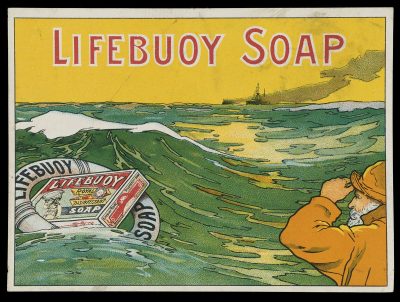
Soap operas are so named because soap companies first sponsored radio theater drama programs to housewives in the early days of radio.
According to a Gizmodo article, the two ABC soap operas, which were killed by the network this past spring, are going to be made available online instead. ABC has licensed both shows to Prospect Park, a production company that “promises all the shows will be just as long and just as ‘high quality’ online as they were on TV.”

While Casey Chan, the Gizmodo author, doesn’t “imagine soap opera watchers to be particularly good at using the Internet,” I think it’s a gutsy move, as opposed to moving to a cable network, like USA Network or WGN. I wonder if this could be the beginning of the end of broadcast television as we know it. Will more TV shows start migrating online? Will the “critically acclaimed” (that’s TV talk for “awesome show, sucky ratings”) shows find new life online, while regular TV is left with the same tired old clichéd dreck we’ve watched since 1983?

While I don’t know whether most soapies (soapers?) will have the ability to watch their favorite soaps online, I think this could be a great reason for them to start. And if they were smart, advertisers like Best Buy or Dell and cable companies would take advantage of this opportunity.

For example, Best Buy or Dell should run commercials during these soaps that say “you don’t have to miss your favorite soap. We have a laptop just for you.” Call it the One Life to Live or All My Children package — build it with enough RAM and a big enough processor, easy-to-use wifi, and a browser that comes preloaded with shortcuts to the OLL and AMC streaming sites.

After I heard the news, I was talking with our new intern, Cody (@CAustinMiller), about the possibilities, and we thought of all the possibilities this venture held for Prospect Park.

Production costs are greatly reduced

A typical TV show is shot on giant TV cameras, which are easily $100,000 dollars a pop. But this year’s season finale of House was shot entirely on a Canon 5DmkII digital camera.

One of those cameras (body only) is $2,500. Lenses are several hundred to a few thousand dollars apiece. Similarly, the web series Odd Jobs is shot entirely with a Canon 7d ($1600 + lenses).

Imagine shooting an entire show for a fraction of the cost of a single TV camera. Since very few people are watching an Internet-only TV show on HD plasma TVs, the need for giant cameras is reduced.

Better video equipment means better story settings and language

If you’ve got these small handheld cameras, imagine shooting some scenes outside, without worrying about a sound stage and all those cables and production crew. A boom mike, digital audio recorder, and a digital camera, and you’re all set.

And you’re no longer bound by studio Standards and Practices people who say you can’t use certain words on television. Want to drop the F-bomb? Fire away. Want the s-word? Let ‘er fly. Online means you can say whatever you want without S&P dropping the hammer on you. (Of course, you have to make sure you don’t offend your audience.)

Advertisers can reach targeted audiences

This is worth a blog post in itself. Imagine these scenarios:

  • To watch the shows, users have an account where they provide some basic demographic information: age, sex, race, location, income, family status, etc. Show producers can go beyond providing basic demographic info to their advertisers — “we think it’s mostly white women between the ages of 25 – 45” — and provide actual counts and percentages.
  • Thanks to today’s web technology, advertisers can deliver specific ads to specific people watching on specific browsers. Send diaper ads to new mothers, life insurance ads to women in their 40s, and luxury car ads to people who make a certain amount of money. Go read up on Facebook advertising for more ideas on how this works.
  • Advertisers can offer special coupons and codes during the show. These ads and coupons can even appear in a sidebar in the browser window. These can all be based on the viewer’s demographic information.
  • Marketers can then track click-throughs and follow the visitor’s path all the way through to the contact page or purchase page. They can determine that X number of people ordered our product while they were watching All My Children at 2:37.
  • I just had a EUREKA! idea: Put a shopping cart right in the browser sidebar window. When a small product is advertised on the show — say, the latest Danielle Steel novel — viewers can fill out the shopping cart without ever leaving the viewing window, order the book, and have it shipped, all during the show. It’s the ultimate in impulse purchasing.
  • Product placement is much easier and less expensive for marketers. Since the production company can call the shots without having to involve the network executives, they can sell product placements for a fraction of the cost of TV spots, but make a bigger piece of the pie.

Sell subscriptions to the shows

This is a chance to test the loyalty of the shows’ viewers: sell monthly subscriptions — say $2.99 per month — to viewers for ad-free episodes. Otherwise treat each episode like a regular TV episode: splits in the shows where they usually happen, with 2 – 3 minutes of advertisements. But monthly subscriptions can also offset production costs and help pay for the episode. If enough people opted for the monthly subscription, it may also show advertisers that viewers don’t want ads, which means they have to be more clever in how they reach those viewers: more product placement, sidebar ads, etc. This could also help the production company find new revenue sources as advertisers scramble for a way to reach this now-clearly defined audience demographic.

Crowdsource the writing

Many years ago — and I can’t remember when or what show — viewers got to vote whether a certain character lived or died. They called in, cast their votes, and the story unfolded to the majority’s wishes. Now, imagine having an online poll that allows viewers to vote on a particular storyline. Does Trent live or die? Is Ashlyn’s evil twin really Ashlyn? Does Trent marry Ashlyn?

It’s one more method of interaction, and one more way to keep viewers involved and coming back. Maybe they could even shoot two endings to a storyline or episode, and let the viewers vote for which ending that gets shown. As a bonus, let people watch the ending that didn’t get aired after the episode is over. Again, more interactivity, more content for viewers to consume, which keeps them coming back.

I’m really excited to see what sorts of developments will come out of this new deal (not enough to watch soap operas, mind you, but still, fairly excited). Prospect Park has said they will begin airing All My Children online starting September 26, after it makes its final TV appearance on Friday, September 23. I’ll be interested to see what kinds of ideas they come up with, and whether the Internet may be a great new frontier for TV shows that can’t survive the picky whims of studio executives who worry more about ratings than actually showing good television.

Photo credit: Wellcome Images (Wikimedia Commons, Creative Commons 4.0)

Filed Under: Broadcast Media, Marketing, Social Media, Traditional Media Tagged With: digital marketing, Internet TV, social media analytics, streaming TV

  • « Go to Previous Page
  • Page 1
  • Interim pages omitted …
  • Page 22
  • Page 23
  • Page 24
  • Page 25
  • Page 26
  • Interim pages omitted …
  • Page 29
  • Go to Next Page »

Primary Sidebar

Subscribe via RSS

Categories

Tags

advice bloggers blogging blog writing books book writing business blogging citizen journalism content marketing copywriting crisis communication digital marketing Ernest Hemingway Facebook freelance writing ghost blogging ghostwriting Google grammar Jason Falls journalism language Linkedin marketing media networking newspapers No Bullshit Social Media personal branding public relations public speaking punctuation ROI SEO Social Media social media experts social media marketing social networking storytelling traditional media Twitter video writers writing writing skills

Archives

Recent Posts

  • The Enshittification of Evernote and Why I Quit Them
  • 11 Tips for New Digital Nomads
  • 13 Things to Do or Not to Do When Connecting With Me for the First Time
  • Why You Need to Write Your Memoir
  • How to Give a 6-Minute Presentation at 1 Million Cups

Footer

BUY ERIK DECKERS’ LATEST BOOK

Erik Deckers' and Kyle Lacy's book - Branding Yourself now available at Amazon

Request a Quote – It’s easy

We write blog posts, manage social media campaigns, write online press releases, write monthly news letters and can write your website content.

Let's figure out the right package for you.

FREE 17 Advanced Secrets to Improve Your Writing ebook

Download our new ebook, 17 Advanced Secrets to Improve Your Writing

Erik recently presented at the Blogging For Business webinar, and shared his presentation "12 Content Marketing Secrets from the Giants of Fiction.

If you attended the event (or even if you didn't!), you can get a free copy of his new ebook on professional-level secrets to make your writing better than the competition.

You can download a copy of free ebook here.

© Copyright 2020 Professional Blog Service, LLC.

All rights reserved. Use of this site indicates your consent to our Privacy Policy and Terms of Use.

1485 Oviedo Mall Boulevard Oviedo, FL 32765
Call us at (317) 674-3745 Contact Us About