10 Advanced Blog Writing Techniques Used By Professional Bloggers

Cover of Corporate Blogging for Dummies book

Anyone can write a basic blog. It’s not that hard. And I’ve talked for hours, whether at seminars or at a one-on-one “brain picking” session about basic blog writing. But I rarely get the chance to talk about advanced blogging, the secrets that I use to improve my blog, and make it stand out from the hundreds of thousands of basic blogs.
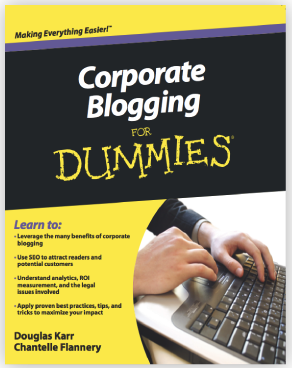
Cover of Corporate Blogging for Dummies book

This is a good book to use for advanced blogging. At least until I write my own.

Here are 10 advanced blog writing techniques we use for our clients and ourselves.

  1. Use WordPress.org: I don’t have anything against platforms like Blogspot.com, WordPress.com, or Posterous.com (I have blogs on all three). But WordPress.org is what a lot of the pros use, because it’s extremely customizable and you can improve its functionality with a few plug-ins.
  2. Use a search engine optimization plug-in: We use All in One SEO Pack and Zemanta. Both of these let us do some additional optimization on our articles, which is something the other blog platforms don’t do as well.
  3. Choose 1 – 2 keywords or phrases per post: Stick with the mantra, “one idea, one keyword, one post, one day.” This post is about the keyword phrase “blog writing techniques,” and nothing else. Not about choosing topics, not about winning readers, not about whether video or photos help with readership, it’s just about how you actually write posts. By doing this, I not only boost my SEO efforts, but I don’t overload people with information.
  4. Write catchy, dramatic headlines: Your headline needs to be catchy, interesting, and compelling. Include phrases like “10 Secrets” or “5 Tips” to fire peoples’ interest. Also, be sure to use your exact keyword phrase in the title for better SEO.
  5. Use keywords in your anchor text: If I’m writing about blog writing techniques, I need to link that phrase to another article about that phrase (which I just did. Sneaky, huh?).
  6. Watch your keyword density: Density means the percentage ratio of keywords to copy. This particular article has about a 1% keyword density (1 keyword every 100 words). If the number is below 1%, search engines might not realize what your post is about. Anything over 2 %- 3% could be seen as keyword stuffing, and the search engines could drop you. Shoot for 1.5% – 1.99%. Divide the number of keywords by the total number of words to figure density.
  7. Automate your cross-posting: Use services like Twitterfeed.com and Ping.fm to promote your posts to your Facebook, Twitter, and LinkedIn accounts, and 40 other social networks. It will save you several minutes every time you publish a post.
  8. Use analytics to determine how your effectiveness: This lets you see where your traffic is coming from, what brought them there, and how long they stayed. You may learn that a particular keyword is getting a lot of traffic, so you write about that topic again. Or that a particular website is sending a lot of traffic, so you work to get published on that site again. I like Google Analytics for solid analytics.
  9. Publish your blog 2 – 3 times a week: Everyone who starts blogging has great intentions, but life intrudes and this resolution gets broken like it’s January 3rd. If you want to excel at blogging, you must write more than once a week. Schedule an hour a day to write, or schedule a three hour block, and write all your posts in advance.
  10. Become a fast writer: Writing fast means being able to find the best words and assemble 400 of them in 20 minutes. If you can’t do this, focus on those things that are holding you back, and work to overcome them. Being able to write fast will also help you publish more frequently.
Author :  •  Content Location : Indianapolis, IN  •  Headline : 10 Advanced Blog Writing Techniques Used By Professional Bloggers  •  Keywords : advanced blog writing, blog writing techniques, seo, Social Media Analytics, social media promotions, writing  • 

Why I Trust User Comments More Than Marketing Copy

I love my Moleskine notebooks.

I’ve been using them for over five years, have gone through at least 10 of them, am a regular visitor at Moleskinerie.com and Moleskiners.com, and know that it’s pronounced Mole-eh-skeen-eh(no, seriously).

Pilot G-2 .05 mm pen with my Moleskine notebook

When I got my first Moleskine, I knew I had a special notebook, so I wanted to get a special pen to write in it. I did a quick Google search for “best pen for Moleskine notebook,” and the top result was a discussion on the Moleskinerie website (in fact, that’s how I discovered the site in the first place).

The number of comments that all touted the Pilot G-2 outnumbered all the other pens other people were recommending, so I took a leap of faith, and bought a small pack of Pilot G-2s, without ever testing a single one.

The writing was so smooth and the pen just glided across the page. I was immediately hooked. It felt like I was writing on butter with more butter. Since then, I have used nothing but Moleskine pens for all my writing. In fact, the one in the picture is the same pen I’ve carried for three years, I’ve just refilled it several times with barrels by cannibalizing a box of other G-2s.

My point is that I bought this pen based on user recommendations, not marketing copy, not magazine ads, not even the Pilot website. (Although, ironically, I bought the notebook because I liked the description on the little card about the history of the Moleskine.) I trusted the opinion of several strangers more than I trusted the opinion of a professional who is paid to tell me what is so awesome about their pen.

That’s what social media has done for us. It has changed marketing so that we no longer believe the professionals as much as we believe our own friends, or even strangers. I’ve had other people buy Moleskines just because I use them. And I was evangelizing about my pen to a friend of mine yesterday morning, and she probably had her own set by the afternoon.

So for those travel destinations, restaurants, and specialty brands who are still relying on traditional marketing to tell your story, divert just a little bit of your marketing budget to social media. Create a place where your fans can talk about how awesome you are, and can share those good experiences with their friends. Let other people do your marketing for you.

How about you? What makes you decide what to buy, where to eat, where to go on vacation? Do you visit the website or look at review sites like Yelp and UrbanSpoon? How much of a factor are user recommendations?

Author :  •  Content Location : Indianapolis, IN  •  Headline : Why I Trust User Comments More Than Marketing Copy - Professional Blog Service  •  Keywords : Moleskine, pen, user generated content, websites  • 

Wither Goest the Newspaperman? Why Blogging is Killing Print Media.

Whither goest the newspaperman, that bastion of bulletins, that purveyor of print?

He is, I’m afraid, about to be swallowed up by the electronic era.

When I was in college, I wanted to be a reporter. I wanted my stories to be delivered with a thwack! on the front porch. To be folded up and carried in a suit pocket. To be clipped and stuck to the fridge. I wanted to use words like “lede” and “slug line.” I wanted to rip my story out of a typewriter, and shout “COPY!” (I used to do this when I wrote for my college newspaper, to great laughs from my editor.)

Sadly, it was not to be. Instead, I work as a professional blogger, and am looked down on by “real” journalists at “real” newspapers. (Full disclosure: I am also a newspaper humor columnist, appearing in 10 weekly print newspapers around the state. So there.)

Last year, 53 weeks ago in fact, I wrote a humor column about Philadelphia Daily News columnist Stu Bykofsky, who wrote his own column sneering at bloggers with:

I DON’T have a blog. If I did blog, this is what it would be like. (To make it seem like a real blog, I’ll include typos and factual errors.)

I would link to Stu’s original column, but it, like most of his fellow newspaper reporters, are no longer available. They have been cast aside, presumably to make room for newer, more up-to-date pieces.Stack of old newspapers

Bykofsky, who is perhaps best known for saying this country “need(s) another 9/11” needs to realize that blogging is not going to go away. Newspapers, on the other hand, are fast disappearing from our landscape. I think reporters would do well to rethink their attitude.

To paraphrase Chicago humorist Rex Huppke (@RexHuppke):

It’s funny when journalists mock (blogging). It’s also funny when people about to be eaten by a bear mock the bear.

Huppke’s quote was originally about Twitter, but mocking a bear is mocking a bear.

So what are the journalists’ complaints about blogging? That we didn’t go to journalism school? They’re teaching electronic media writing in J-school right now. That our pieces aren’t properly fact-checked and vetted by editors? Disgraced plagiarizer fabricator New York Times reporter Jayson Blair could tell you a thing or two about that. Or is it that our stories aren’t printed on dead trees? I found Bykofsky’s original column online.

Citizen journalists — the people who are picking up the slack that the mainstream media are missing — have taken to the web to cover the news and write about the issues that journalists have been missing. If they’re not former journalists who became bloggers, they’re learning how to do proper journalism. The really good citizen journalists are writing stories that are just as good, if not better, than a lot of the mainstream media stories.

These modern day pamphleteers share the news and their opinions via a blog instead of a printing press. And while they are still looked down on, these citizen journalists have uncovered a lot of stories that Byofsky and his ilk have ignored, overlooked, or scorned. We’re breaking the news before The News does.

Griping about bloggers is nothing but pure elitism. Snob journalism at its finest. When children start playing a game, it’s not uncommon for the child on the losing team to pout, whine, and make excuses for why he’s playing poorly. And Bykofsky’s blogging gripes make him sound like he’s taking his ball and going home.

The newspaper industry has been in decline ever since the advent of radio and TV news. It slipped further into decline when Craigslist became popular. And now, blogging is threatening to be the final stake through print journalism’s heart.

We’ve seen significant gutting at our local paper (the Indianapolis Star will now be laid out in Louisville. Sounds about right for Gannett.), and journalists are being thrown overboard left and right.

A friend of mine worked for the Associated Press in Indianapolis, and was let go right before Christmas 2009, after 17 years of service. Why? The AP was losing money because fewer newspapers were licensing their content. So rather than stick with the professional who had the most experience and best judgment, they let him go in favor of someone with a lower salary and less experience. In another state.

So we have younger, less experienced journalists — remotely — running our country’s newsrooms, and it’s bloggers who are being dismissed out of hand as Not Real Journalists?

I’m sad to be watching all of this unravel. I think the decline of the big city American print newspaper is one of the great tragedies of our time. But I also see the future of the industry, and if it’s going to survive, it’s going to be online, not on dead trees.

Journalists need to stop deriding blogging, and embrace it instead. Learn how to do it now, rather than watching it pass by. You can either mock the bear or turn and face it. Otherwise, your next byline will be from the south end of a north-bound bear.

For related reading, check out:

Photo credit:

Author :  •  Content Location : Indianapolis, IN  •  Headline : Wither Goest the Newspaperman? Why Blogging is Killing Print Media. - Professional Blog Service  •  Keywords : blogging, columns, mainstream media, media, newspapers, obsolescence  • 

5 Questions to Ask Your Social Media “Expert”

Screen shot 2010-07-26 at 3.45.25 PM

The term “social media expert” is thrown around and debated so much, it has nearly become a punchline.

Someone told me once that when the economy recovers and the bartenders and waiters get their old jobs back, the number of social media experts will be cut in half. And I keep reading lately that a lot of advertising agencies are starting to embrace digital media as one of their new offerings.

Meanwhile, there are real social media firms who have been using the product for more than a few weeks, don’t limit their Facebook time to playing Farmville and Pirate Clan, and don’t think that ROI is the name of that Canadian goalie playing for the Colorado Avalanche.

So when you go to hire your next social media consultant, ask them these questions, and pay careful attention to their answers.

1. How long have you been blogging? How often do you publish? The correct answer is anything longer than a year. People who write about a particular topic have to know something about it. And your social media expert can and should be blogging about some aspect of social media. Basically, if they’re not blogging, they’re probably not doing their job correctly.

They should also be publishing at least once a week. More is better, say, 2 – 3 times per week. But if they go for a few months without publishing anything, they’d better have a good reason why. “We’ve been executing some national campaigns for our clients, and I barely have enough time to sleep” is a pretty good excuse. A blank stare and a mumbled “I dunno” is not.

2. What blog platform do you use? The correct answer is “WordPress dot org. If they say WordPress.com, Blogspot.com, or anything else, ask them why. Anyone who has the technical knowledge to use WordPress.org will have the technical know-how to use the other tools you may need for your campaign.

I say this as someone who has different blogs on different platforms. I really like Blogspot.com for my personal blog, my favorite short blog platform is Posterous, and I will acknowledge the existence of Joomla. However, I embrace my elitism and snobbery when it comes to WordPress.org for client blogs.

3. What are some automation tools that you use? You don’t really care what they say, you just need to hear that they have an automation process. They should talk about things like Twaitter.com, Twitterfeed.com, Ping.fm, TweetDeck, and HootSuite.

If they carefully craft each blog promotion (i.e. including yours) by hand, they either don’t have enough work — which means they’re new, and they’re going to learn how to do this on your dime — or they’re inefficient — which means your work may fall through the cracks.

4. What analytics package do you use? For measuring blog or website traffic, if they say “Google Analytics,” that’s acceptable. We use Google Analytics quite a bit on our client blogs. However, better yet is “Yahoo Analytics” or “Going Up,” or one of the many other professional-level packages. For social media tracking, if they say “you can’t measure social media effectively,” thank them for their time, and ask them to leave. If they say “Google News Alerts,” give them a B– for trying.

The real social media experts will either cobble together their own system (B+/A–) or use a paid service like ScoutLabs or Radian6 (A+). Just keep in mind that those services are pricey, so if you want top-notch analytics results, that will be added to your budget.

5. What kind of ROI should I expect? Trick question: they shouldn’t be able to answer right away. Anyone who promises you a specific increase is just guessing. We’d love to tell you that you’ll see a 25% increase in sales, but we can’t. We’d love to say that you will see amazing growth in just a few months, but we can’t. The truth is there are too many variables to make an accurate prediction, just like with any marketing. We can’t predict the future, but we can measure it when it happens.

Follow up question: What kind of ROI have you gotten for other clients? While you would like to see significant numbers, what you’re more interested in is whether there are any numbers. A good social media practitioner will be able to track what business came from their campaigns.

Most of the social media poseurs will not be able to give you a good answer to most of these questions. Your true social media expert will have more than just a deep understanding of the tools, but will understand how to find your target audience and be able to create the right messages to reach them. But they should also be able to answer these five questions satisfactorily.

Photo credit: Pro Blog Service generated by Wordle.net
Yewenyi (Flickr)

Author :  •  Content Location : Indianapolis, IN  •  Headline : 5 Questions to Ask Your Social Media Expert - Professional Blog Service  •  Keywords : consulting, google analytics, Social Media, Social Media Analytics, social media expert, WordPress  • 

Four Blogging Tips for Travel and Tourism Destinations

Screen shot of the Indiana Insider blog from VisitIndiana.com

One of the best things travel and tourism destinations can use for social media marketing is blogging. It’s a way to share content that:

  • is easy to update. Writing a blog post is as easy as writing an email.
  • helps with search engine ranking. Search engines love blog content.
  • will last for years. Your content can be found years later by interested visitors.

So here are the four things you can do with your blog to help market your tourism destination to your visitors.Screen shot of the Indiana Insider blog from VisitIndiana.com

1. Tell stories about the stuff your guests are doing.

Rather than just describe the activities that are available at your destination, talk about the things your guests have been doing. Write it more like one of the old weekly newspaper columns that used to tell us when the town’s citizens had visited each other.

The stories should talk about some of the stuff the guests are doing. Do a quick interview with them, find out the favorite part of their activity, and write a brief synopsis of what they did. Include some photos if possible (see #2).

We just heard from David and Sharon A. about the round of golf they played this morning. Sharon is a fair golfer and scored a 91, although David (89) is still recovering from a back injury. David said that while the course was a little challenging, he still couldn’t make it out of the water trap on the 13th hole.

Meanwhile, the Robins just returned from their horseback ride, on Morgan and Shadow. Morgan is always a gentle horse, which is good, because David Robins has never ridden before. They spent the morning out on the trail and stopped for a picnic lunch out on Oak Lookout.

It’s just a short post, and people may not really care about what the families are doing (more on that in a minute), but the people who have gotten caught in the 13th hole water trap, ridden Morgan, or had a picnic lunch on Oak Lookout are going to have their own memories of the place, and will remember the great times they had. (However, the families who are mentioned in your post may also tell their friends about your blog entry, and they’ll get to read about your place as well.

2. Post your photos and videos.

We talked in a previous post about why travel and tourism destinations should use photo and video sharing sites. The only issue is that you can’t always get people to go to those photo and video sites, especially if you’re uploading hundreds and thousands of photos.

But your blog is also an easy place to share those photos and videos. Choose the embed code for your album or video, and paste it into a blog post. You can use this content to reinforce the text you’re writing about, and increase the impact of your posts. Plus, videos and photos embedded on your blog will help your search engine rankings

3. Talk about behind-the-scenes stuff.

Think about your good friends, the ones you really like. How much do you know about their lives, the stuff they don’t tell just everyone? Probably quite a bit. And it’s that non-public knowledge that probably makes you feel closer. You can do the same thing on your blog.

Inn-Bedded Resorter Martin Earley is spending two months at The Balsams Grand Resort Hotel as their social media guy. He’s been enjoying all the amenities the guests get to use, but he’s also giving people a behind-the-scenes look at The Balsams. You can see a video of the kitchen during a dinner rush, but he has also spent time with the cleaning staff, and will also spend one night working security.

He’s showing regular and potential guests how things work around the place, so people will understand a little better how their favorite New England resort works, but also so they feel a little closer to it, and will want to return again and again.

4. Write it as a letter.

The biggest mistake beginning bloggers make is writing for posterity. They imagine thousands of readers, book editors, and critics, all poring over their blog. As a result, the posts sound stilted and forced, the language is wooden, and the whole thing sounds like it was written by a marketing committee.

Don’t write it for those people, write it for one person. Pick your favorite guest, your best friend from high school, or your mom. Write it in the same friendly tone as if this was only being read by that one person. In fact, start your post out with “Dear Sharon” or “Dear Mom.” Then, write the post to Sharon or your mom. When you’re finished, go back and delete the salutation. The tone of the post will come across as casual, friendly, and personal. The net result is more people will enjoy reading it, and they’ll want to come back every time you publish a new post.

Photo credit: Erik Deckers (Disclosure: I am a travel writer for the Indiana Tourism Department’s Blog, Indiana Insider.)

Author :  •  Content Location : Indianapolis, IN  •  Headline : Four Blogging Tips for Travel and Tourism Destinations - Professional Blog Service  •  Keywords : blogging, business blogging, Social Media, social media marketing, tourism, tourism blogging, travel, travel and tourism, travel blogging  • 

4 Ideas for Travel & Tourism Destinations to Get Started in Social Media

Vevay, IN Facebook page

This week, I’ve been focusing on how travel and tourism destinations can get started in social media.

(See “5 Reasons Why Travel & Tourism Destinations Need Social Media” and “5 Photo & Video Sharing Sites Travel Destinations Should Use.”)

I probably jumped the gun a little bit by diving into the photo and video sharing sites before I told you how to actually use social media, but that’s okay. For one thing, social networks are created to be soooo easy for everyone to use that you don’t need me to tell you how to get started. Second, you can start these all in a matter of a couple hours, and then start working to integrate them all together. (We’ll discuss that in a future post.)

Vevay, IN Facebook page

Facebook

What it is: It’s the largest social network in the world with 500 million members. If it was a country, it would be the 3rd largest in the world, behind China and India. Basically, if there is an online place where your guests and customers gather, this is it.
Get started: Start out by setting up your own personal profile, and connect with friends and family. Keep this separate from your business or organization. You don’t want to combine your business with your personal life on here.
Strategy: Once you’re comfortable with Facebook, set up a separate business page (what used to be called a “Fan Page”) for your business or destination, and then upload your business email database — you have been saving your guests’ emails, haven’t you? — to build your network. Ask these people to “Like” your page. Start communicating with your page’s network about things going on at your place through status updates, telling people about new photos and videos, new blog posts, and new specials.
Why? The whole foundation of social media is building relationships with people. You want to evoke a positive emotional response in people when the visit your place, and you want to remind them of that emotional response when they see the latest news or photos. If you remind them of the good feelings they had while they were there, they’ll want to experience them again, and will return again.

Twitter

What it is: It’s a 140 character message that is sent out to your followers (people who have started “following” your messages, because they want to see what you have to say). Twitter is like Facebook’s “Status Updates” but without everything else.
Get started: Go to Twitter.com and sign up for an account, and add your customer list (see Gmail below). Next, download TweetDeck from TweetDeck.com.
Strategy: Communicate the same information you send out on Facebook and your blog by tweeting your headlines and links to events or new posts.
Why? Because not everyone is on Facebook at the same time. Because some people prefer Twitter over Facebook. Because with TweetDeck you can update both Twitter and Facebook at the same time. Because there are a lot of other reasons I will cover in a future post.

Blogging

What it is: Blogging is a way to publish information, like articles and stories, for other people to read and for search engines to find. It’s a way to share photos and videos, without sending people off to Picasa and YouTube (see yesterday’s post, “5 Photo & Video Sharing Sites Travel Destinations Should Use.”)
Get started: Visit Blogger.com or WordPress.com and follow the instructions. You won’t need to upload an address book to find connections.
Strategy: Blog on a regular basis — at least once a week, but preferably more — about what’s going on at your destination or business. Show photos and videos of the fun stuff other people are doing. Talk about any special events or festivals, both before and after they take place. Share testimonials from your guests.
Why? For two reasons: 1) you can rank high in the search engines with a lot of interesting content like this, and 2) it helps your guests feel more connected if they can visit your site and feel like they’re visiting your location. (See the Facebook section above.)

Gmail

What it is: A free email network owned by the folks at Google.
Get started: Set up an account at Gmail.com, and import all of your addresses from your different email profiles, whether it’s Yahoo, Hotmail, your local cable provider, or the address book on your computer. Next, clean it up by eliminating duplicates, deleting out of date entries, and adding missing information.
Strategy: You won’t use this for social networking. You’ll use it for uploading all the addresses of your guests to the other networks. Any new social network you join will let you “see if your friends are on here!” And every social network will plug into Gmail with ease, so this makes it so much easier to build your network in just a couple minutes.
Why? Because you want to have a master list of all your email addresses somewhere other than your computer, in case your computer breaks down.

I was recently in a contest to become the “Inn-Bedded Resorter” at the Balsams Grand Resort Hotel in New Hampshire, and had a chance to be their social media specialist for two months. This was a novel approach, because the Resorter was going to be a guest, do all the guest activities, and then report it via social media. They were starting to use all of these technologies to communicate with their fans and guests, and have seen some great success with these technologies. You ought to give them a try and see what you can do with it.

Author :  •  Content Location : Indianapolis, IN  •  Headline : 4 Ideas for Travel & Tourism Destinations to Get Started in Social Media  •  Keywords : blogging, facebook, Gmail, photo sharing, tourism, travel, travel and tourism, twitter, video sharing  • 

5 Photo & Video Sharing Sites Travel Destinations Should Use

Yesterday, I talked about the 5 Reasons Why Travel & Tourism Destinations Need Social Media, and how social media is being used by more and more people than you may have realized.

Social media helps people share news about their lives with their friends and family. Not only are they telling people they went on vacation, they’re able to show them where they went, what they did, and all the good times they had. They’re especially doing it on the photo and video sharing sites. Here are fives sites you should use to promote your own travel and tourism destination.

YouTube (VIDEO)

What it is: This is the website everyone knows when it comes to video sharing. According to one source, there are 1,500 years worth of videos on YouTube right now. But that’s because they make it so easy.
Get started:Go to YouTube.com and set up your account. If you already have a Google account of some sort (Gmail, iGoogle, Google Docs), you already have an account, because Google owns YouTube. Start finding other friends and guests by importing your email address book. Then follow the instructions to upload your videos.
Strategy: Encourage guests to upload their own videos and tag your destination in it. (This helps you get found for any searches on YouTube.) Upload your own videos (regular or HD) and embed them in your blog or link to your Facebook account.

Vimeo (VIDEO)

What it is: Vimeo is another video sharing site that’s not nearly as big as YouTube. The benefit to you is that you get to be a bigger fish in a bigger pond. According to their website, it was originally “. . . created by filmmakers and video creators who wanted to share their creative work, along with intimate personal moments of their everyday life,” so there tends to be more of an artsy feel to it, but you’re not limited to only being a filmmaker or artist.
Get started: Go to Vimeo.com and set up an account. Import your email address book (Google or Yahoo), and make connections with your guests.
Strategy: Same as Facebook. If your guests use Vimeo, encourage them to upload videos and tag your destination in it. Upload your regular and HD videos, and then use the embed code to place them in your blog or link to your Facebook account.

Flickr

What it is: Flickr is one of the two most popular photo sharing sites. In fact, by strict definition, it’s a social network centered around photo sharing (actually, all the video and photo sharing tools are considered social networks). You upload your photos and share them with your friends, embed them in blog posts, and link to them in Twitter messages.(Note: Flickr has begun accepting 90 second videos for uploading. While they won’t give YouTube a run for their money, they are making it easier for Flickr fans to keep their video in one place too.)
Get started: If you already have a Yahoo account, you have a Flickr account. Otherwise, sign up, import your email address book, and then start uploading photos. If you have an iPhone or Android, you can also upload photos directly to Flickr from your phone. There is also a digital camera storage card called the Eye-Fi that will not only store your photos, but upload them whenever you’re in a wifi hotspot.
Strategy: Hold a best photo contest and encourage guests to upload the photos to Flickr and Picasa (next section), and then embed the photos in the comments section of your website or your Facebook page.. Post the entries to your website, and allow voting for the best photo (use SurveyMonkey.com). Use the best photo(s) on your promotional materials. Also, consider using a Creative Commons license with your photos (this lets other people use your photos as long as they give you credit), and let them use photos that link back to your Flickr page.

Picasa

What it is: Another photo sharing site, but this one is owned by Google. I like Picasa a little more because it’s easier to integrate with a Blogger blog, plus they have different paid subscription levels. You can get 20GB for $5, or 200GB for $50.
Get started: If you have a Gmail account or a YouTube account, you’re all set. Otherwise, go to picasaweb.google.com Next, go to Picasa.com and download the Photo Uploader. This will let you upload photos in batches, rather than a few at a time.
Strategy: First, don’t worry about whether you can upload videos to Picasa, because you can also use YouTube. (Remember, they’re both owned by Google.) Next, just like with Flickr, hold a photo contest, and use the best photos in your promotional material. And consider using a Creative Commons license with your Picasa photos.

Facebook

What it is: The biggest social network in the world. We talked about it previously.
Get started: Hopefully you already started a Facebook account, but if not, go to Facebook.com and start an account. Get comfortable with it and then start a business page (what they used to call a “Fan Page”) for your own business. Invite friends to “Like” your business page, and do it more than once (people need reminding).
Strategy: While this won’t be the hub of your social media campaign, it needs to be a major part of it. Facebook will have more of your guests and customers on it than any other social network. This is where you need to push a lot of your marketing message, which will drive people back to your main website or blog.

Where should you start?

While there is a chicken and egg question about whether you should join social networks first or start with photo and video sites, it ultimately doesn’t matter. It will take a few days to get everything ramped up. Focus on one video site and one photo site. Pick the one you like the best, and the one that is easiest to use, and just start using it.

At the same time, pick the social network you want to start on (I recommend Facebook, since that’s where everyone is), and work on that one as well. You’ll ultimately spend more time on Facebook than you will on your photo and video sites, so consider these sites as supporting sites for your social network.

Author :  •  Content Location : Indianapolis, IN  •  Headline : 5 Photo & Video Sharing Sites Travel Destinations Should Use  •  Keywords : facebook, Flickr, Picasa, social networking, social networks, tourism, travel, travel and tourism, Vimeo, youtube  • 

5 Reasons Why Travel & Tourism Destinations Need Social Media

I speak to a lot of travel and tourism destinations about social media, and often answer the same question, “why do we even need social media?” There are several reasons, so before I ever start talking about howyou can do social media, let’s focus on the why first.

Photo of marina at Patoka Lake, taken by Erik Deckers

Patoka Lake in southern Indiana

  • Generation Y loooooves social media. Last year, Gen Y outnumbered Boomers 81 million to 78 million in this country. And while Gen Y doesn’t buy as many vacations as Boomers, they ARE responsible for about $2 – $3 billion in spending each year. They influence things like the family’s car purchase, where the family goes to eat, and of course, where the family goes on vacation. Combine that with the fact that nearly 96% of Generation Y is on a social network of some kind, and you start to see who you need to reach.
  • Boomers are huge consumers of social media too. While Generation Y is the biggest demographic on Facebook (which will tip the scales at 500 million members in the next couple of weeks), the fastest growing demographic is women between the ages of 50 – 60. And they’re on the network telling their friends about their kids and grandkids, catching up with old friends, sharing glimpses of their lives, and of course, telling their friends where they went on vacation. And they’re sharing photos and videos of those memories.
  • Social Media is free. All of the major social networks are free to join, and free to use. You can join Facebook, Flickr, and YouTube right now, and get started. Of course, there’s a significant amount of time involved, but if you can find even 30 minutes a day to do your social media marketing, you’ll make a huge dent in your campaign, and be miles ahead of your competition. We’ll talk about how to do this in a future post.
  • Social media lets others do the work for you Facebook, YouTube (video sharing), and Flickr and Picasa (photo sharing) are all considered social networks. And they make it easy for people to share information about their vacation. They upload photos and videos to their sites, and share them on Facebook. As their friends see where they went, they think about going there too. So they’re doing your marketing for you via word-of-mouth. Cost to you? Nothing
  • Social media is about telling a story. People don’t want to see newspaper ads or read brochures. They want stories. They want proof. They want to know what other people are doing at your place. Don’t just tell people you offer water skiing or horseback riding, show them other guests who are riding horses or water skiing. Let your other guests tell stories about how much they enjoyed it. Tell people your stories, let your guests tell their own stories, and then share them through your social network. Again, cost to you? Nothing.

Social media is fast becoming the way people share information and news about themselves. We are becoming a society that values the opinions of our friends — and even online strangers — more than we value the marketers’ opinions. Social media lets you do all of that quickly and easily. We’ll show you how in the coming days and weeks.

Author :  •  Content Location : Indianapolis, IN  •  Headline : 5 Reasons Why Travel & Tourism Destinations Need Social Media - Professional Blog Service  •  Keywords : Social Media, tourism, travel, travel and tourism, travel destinations  • 

Conan the Barbarian Thinks Your Mission Statement Sucks

I hate mission statements.

I hate vision statements, statements of purpose, guiding principles, mottoes, and business raison d’etres.

That’s because most of them suck. They’re bland, boring, and don’t tell me a single thing about what a company does. Seth Godin found a doozy back in 2005:

To satisfy our customers’ desires for personal entertainment and information through total customer satisfaction.

It was so bad the company removed it from its website.

Now here’s a good mission statement:

To crush your enemies, see them driven before you, and to hear the lamentation of their women. — Conan the Barbarian

There is no doubt what Conan’s mission in life is. He wants to do one thing, and do it well. Anything else is a distraction that must be dealt with (which, in Conan’s case, involves sword play and eventual dismemberment.)

So why do companies write bad mission statements? Partly because they lose focus. Partly because they don’t want to offend anyone. And partly because they let more than one person write it, usually not the person in charge.

According to a 2008 article in Fast Company, AOL had a mission statement on a plaque in their lobby: (T)o build a global medium as central to people’s lives as the telephone or television… and even more valuable.

Once they accomplished that, and had become one of the media powerhouses of the new century, they asked a committee (GAAH!) to write a new mission statement. They came up with: To serve the world’s most engaged community.”

Seriously? It took more than one person to create that? Something that generic, bland, uninspiring, and just plain emotionally limp took an entire team of people? I’d bet they even met more than once to create it.

It is, as Fast Company said, “a creed that could just as well suit a Hardee’s.” While I don’t think this is what contributed to AOL’s downfall, they certainly lost their way from becoming “central to people’s lives… and even more valuable.” Life imitates art, and mission statements imitate corporate attitude.

Mission statements should inspire and motivate. They’re a battle cry, calling the organization to great and noble things. They’re not some namby-pamby, floppy, pitiful excuse for a gathering of words. They should be the very foundation of what that organization stands for.

President Kennedy established the space program in a speech in 1962 when he said “This nation should commit itself to achieving the goal, before this decade is out, of landing a man on the moon and returning him safely to Earth.”

NASA made that one statement their goal, and were successful six months before the end of the decade. That’s because they had a definable goal, a single principle to stand behind. They could look at any activity, idea, or program and ask, “will it help us land a man on the moon and return him safely to Earth?” If it would, it stayed. If it didn’t, it was rejected.

So what does your company believe in? Is it something generic and noncommittal? The business version of “we should do something sometime?” Or is it loud and proud, demanding crushing and lamenting?

Author :  •  Content Location : Indianapolis, IN  •  Headline : Conan the Barbarian Thinks Your Mission Statement Sucks - Professional Blog Service  •  Keywords : AOL, Conan the Barbarian, mission statements, NASA  • 

5 Reasons Email Is NOT Going Away. I Don’t Care What Facebook’s Sheryl Sandberg Says

Email is NOT going away.

South African blogger Arthur Charles Van Wyk thinks Facebook’s COO Sheryl Sandbergis just a bit crazy when she says that email is going to die off, because only 11% of teens are using email these days. (You can watch the video below.)

Email is not obsolete. Not yet, anyway.

The premise is an interesting one: if you want to figure out what kind of consumer technology we’ll be using in several years, look at what the teens are using right now. And the teens aren’t using email, they’re using SMS on cell phones, or they’re using social networks like Facebook.

Does this mean that we will all write in text speak? Will sexting become an appropriate form of communication?

I don’t care what anyone says. Email is not, NOT NOT going to die off. Here are 5 reasons email is not going away:

  1. Email is widely used in the business world. We’ve got so many companies using it, it’s never going to be dislodged, at least not in my lifetime. Until someone finds an easier way to transfer large documents and files only to specific individuals, it’s going to be the communication tool of choice. Can you see corporations — many of whom were reluctant to start letting people get email addresses and Internet access in the first place — dropping a tool that they fought against adopting? They’re still using fax machines, for God’s sake! So, sure teenagers aren’t using it now, but wait until they get assimilated into the corporate collective. They’ll be forced to use it whether they want to or not.
  2. How do you get notified when you get a new friend, get tagged in a photo, have someone comment on your status update? Right now it’s by email. Do you really want your phone to buzz every time someone wants to be your Farmville friend on Facebook, or responds to someone else’s status update? While everyone likes their mobile phones, getting buzzed by an abundance of social network messages is going to get tiresome.
  3. Our mobile phones can only hold so many texts. I have emails from 5 years ago that I still need to keep, but I can’t say the same for text messages. But if I did what happens if my cell phone gets too full? And then what if I lose it? Sure, those things can be saved in the cloud, but that’s where my email messages are anyway. Plus, my emails are easier to organize and search for.
  4. Mobile phones and text messages are not ideal for important communications. While email may be less formal than, say, a certified letter, it’s more formal than a text message. What kind of damage are you doing to your personal brand if you tell a potential employer, “just text me,” especially if you’re someone who got a cell number that spells a naughty word? Or what if you got a job offer (or didn’t)? Do you want to get “Dude, u r not hired. Sry. Better luck nxt time” from an employer? Communicating with people who will be important to your life needs to be done in a way that’s more dignified than a cell phone.
  5. Email is free, text messaging is not. I have to pay $10 every month to get unlimited texting, but my Gmail account is free. Admittedly neither cell phones nor computers are in every home in this country, but while text messages still cost money — even though they cost the cell carriers nothing to send (don’t get me started on that!) — it’s going to be a barrier for people to adopt it wholesale around the country

Email may not be the communication tool of choice, but it’s not going anywhere. And while SMS will become more prevalent in this country, I don’t believe it’s going to kill email, and I think people who say so are doing it for shock. We haven’t even killed postal mail, and yet the hip thing to do is to declare the death of free mail?

Kill off postal mail first, and then I’m more likely to believe you.

Photo credit: Jparise (Flickr)

Author :  •  Content Location : Indianapolis, IN  •  Headline : 5 Reasons Email Is NOT Going Away. I Don't Care What Facebook's Sheryl Sandberg Says - Professional Blog Service  •  Keywords : Comminication, email, social networks  •