Defining Two Types of Crisis Communication

Crisis communication has two different, distinct meanings. They require different approaches, different ideas, and completely different types of plans. And not knowing the differences between the two can create some problems if you try to use one approach in the wrong place.
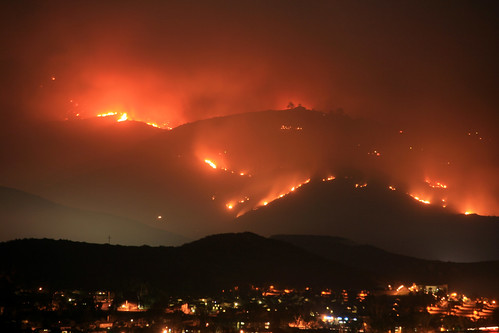
There’s corporate crisis communication (CCC), and there’s CERC.

CERC — Crisis and Emergency Risk Communication — is what the government calls communication during a massive emergency, such as swine flu, a terrorist attack, or large-scale natural disaster. (And you can tell the government came up with it, since it’s so much longer and has more words than are truly necessary.)

Both are often called “oh shit PR,” but the difference is that in a CERC situation, a lot of people could die. With CCC, a lot of money could be lost. One type of emergency gives emergency first responders sharp chest pains and indigestion, the other makes the corporate lawyers pull out their hair. But they both say the same two words when something goes down.

Although these two forms have a lot of similarities, there are some important differences. And if you’re talking about social media for crisis communication, you need to know them, because they affect your strategy.

Corporate crisis communication

I’d like to say that it’s important to always tell the truth and to be as open and honest as possible. But the sad truth is that being completely open and honest can ruin a company. I’ve hassled corporate legal departments over their “wrecking” crisis communications, but they’re a necessary part of any response. They just shouldn’t control it. In CCC:

  • Transparency tends to go out the window. The emergency is usually something that will make the corporation (or individual) look bad, so the first instinct is to hunker down and contain the bad news. This often means trying to keep it under wraps. This hardly ever works.
  • The negative end result of a corporate crisis is a loss of money. It could be a hit to their reputation, credibility, or branding, but those will all effect the bottom line. And since that can be in the millions or billions, crisis communication is not something that should be taken lightly. Entire companies, like Chi-Chi’s restaurants, have been lost to bad communications. But it’s the attempt to avoid losing money that leads to bad communications.
  • Communication is about containment. Many corporate crisis PR professionals are focused on keeping their client from being found guilty or negligent. They’re not worried about whether people like them, they just want to win the pending lawsuits. So they’ll put out information that, while is not a lie,
  • The message is the biggest part of the response. There’s other stuff going on behind the scenes — product recall, legal preparations, brand managment — but the communication is what’s going to affect the public’s perception, and thus, their reaction, lawsuits, vendor relationships, etc. Information may be easy to get if you’re in crisis communication, but it’s not always easy to share.

Social media strategy: Guarded, but present. Correct misinformation, use Tweets and Facebook to communicate with customers in a brand management manner. Put on your best face, but don’t lie. Monitor the gossip sites, but don’t engage.

Crisis and Emergency Risk Communication

This is the area I came from. We wanted as much open communication as we could get. More was better, and there was no such thing as too honest. Our goal was to “prevent panic,” and make sure everyone knew what was going on. With CERC:

  • Transparency is crucial. This is information people need to know. Information about where to go for safety, supplies, or medication.
  • The negative end result of a public crisis is a loss of life. When I was at the Indiana State Department of Health, we trained for things like medication distribution during an anthrax attack. The goal was to tell as many people as possible where medication was available. Information has to be gotten out quickly and to as many people as possible.
  • Communication is widespread. The point of CERC is to get as much information out as possible, and to correct misinformation. There is nothing that should be contained or covered up.
  • The message supports the rest of the response. It’s the other stuff that’s going on — law enforcement, public health response, rescue/recovery, clean-up — that’s going to affect the public, and communication lets the public know what’s going on. If there’s medicine to be distributed, communication will tell the public where to get it, but it’s the Point of Distribution that will give it out. The problem with this approach is that the public information officers (PIOs) are trying to get information from the busiest people, which means it’s not always readily available or being put out as quickly as possible. This is one reason the PIOs have direct access to the Incident Commander, the person in charge.

Social media strategy: Strong social media strategy. More people are getting their news on Twitter and Facebook than they are in their regular media. Put information out on social media at the same time you give it to the mainstream media. Correct misinformation directly, rather than through mainstream media. Monitor the citizen journalists, and engage when it’s appropriate.

Photo: Slworking2

Using Social Media for Public Health: Some Proof

I’ve been beating the drum lately about how public health and crisis communication folks can and should be using social media. (Also here and here.)

The problem is most decision makers think this is still just a bunch of kids and out-of-work job hunters playing on FaceSpace and “twittering, twuttering, whatever the hell you call it.” (Note: Playing dumb as a way to denigrate something you don’t understand? Not endearing. Are you that confused, or just trying to be funny?)

But the Pew Internet & Life Project (official motto: “we’re smart, and we can prove it with a ±2% error margin”) is backing this idea as well. Susannah Fox recently spoke at the National Conference on Health Communication, Marketing & Media, sponsored by the National Center for Health Marketing, Coordinating Center for Health Information and Service, and the Office of Enterprise Communication, Centers for Disease Control and Prevention (CDC), Substance Abuse and Mental Health Administration, the National Cancer Institute and the National Public Health Information Coalition.

In other words, people who don’t take this stuff lightly. I used to be in the same field, and I know if the CDC and NPHIC are paying attention, then other people need to be paying attention as well.

Some interesting statistics from Susannah’s slide deck:

  • 79% of adults in the U.S. use the Internet. Of those people, how many have stopped getting their news from newspapers, radio, and TV? We had an LP tanker explosion at a major Interstate intersection. I heard about it on Twitter, not TV. And a newspaper would have been useless for up-to-date news.
  • 48% of African Americans and 47% of Latinos go online with a handheld device; only 27% for whites. Since black people also have a very high occurrence of chronic diseases like high blood pressure and diabetes, handhelds could be a great way to have them access important public health information.
  • Did you know there’s a website called PatientsLikeMe.com? Yeah, me either. But it’s for people who have “life changing conditions.” They’re talking to each other and learning from each other. (Know who that’s going to inconvenience? Doctors. They’re suddenly not the smartest ones in the room, the patients are.)

I could go on and on, but, well, there are only 7 slides in the deck (Rule #1 of good PowerPoint: Don’t use a lot of slides.)

But the moral of the story is that if you’re in public health, look at social media as a way to get your message out. Quit relying on the traditional media. Get out of 1987 and join us up here in the 21st century. A vast majority of the public is, but you’re still putting all your eggs in a newspaper-lined basket. Keep old school media in your toolbox, but quit reaching for it first.

Author :  •  Content Location : Indianapolis, IN  •  Headline : Using Social Media for Public Health: Some Proof  •  Keywords : Crisis Communication, Public Health, Social Media, social networking, Twitter  • 

How Social Media Can Help the Public Avoid the Swine Flu

Originally published on the DeckersMarketing.com blog.

I used to be the Risk Communication Director at the Indiana State Department of Health and one of the things we prepared for over and over was “pan flu.” At the time, we thought it was going to be the H5N1 bird flu, and we prepared by practicing drills, simulating events, writing tons of press releases, and creating processes to get information out to the media and public. Quickly.

The problem is the old model of sending out press releases via email was fast enough three years ago, but since the explosion of Twitter and social networking, and the decline of the traditional newspaper, people just aren’t getting their news through traditional methods anymore.

With social media, the public is getting their information as it happens, rather than waiting for a newspaper to publish day-old news, watching network news at certain times of the day, or cable news that only has time for a national focus, but nothing deeply local.

I’ve been using Twitter to get national news from sites like CNN, the BBC, and USA Today.

I’ve been watching the Google Maps case markers, the CDC’s swine flu investigation, and even listened to a couple of the CDC swine flu podcasts.

There are a few ways public health and first responders could use social media to educate the public, and get ahead of the rumor mongering and bad information that many people seem to perpetuate, whether accidentally or otherwise.

Create a Twitter account.

Someone posted a tweet today that the Twittersphere was talking about swine flu the most, so this is the place to start. Use Twitter to quickly answer questions, debunk rumors, and give out good information and news links.
1) Use the name of your agency AND the emergency (for example, IN_SwineFlu.)
2) Download TweetDeck from TweetDeck.com.
3) Set up a search column for “#swineflu and swine flu.”
4) Use Twitter’s Find People function to find media outlets and journalists in your area, and follow them. They’ll follow you back.
5) Use NearbyTweets.com to find other people around your area. Search for the city AND keywords like “#swineflu” and “swine flu” to find local people talking about those topics. Follow them, and they’ll follow you back.

Set up a blog

Don’t screw around with the rigamarole of getting your IT department to set up a blog on your agency’s server. They’ll have to ratify it in their bi-weekly committee meeting, and want to create a mission statement and all that crap. Use blogs to publish press releases, send out quick updates and stats, give information that can’t wait (i.e. locations of hospitals and medication).
1) Go to Blogger.com, and set up a blog for your agency (i.e. http://youragency.blogspot.com). You COULD screw around with WordPress, which is actually better, but we’re going for speed here. Plus you can’t do this. . .
2) Set it up so you can send emails and texts to your blog. If you’re one of the lucky people who has a Blackberry, you can send blog updates that way. Ditto with photos.
3) Go to TwitterFeed.com and have your blog automatically update your Twitter account.

Monitor your traffic

It’s important to monitor your traffic so you can know what messages are getting the most attention, what ones are being repeated, and where your biggest traffic sources are from.You need to know how many people are coming to your blog, reading your tweets, and paying attention to what you’re saying to know which areas you need to improve on.
1) Set up your TweetDeck URL shortener to use bit.ly, not Tiny.url or any of the others.
2) Go to www.Twitalyzer.com, and enter your Twitter ID. Scroll to the bottom of the page, and click on Return on Influence. You’ll be able to measure how many people have read your Tweets.
3) Install StatCounter into your blog. I usually like Google Analytics, but they only update around 3 am EST. StatCounter updates minute to minute.

Those are the basics of using social media to communicate with the public. If you have any questions or suggestions for best practices, post them here in the comments. I’ll put up new blog posts to answer big questions

In the meantime, please take a few minutes and watch this video to learn how to avoid spreading colds and flu, not just swine flu.

Author :  •  Content Location : Indianapolis, IN  •  Headline : How Social Media Can Help the Public Avoid the Swine Flu  •  Keywords : crisis communications, emergency response, Public Health, Social Media, swine flu, Twitter  • 

What Can Swine Flu Teach Us About Crisis Communication Through Social Media?

social_media_communities_main-1

Social media has been playing an important part in the swine flu epidemic, which public health experts worry will turn into a pandemic (an epidemic that crosses many countries).social_media_communities_main-1

When I was the Risk Communication Director for the Indiana State Department of Health, half of my time was spent talking about the influenza pandemic — pan flu — and what we could do to communicate during a pandemic. I had a staff of public information officers, and we came up with all sorts of ways to communicate with the media.

We had email, cell phones, and Blackberries, and all of our strategies relied on us being able to have access to those email servers and being able to get news out to the state media outlets, who would then take our news and push it to the top of the news cycle, thus insuring our message would be prominent. Which is great if we were living in 1995.

But they were all the tools in the toolbox for communicating about the impending bird flu.

“People need to quit calling it bird flu,” said more than a few docs and epidemiologists one day. I had made the mistake of calling it bird flu in a meeting one day. (The H5N1 bird flu in Asia was the big fear in 2006.)

“But that’s what people are calling it already,” I countered.

“So?” they all said, in that way educated smart people can. “We just need to educate people to call it pan flu, because by the time it becomes a pandemic, it won’t be from birds, it will be transmitted through people.”

“We’ll spend all our time educating people on not calling it bird flu that we’ll waste our energy we could be using to educate the people.”

But my pleas fell on deaf ears, and so we called it pan flu. “Pan flu” this, “pan flu” that.

Except nobody’s calling it “pan flu” now. We’re calling it swine flu. And that’s the name that stuck, unless you’re from Israel (they’re calling it the Mexico Flu).

So the health department is calling it swine flu, and after three days of no news, they finally put up a press release on their website, and a joint Twitter account with the Indiana Department of Homeland Security.

Social media has taught us all a few lessons when it comes to crisis communication and rapid response, whether you’re in a government agency or the corporate setting.

  • Use the terms the people are using, not your experts. The people are calling this epidemic swine flu. I’m glad to see the health department also calling it swine flu. But avoid the urge to call it “pan flu” if/when that happens. Avoid calling it “influenza.” We all know it as swine flu, so continue to use that term.


  • Go to where the people are. The people are not reading newspapers. That information, if we’re lucky, is only 12 hours old, which means it’s outdated as soon as the printer fires up. The people are online, on Twitter, and reading blogs. Meet them there, don’t make them come to you, because they won’t.


  • Some information is better than no information. Rather than wait for three days to release one press release, give out bits of information as you have it. Talk about precautions. Talk about plans. Talk about the number of cases in the state (at the time, none; now there is one case.


  • Use a blog to communicate with the public and the media. People aren’t reading local newspapers or watching local TV. They’re getting news online that’s been referred to each other through Twitter and other blogs.


  • Use the name of the topic on Twitter. While using ISDH in the title is good, and word will eventually spread that ISDH_IDHS is the Health Department and Homeland Security, it’s not very obvious, like IN_SwineFlu.


  • Follow area people on Twitter. Right now @ISDH_IDHS is only following the news sources, but not the people of Indiana. One of our goals at ISDH was to correct misinformation, and people are putting out all kinds of bad information on Twitter. They should follow as many people as possible in Indiana, and then address any and all questions, bad information, etc. Refer people back to the blog, or at least the CDC’s website. Set up TweetDeck with a group that searches just for “swine flu” and “Indiana.”

—-
(UPDATE)

A few links to articles I’ve written on using social media for crisis communication.

Author :  •  Content Location : Indianapolis, IN  •  Headline : What Can Swine Flu Teach Us About Crisis Communication Through Social Media?  •  Keywords : media, newspapers, Public Health, Social Media, social networking, swine flu  •