Six Sure-Fire Methods to Break Writer’s Block

A lot of writers suffer from writer’s block. That big mental wall that sometimes get in the way of getting any writing done. But it doesn’t have to be permanent. Only a few times have people suffered career-ending writer’s block, but when that happens, we’ve gone beyond just plain ol’ writer’s block, and are getting into some serious performance anxiety.

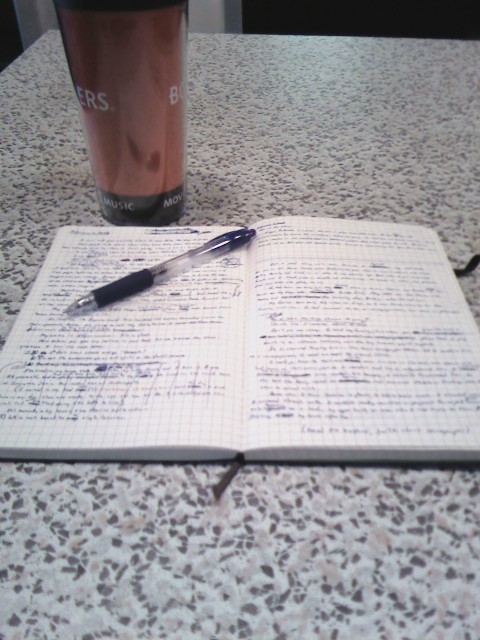
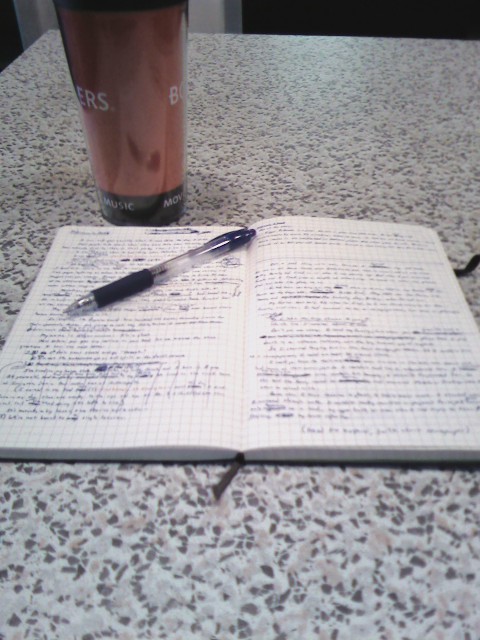
Here are six sure-fire methods you can use to break through your own writer’s block.Erik Deckers' Moleskine & Coffee Tumbler

  • Carry a notebook with you at all times: I keep a little black Moleskine notebook and pen with me close at hand. Whenever I have an idea or a thought that I know I’ll want to use later, I write it down. If I have several minutes, I’ll write as much as I can about the idea that inspired me. Oftentimes, when I’m stuck for a topic or struggling with an idea, I’ll pull out the notebook and refer to what I’ve already written. Or if I’ve written enough, the material from the notebook is what I needed in the first place. I just transcribe it and clean it up.
  • Write something else: Most writers I know get hung up on one particular project. They can’t write this blog post, they can’t write that article. So write something else. If you’re a professional writer, or even a persistent amateur, there’s always something else to write. So write that instead. It often gets the juices flowing, and you can break the block. When you feel it break, immediately switch over to the project you were stuck on.
  • Write it in an email instead: Most writers seem to get stuck because they’re writing for posterity. They’re thinking not only of The Reader, but The Reader in 50 Years. I don’t know how many journals and notebooks I started and then trashed because I thought, “what if my grandchildren read this in 50 years” or “what if someone wants to study my writings in 100 years? What will they find?” I immediately froze up, got two entries into the journal, and then quit. I lost count of the notebooks I’ve pitched because of this.
    If this happens to you, regardless of what you’re writing, write it in an email instead. Start it out with “Dear Mom, this is something I’m working on right now.” Then write your project/article/blog post to your mom. We love our moms, and they love us. But they don’t always get what we’re working on. So write this in terms your mom will understand. Then, go back and delete the greeting, and you’ve got your piece. Stop writing for The Reader and The Future Reader. Write for yourself. And your mom. And call her once in a while, she misses you.
  • Pick a different environment: I have two offices. My regular office and my favorite coffee shop. Some weeks see me in one office more than the other. And there are times that being in one place or the other is not conducive to getting work done. So I go to the other office. The change in environment is often enough to jolt me out of my stuckness. But if it doesn’t work — and I can usually feel the torpor coming on — I’ll go somewhere completely different. A different coffee shop, a friend’s office (Tip: Make sure they own the business. Don’t stop by your friend’s place inside the giant corporate building.) The new setting is usually enough to jolt me out of my complacency and get my creative juices flowing again.
  • Write nonsense:I’ve never been a fan of writing exercises to get warmed up. This isn’t running. I’m not going to injure my brain if I don’t write something “creative” before I start real writing. But that doesn’t mean there’s not some validity to just writing complete and utter crap for the first 20 minutes. If you’re stuck on a particular topic, write stream-of-consciousness stuff about your subject, maybe even the piece itself. As you write, do it in an over-the-top voice and style, like Sideshow Mel from The Simpsons. As you do this, you’ll find yourself breaking through the block and starting to write some real material. But don’t delete the crap. Cut-and-paste it into another document, and then go back and read it a couple days later. You may find some nuggets worth keeping.
  • Quit waiting to be inspired: Once you become a professional writer, you don’t have the luxury of having writer’s block. You also don’t have the luxury of “being inspired” or “waiting for the right moment.” Real writers don’t get inspired. Real writers plant their asses in their chairs and start writing. If the words aren’t coming, try one of the other five things I mentioned. If they still aren’t coming, put your head down, and keep writing. They’ll come to you eventually.
    Most professional writers ignore the writer’s block, because they have a job to do, and they do what they need to to get it done. There’s no such thing as an accountant’s block, where the figures just don’t add up. Or a chemist’s block, because they can’t get the formulas right. When you reach this level of writing, the words just come automatically, like breathing and eating. You may have times where your work is better, but as a professional writer, even your “good enough” should be pretty good.

What about you serious writers? How do you break through writer’s block? How do you prevent it? Has anything worked or not worked? And did any of those involve alcohol?

Update: After I wrote this post, I thought of one more method to breaking writer’s block, which I published the following day.

Author :  •  Content Location : Indianapolis, IN  •  Headline : Six Sure-Fire Methods to Break Writer's Block  •  Keywords : writer's block, writing, Moleskine,  • 

Social Media Marketing Lessons from a Broken Pilot G2 Pen

Broken Pilot G-2 .5 mm penWhat a $2 pen taught me about the power of strangers.

My pen died last week.

Normally, this is not big news. In fact, this may be the lamest thing I’ve ever written about, and that includes my “this is my first post” post on Blogger back in 2003.

Broken Pilot G2 .5 mm pen

It gave its life in service of my words.

But it’s a notable event, because I want to brag about my pen, and also talk about the power of strangers in the world of social media marketing.

Social media has turned the marketing world on its ear, because it has disrupted marketing altogether. It used to be that we needed professional marketers to tell us what was cool/great/awesome about a particular product. If the paid professionals told us, then it must be true. Or at least, if it wasn’t true, their shouting generally drowned out the one or two detractors who hated the product. In fact, if there was something we didn’t like about a particular product, we got our talking points from a competitors’ commercial, much like talking points in a political ad.

But several years ago, when we started using early social media, like AOL, and creating websites with comments, we started relying on each other to tell us what was cool/great/awesome about a particular product.

That’s how I became such a fan of my Pilot G2 pen. In 2004, I had just entered the world of Moleskine notebooks, way before they became douche-y, and realized I couldn’t use just any old pen in the same notebooks used by Hemingway, Picasso, and Bruce Chatwin. So I went to the Moleskinerie website, an online community for and by Moleskine fanatics, and looked for any recommendations for a good pen. As it turns out, a few months earlier, someone had posed that very question, and the fans weighed in. In fact, it was one of the most commented-on posts they had.

The commenters far and away raved about the Pilot G2 pen, the 0.5 mm size, so I bought one and immediately loved it. I loved it so much, I have used nothing but Pilot G2 0.5 mm pens for the last 7 years, even carrying the same exact pen for over four years (I cannibalized the cartridges from a box of G2s to replace the empty one, rather than just replacing the entire pen). That pen finally broke last summer, so I had to pull out a second one, which broke last week and leaked all over the place.

The cool thing about this is, for as often as I use this pen, to have only one break or go bad in nearly eight years, I’m very pleased. (I’m especially pleased I found it before it leaked into my shirt pocket.) That’s a pretty good testament to quality — to have one cartridge go bad in 8 years of using them? I’ve never even had a car that long without developing problems.

But the coolest thing? I bought this pen based on the advice of a bunch of people I had never met. I didn’t need the Levenger people telling me what was cool about the $237 Pelikan, or Faber-Castell’s four-color booklet on the long history of the Faber-Castell name. All it took was several random comments from a bunch of strangers who were passionate about a notebook and were choosy about their pens.

Traditional Marketers May Be Out of Work Soon

Marketers who haven’t yet embraced social media need to take note: you’re basically out of a job. Consumers are no longer being persuaded by your beautiful graphics and well-designed websites and brochures. We’re being informed by them, but we’re not being persuaded. Instead, we’re persuading each other.

Italian artist Luc on 24 hours of Le Mans - he sketched and wrote about the highlights of the auto race in his Moleskine notebook

We’re getting advice from each other on where to eat, what to watch, which computers to get for our kids, what cameras to buy, what cars to drive, and yes, even what pens to write with.

Marketers who want to take advantage of this should provide places for your customers to talk to each other. You should get your products and/or services into the hands of influencers. Moleskine went so far as to buy Moleskinerie.com and leave it in place, so Moleskine users could share what they were doing with their notebooks, like Italian artist Luc, who uploaded several photos of his sketches and notes about the 24 Hours of Le Mans auto race.

The smart marketers aren’t telling us what’s cool/great/awesome about their products. They’re providing places for the rest of us to tell each other. They’re sponsoring special niche networks on Ning and other platforms for their target audience. They’re getting their products into the hands of influencers. Or in the case of Fiskars and their Fiskateers (which we discuss in No Bullshit Social Media), they’re turning it into a niche community and a research and development channel. They’re basically letting us do all the work for them, and are getting out of the way.

Social media marketing is disrupting the way traditional marketing is done, and giving us all of the power. Now if I can just get someone to send me another pen, I’ll be happy.

Photo credit: Broken pen –
Moleskine Notebook – Luc on Not Not Tana

Content Location : Indianapolis, IN  •  Headline : Social Media Marketing Lessons from a Broken Pilot G-2 Pen  •  Keywords : social media marketing, traditional marketing, Moleskine, Pilot G-2 pen  • 

Why I Trust User Comments More Than Marketing Copy

I love my Moleskine notebooks.

I’ve been using them for over five years, have gone through at least 10 of them, am a regular visitor at Moleskinerie.com and Moleskiners.com, and know that it’s pronounced Mole-eh-skeen-eh(no, seriously).

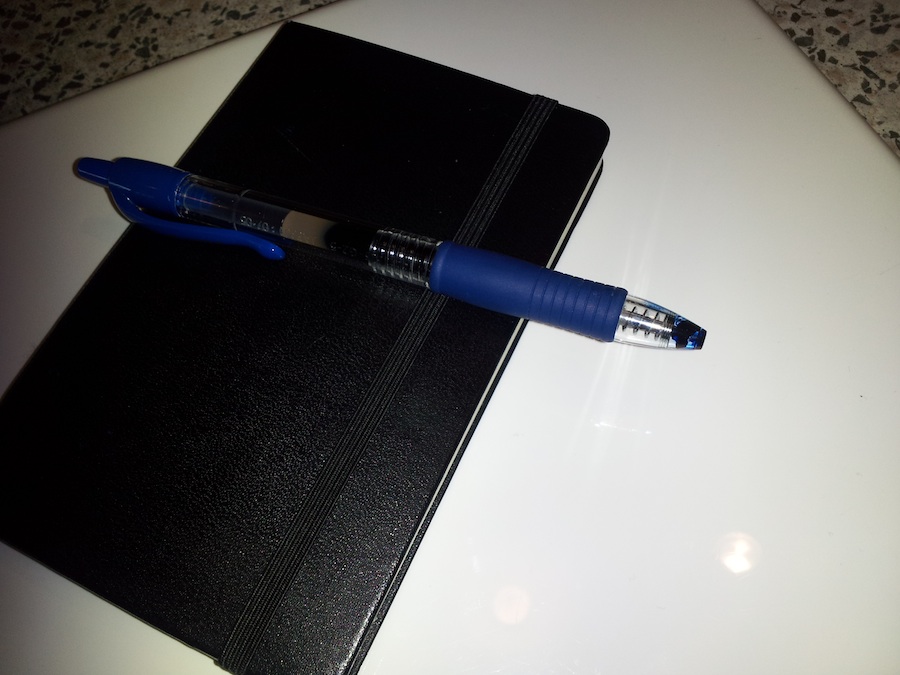
Pilot G-2 .05 mm pen with my Moleskine notebook

When I got my first Moleskine, I knew I had a special notebook, so I wanted to get a special pen to write in it. I did a quick Google search for “best pen for Moleskine notebook,” and the top result was a discussion on the Moleskinerie website (in fact, that’s how I discovered the site in the first place).

The number of comments that all touted the Pilot G-2 outnumbered all the other pens other people were recommending, so I took a leap of faith, and bought a small pack of Pilot G-2s, without ever testing a single one.

The writing was so smooth and the pen just glided across the page. I was immediately hooked. It felt like I was writing on butter with more butter. Since then, I have used nothing but Moleskine pens for all my writing. In fact, the one in the picture is the same pen I’ve carried for three years, I’ve just refilled it several times with barrels by cannibalizing a box of other G-2s.

My point is that I bought this pen based on user recommendations, not marketing copy, not magazine ads, not even the Pilot website. (Although, ironically, I bought the notebook because I liked the description on the little card about the history of the Moleskine.) I trusted the opinion of several strangers more than I trusted the opinion of a professional who is paid to tell me what is so awesome about their pen.

That’s what social media has done for us. It has changed marketing so that we no longer believe the professionals as much as we believe our own friends, or even strangers. I’ve had other people buy Moleskines just because I use them. And I was evangelizing about my pen to a friend of mine yesterday morning, and she probably had her own set by the afternoon.

So for those travel destinations, restaurants, and specialty brands who are still relying on traditional marketing to tell your story, divert just a little bit of your marketing budget to social media. Create a place where your fans can talk about how awesome you are, and can share those good experiences with their friends. Let other people do your marketing for you.

How about you? What makes you decide what to buy, where to eat, where to go on vacation? Do you visit the website or look at review sites like Yelp and UrbanSpoon? How much of a factor are user recommendations?

Author :  •  Content Location : Indianapolis, IN  •  Headline : Why I Trust User Comments More Than Marketing Copy - Professional Blog Service  •  Keywords : Moleskine, pen, user generated content, websites  •