Five Books Every Blogger Should Read or Own

Writers need to read if they want to improve. We learn, we borrow, we’re influenced, and in some cases, we steal.

Whether you’re a blogging veteran or wet-behind-the-ears rookie, there are certain books that will give you the knowledge, insight, and ability to be an effective blogger.

I am always reading books, sometimes in my industry, sometimes outside (my favorites are Christopher Moore humor novels and British murder mysteries), and trying to learn some of the techniques these writers use.

I have five books that I think every blogger should own, or at least read, if they want to improve their writing and become a better blogger.

These five books vary in industry and focus. They may tell you how to blog, how to write, or how to spell. But these are the five books that I have found to be the most valuable in my own professional blogging career.AP Stylebook 2011

  • Corporate Blogging for Dummies: My good friend, Douglas Karr (@douglaskarr), and Chantelle Flannery wrote this tome for corporate bloggers everywhere. And while the title suggests it’s for corporate bloggers, anyone who wants to be a blogger can learn from this one. It talks about why blogging is important, what tools are available, and even how to write blog posts.
  • The AP Stylebook: I’ve long maintained that blogging should follow AP Style when it comes to settling confusing questions of spelling, grammar, and punctuation. After all, we’re becoming citizen journalists, so we should follow journalistic style. The AP Stylebook can answer odd and esoteric questions, like the “proper” abbreviation of state names (AP style does not use the two letter postal abbreviations), whether to capitalize job titles (you don’t, unless you’re referring to the President of the United States), and even whether to use an Oxford comma (they don’t, but I think they’re horribly wrong about this one.)
  • Grammar Girl’s Quick and Dirty Tips for Better Writing: (affiliate link) I am a regular listener of Mignon Fogarty’s (@GrammarGirl) “Grammar Girl’s Quick and Dirty Tips” podcast, and recommend it to anyone who wants to improve their grammar and punctuation usage. Her book on Better Writing is also a must for anyone who wants to improve their writing mechanics, and avoid the little nagging errors that are so tiny but seem to throw everyone into a terrible tizzy. (I’m also a fan of the A Way With Words show on NPR/podcast, but they don’t have a book out. Plus, I made Grammar Girl’s “Wordsmiths” Twitter list, which I’m very proud of.)
  • Ernest Hemingway’s short stories: If you want to learn how to write with punch and power, read Hemingway. Especially his short stories. Especially anything with Nick Adams (Big Two-Hearted River). It has that punchy, short dramatic style that tells you how to craft short sentences that carry a lot of impact. Hemingway cut his teeth at the Kansas City Star in 1917, learning the style that made him the most recognized writer of his day. While some of his language and ideas are definitely from the early 1900s, his writing style is still something to study and learn from.
  • Once More Around the Park

  • Roger Angell’s Once More Around the Park: Roger Angell is the baseball writer for The New Yorker, and the master of the long meandering sentence. If Hemingway is a boxer, writing short, punchy sentences, Roger Angell is the old dude doing tai chi in the park on a warm Sunday morning, moving slowly but fluidly, and never stopping until he has achieved inner peace and gotten a low-impact workout in at the same time. Angell’s descriptions of baseball games, baseball fans, and even the parks is something even the non-fan will enjoy. It’s a book I definitely recommend reading, whether you’re a baseball fan or not. While the fan will appreciate his explanation of the games and the names of the fan’s childhood, the writer will appreciate the images Angell is able to conjure up, and the ease at which he writes long, smart sentences that carry the sounds and smells of a faraway day.
  • What are some of your favorite books for writers and bloggers? Are there any that you recommend? Any that you would stay away from? Leave a comment and let’s hear from you.


    Author :  •  Content Location : Indianapolis, IN  •  Copyright Year : 2011  •  Headline : Five Books Every Blogger Should Read or Own  •  Keywords : blogging, blog writing, Ernest Hemingway, Douglas Karr, Grammar Girl, Roger Angell, Associated Press, AP Stylebook  • 

It’s Still Corporate Blogging, Not the Social Web

Decoder Ring Theatre cast

Debbie Weil doesn’t like the term “blog” anymore. She wants to do away with it.

I was listening to Debbie on Doug Karr’s Blog Talk Radio from the end of February, and she said she doesn’t like the term “blog” anymore. Rather, she wants to call it the “social web,” since blogging has grown beyond a string of chronologically arranged thoughts by writers who wanted to journal publicly (I’m paraphrasing).

I couldn’t disagree more.

While blogging may be old hat to people like Debbie, Doug, and me, it’s still new to a lot of businesspeople, who are only just now hearing about it. They’re only just now hearing about social media. They have just recently quit calling it “Facespace,” and realize there might be something to allowing their employees to contribute to their website.

Amish buggy and cart

Some of these guys even have a website. (No, not the horse.)

Keep in mind, the business community still hasn’t embraced the Internet as a whole. According to Formstack, only 45% of businesses in the US have a website.

That’s a friggin’ website! That’s not even a blog.

I built my first website in 1994. On Adobe PageMill. It was horrible. But we were one of the first businesses in our industry to have one, and I’ve been online ever since.

It’s 17 years later, and more than half of the businesses in this country still don’t have a website. They’re certainly not thinking about a blog. Maybe they’ve heard of it, maybe they know someone who’s got one. But they’re not seeing the need to have one.

And if that’s the case, they’re certainly not ready to embrace the social-ness of their website, and stop referring to it as a blog, since they don’t even have one.

Decoder Ring Theatre cast

Cast of Decoder Ring Theatre, an audio theatre company in Toronto. They're airing 6 of my radio scripts this summer on their podcast.

I’ve seen this “we’ve got to stop calling it by the old name because it’s not accurate anymore” phenomenon so many times before in so many different industries. Radio theatre is no longer called “radio theatre” anymore, it’s called “audio theatre.” Why? Because you don’t listen to these plays on the radio anymore, you listen to them via streaming audio, podcasts, mobile phones, CDs, and even tapes. Who the hell uses radio?

The audio theatre groups I’ve been a part of have been arguing about this for the last 10 years. (In fact, if I want to rile them up, I’ll bring it up again, like shaking a jar of angry bees just as they’re starting to calm down.) But the only people who care about the distinction are the practitioners themselves. Most of the non-audio theatre public still calls it “radio theatre,” because that’s the name they know. That’s how they refer to it when they talk about what they, their parents, or their grandparents listened to.

When I ask them about “audio theatre,” they stare at me blankly, until I say “that’s the new word for radio theatre.” Then they get it. Audio theatre’s biggest marketing blunder was when they stopped calling the art form what the typical listener was calling it, and I think it played a role in the diminished acceptance of the art form, even as audiobooks and other forms of audio entertainment and education have taken off.

If we want corporate blogging to continue to grow, we need to keep calling it a “blog” for as long as the business community has not fully embraced the Internet as a whole. Once everyone has a website and a blog, then I’ll call it a “social web.” Until then, I’m going to stick with the term the rest of the business community is already using. The social media pros can call it whatever they like.

Photo credit: pullarf (Flickr)

Author :  •  Content Location : Indianapolis, IN  •  Headline : It's Still Corporate Blogging, Not the Social Web  •  Keywords : corporate blog, corporate blogging, Debbie Weil, Douglas Karr, social web, websites  • 

Five Secrets I Used to Trick Klout. Sort Of.

It’s really been grinding Douglas Karr’s gears that my Klout score is higher than his, even if it’s only by a couple points or so.

He mentioned his anguish during a recent talk at a Northwest Indiana tweetup, and then again on his Marketing Tech radio show, so I know it’s getting to him. Still, Doug has set the bar plenty high, so to even come close to him on something is a pretty big deal, let alone beat him. (And since it’s the only thing I’m going to beat him in — ever —  I want to hold on to this for as long as I can.)

It’s possible to game the Klout system, but it takes a long-term strategy. Sure, you can try to work it in short bursts, but the system will weed out people who don’t stay dedicated, mostly because they use cheap techniques that take too much energy and effort for an extended period of time. So I came up with my own system that will work, by tricking Klout into thinking I’m actually a model Twitter citizen. Here’s how I did it.

1) Be choosy about who I follow.

One of the things Klout pays attention to is the follower/following ratio, how influential my audience is, and whether they take action on my tweets. Having a big network doesn’t do me any good if I’m following junk accounts, abandoned accounts, or spammers.

I use Manage Flitter to unfollow people who don’t follow me and haven’t tweeted in the last three months. This way, I clean out all the deadwood on my network. Why run up my following count on people who won’t use the system more than once every 90 days? They don’t provide value, so they’re out.

I also carefully consider whether to follow someone. I’ll follow people if they provide good value, if they are real people and not brands, and if they don’t tweet crap, constant news headlines, or motivational quotes. I avoid the spam accounts, bot accounts, and the accounts that follow 2,000 people but have never written a single tweet. By following people who know how to use Twitter properly, my network is made up of people I’m happy to read and retweet.

2) Be choosy about who follows me.

I am actually a little choosy about people who follow me. I will “block & report for spam” any porn accounts, anyone who uses Twitter to promote their MLM or money-making system, or is going to do nothing but sell crap. By eliminating these people, my network is more engaged and more likely to read my tweets and react to them. I don’t need to artificially boost my follower account by letting in these spammers and fakers, and I would certainly never join one of those “find followers fast” networks that promise to boost my numbers.

3) Tweet good stuff.

If you want people to pay attention to your stuff and retweet it, make sure you say something useful. I will never tweet out motivational quotes, daily “good morning tweeps” messages, or news headlines after news headline. Instead, I send out things that will be useful, interesting or funny to my Twitter network. Since my network is made up primarily of social media folks, writers, and people with a sense of humor, I make sure at least half of my tweets will be appealing to one or more of those groups. The other half are real conversations and responses to other Twitterers.

4) Retweet good stuff.

I set up a few columns on my TweetDeck to monitor people I want to pay careful attention to. I have columns for people in my state, other social media pros, humor writers and comics, and PR and marketing pros. Whenever someone in those groups tweets something useful, interesting, or funny, I retweet it. I also respond to their conversations with thoughtful responses, and answer questions.

This introduces these new voices to my own network. And since I have earned my network’s trust by only tweeting out good stuff, they’ll read and respond to those retweets as well. This helps expand their networks by connecting these people to each other, which can enhance my own reach as well.

5) Write good blog posts.

Of course, the best way to get people to retweet my stuff is to write good blog posts in the first place. People don’t retweet my vacation photos. They don’t retweet posts where I talk about what I do, what my plans are for my company, or what kind of magazine I would be. I have to write useful information, like exploding grammar myths, how social media is not an entry level position, or an SEO strategy using microsites and specialty domain names. By writing useful posts like these, and promoting them on Twitter, people are more willing to retweet them to their own networks.

So that’s my strategy for gaming my Klout score. By spending an hour writing a single blog post, searching for valuable information to tweet and retweet, and by sending it all out to a drum-tight network that I insure is made up only of valuable and interesting people, I’m able to trick Klout’s algorithm into boosting my overall score without having to work very hard to. . . ah, dammit.

Author :  •  Content Location : Indianapolis, IN  •  Headline : Five Secrets I Used to Trick Klout. Sort Of.  •  Keywords : Douglass Karr, Klout, social media, strategy, twitter  • 

5 Types of Presentations You’ll Find at Blog Indiana 2010

I’ve been Blog Indiana 2010and attended several of the presentations here. Our sessions tend to be the same kind of presentation, although they cover a wide variety of topics. Whether it’s at a conference, a seminar, or a corporate presentation, presentations tend to follow the same formula.

Erik Deckers at his presentation at Blog Indiana 2010

Me at my presentation at Blog Indiana

If you’re interested in becoming a public speaker, there are five basic types of presentations you could give.

    1. How to: Basic tips, how-to, suggestions, and strategies. These are great for sharing information, and to establish your expertise. Title your talk something 7 NEW Secrets To Promoting Your Blog Through Social Media. People who are interested in sessions like this are looking for concrete, nuts-and-bolts ideas. This is the kind of talk I gave this year.
    2. Case Study: These historic talks show how you got from point A to point B, and the lessons you learned on the way. They can be inspirational or a cautionary tale, and if they’re done well, people can get both types of information from them. If you’re a great story teller, then I suggest you give this a try. Do a case study of a single client, or tell a part of your story (Note: We didn’t ask for your life story), or even 3 -4 short stories that are all centered around a single point. This is also a good place to ask for discussion from the audience. Paul Poteet gave this as a keynote presentation this year.
    3. Futurecasting: This is where the futurists and 30,000-foot-view thinkers can really shine. You can talk about what you think the future of your industry will be. If you make enough accurate predictions, you’ll be one of the hot properties on your industry’s speaking circuit. This presentation may look back historically to make its point, but a futurecasting talk is going to discuss what they believe will be happening over the next few years.
    4. Educational: Educate your listeners about a topic, idea, or tool. It may not be as in-depth as the how-to, but it’s great for teaching beginners about a particular concept. An informative session will teach people about Twitter — why use it, how it works, who uses it — while a how to session will cover the specifics of using it — signing up, following people, sending tweets. Doug Karr told listeners why their site sucks, with his Why Your Site Sucks educational session.
Jason Falls, Jay Baer, and Chris Baggott participate in a panel discussion at Blog Indiana 2010.

Jason Falls, Jay Baer, Chris Baggott (standing)

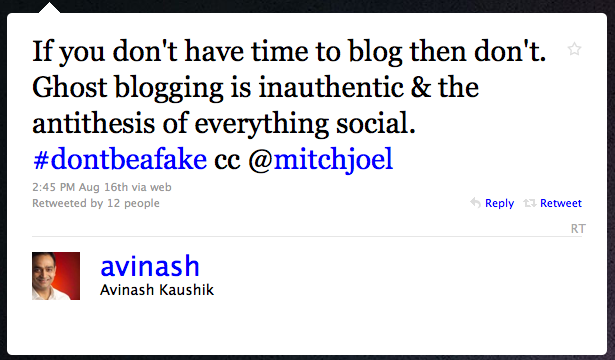
  1. Issues: Every industry has its issues and controversies, and these are a great place to address them. This can be a panel discussion, a single person facilitating an audience discussion, or even one person presenting one or both sides of the issue. Fellow ghost blogger Lindsay Manfredi talked about ghost blogging this year, which has been a big hot button issue for our industry for a few years. Chris Baggott, Jason Falls, and Jay Baer participated in a panel discussion to “dispel the myth of the blog reader.”
Author :  •  Content Location : Indianapolis, IN  •  Headline : 5 Types of Presentations You'll Find at Blog Indiana 2010  •  Keywords : Blog Indiana, blogging, conference, Douglas Karr, Indianapolis, Lindsay Manfredi, speaking  • 

Why Are There So Few Trend Setters in Social Media?

I noticed an interesting trend, and I’m ashamed to say I’m part of it.

There are very few trend setters in social media. Very few pioneers. We’re mostly settlers.

We all try to be as cutting edge as we can, but we’re sometimes at the mercy of what everyone else is talking about. We pay close attention to luminaries like Chris Brogan, Jason Falls, Jeremiah Owyang, and Gary Vaynerchuk. We wait to see what they’re talking about, and we talk about that. And we all hold up their discarded sandals, like that great scene from Monty Python’s Life of Brian.

I do it too. I see an interesting article on Jason’s blog, and decide I’ll comment on that. Or I’ll see something Doug Karr wrote in the Marketing Technology blog, and piggyback off that. But it’s rare that I write about issues that those guys didn’t write about first.

I’ve done it a few times — crisis communication, entre-commuting, or getting spanked by the Canadian Council of PR Firms — but I’ve also jumped solidly on the bandwagon, pushing women and children out of the way so I could get a comfy seat.

Unfortunately, this is a rather centralized industry. We only have a few tools we use with any regularity — Twitter, Facebook, LinkedIn, Google — and so we all talk about how we use them, and the great things we’ve learned, or the trends coming our way.

I want to stop doing that. I want to be that one guy in the crowd who says, “Hold up the sandal!”

I can’t say I won’t keep doing following the pioneers, but I’m going to make a conscious effort to do it less. That’s one reason I didn’t post anything on the blog for a couple of weeks. (Yeah, yeah, that’s the reason.)

So it may mean I post fewer times per week on the blog. It may mean shorter posts, and fewer how-to posts. But we’re going to try to make our own path as much as possible, even if it runs adjacent to someone else’s. We’re just going to quit following the well-worn path that some people have meandered down.