Hooray/Dammit, I’ve Been Plagiarized: What to Do When You’ve Been Ripped Off

Kim looks very stressed out, after finding her work had been plagiarized

Yesterday, I discussed how to find out if you’ve been plagiarized, or at least had your stuff used without permission, but with your byline intact.

When that happens, it’s not uncommon to feel both flattered and angry at the same time. Jason Offutt called the feeling “flangry.” On the one hand, you’re pissed that your stuff was stolen. On the other, you’re flattered that it was good enough to steal.

Kim looks very stressed out, after finding her work had been plagiarized

Flangry: adj. The combination of being flattered and angry, after finding some jackwagon stole your work and passed it off as their own.

Regardless of how you feel, it was wrong of the other person to take it, and you have rights. Here are the steps to take if you’ve been stolen from, especially if they removed your byline, and tried to pass it off as their own.

(Remember, plagiarism is when someone passes your work off as their own; copyright violations are when they use your work without permission, but may leave your name intact.)

1) Immediately create a PDF or screenshot of the page.

On a Mac, select Print, and then set the output to be a PDF instead of a printed page. On Windows, if this option isn’t available, download CutePDF and output the page to a PDF. Next, save an html copy of the page. And if you have it, save it to Evernote. If you’re a designer or photographer, and one of your images is being used, take a screenshot. You need to do this, because as soon as the plagiarist gets a hint of what’s going on, all stolen content will disappear, and you’ll want proof of what happened.

If they have already removed the content, do a search for the original phrase that brought you there, and then hover over the Google results. A preview window should pop up in the side bar, as well as the word Cached. Click Cached, and you’ll see the older version of what Google has in their index. Print that to a PDF or take a screenshot.

2) Start researching their other content.

The only reason I heard about the two instances where I had been ripped off this month is because the person who first found he had been ripped off that that other stuff might be stolen too. In both cases, they researched all available columns they could find and discovered the original authors. They also saved copies of every stolen piece they found, as per #1.

3) Contact other victims.

If you find that other writers have been stolen from, contact them and let them know what’s going on. You can do it as a group email, or you can do it as a one-to-one email. Explain the situation clearly and without a lot of preamble, but recognize that some writers may ignore your email. One author in this most recent case of plagiarism thought the initial email was spam, so he ignored it. It wasn’t until he got a call from a reporter for a newspaper story that he realized it was real.

4) Present a unified plan of action, and adopt the role as leader.

This may seem a bit unusual, but it’s important if you discover that several people have been stolen from. If you’re the only victim, then you need to lay out a plan of action before you do anything. If there’s more than one of you, there should be one point of contact between the publisher and/or editor, and the group whose work was stolen. If the editor is being bombarded by 5 or 10 different people, then they may be less likely to be helpful. Be patient and cooperative, and the publisher is more likely to help you.

In the Jon Flatland situation, one of the writers went off-script and contacted the plagiarist directly. As a result, Flatland realized he’d been caught, and tendered his resignation via email admitting to a single act of theft, before his publisher ever got to the office. As a result, we (and the publisher) missed out on the chance to hear the plagiarist’s excuses, get an apology, and to royally ream the guy out.

This also means you need to hold off on putting the word out on social media and your own blogs until you’ve gotten some answers from the publisher. Trust me, this is so heinous a crime that a media publisher will drop everything to deal with it, because they know they’re facing some serious problems. You shouldn’t have to wait that long. Be patient, contact the publisher, and start writing your summary of the situation for your blog. Publish it when you get a final resolution from the publisher or editor.

5) Don’t start screaming about lawyers.

Chances are, if your stuff was stolen by someone in the traditional media, they have a boss and/or peers who all know it’s wrong. Journalists are trained not to steal. It’s the number one sin they could commit, so there are mechanisms in traditional media settings to bring them to justice. Instead, rat them out to their bosses, and they’ll take care of the rest. Ask to be updated on a regular basis, and pass that information on to your fellow victims. Chances are, the publisher will recognize the legal ramifications of someone on their staff stealing their stuff, and they will be eager to make everything right, just so you won’t sue them.

Instead, be patient, and wait for nature to take its course. If cooperation from the publisher is not forthcoming, or they refuse to cooperate, that’s when you pull out the big guns. Get a lawyer to write a nasty letter for you, and see what happens.

6) Use takedown notices and invoices for one-person operations.

Occasionally you’ll see your stuff used in someone else’s one-person operation. Whether they swiped your stuff without attribution, or your find it with your name and website included, there are times you need to defend your property and your copyright.

  • If they included your byline, ask them to take it down by including what it would cost to normally run your piece. Most people will comply if they think you’re going to charge them $150 just to run a single piece they copy-pasted; more if they took more than one piece.
  • On the other hand, there is some benefit to having a link out there that leads back to your website. If the site is not a spammy site, or it links to a lot of unrelated garbage, leave it up. You’re getting a little SEO (search engine optimization) juice out of it.
  • If they stole your stuff outright, let them know that you know. Give them 48 hours to remove it fully. If they don’t comply, get a lawyer to send a letter. Be sure to save a copy of that letter so you can use it later for future instances. (Get the lawyer’s permission to reuse it, of course!)
  • Also send a note to their ISP and/or web host. Let them know that one of their customers has posted unauthorized, copyrighted material on their site. Include the name, site name, and exact URL of the material, as well as URLs or copies of your original material. While SOPA may have died, most ISPs are still concerned about hosting stolen material, and will help the content owner. If they don’t, get the lawyer to write you another letter.

7) Suing for this stuff is hard

While you may think that a lawsuit for major theft is a good idea, keep in mind that it’s expensive and very difficult. And in most cases, it’s going after the wrong person. While the publisher is often responsible for the content of the newspaper, it’s the writer who did all the stealing, and tricked the publisher. You can sue the publisher, but they’re usually on your side (at least insofar as they don’t want to get sued and will cooperate with you to avoid it). So you’ll look like a real d-bag if you sue someone who tried to help you out.

Plus, there aren’t many lawyers who are willing to take these cases on contingency, so that means you have to come up with a few thousand dollar retainer to hire them. If you’ve only had a couple pieces stolen, it’s not worth it. If you didn’t actually lose anything monetarily or opportunity-wise, it’s not worth it. But if someone ripped off an entire book that went on to become a NY Times best seller and made the author fabulously wealthy — and you can prove your entire manuscript was stolen, because you registered it with the US Copyright Office (also read Wikihow’s “How to Copyright a Book“) — then, by all means, find an attorney and pursue it.

For the most part, people are honest. If they took something without permission, it’s because they don’t have a basic understanding of copyright laws (Tip: Just because you found it on the Internet doesn’t mean it’s free.) If you address it with someone — be polite, at least the first time — they’re probably going to be willing to do as you ask.

But occasionally you’ll find someone who knows it’s wrong, like a trained journalist, and they stole from you anyway. Follow these steps once you , and the action you think you should take. Hopefully you’ll never need it.

Author :  •  Content Location : Indianapolis, IN  •  Headline : Hooray/Dammit, I've Been Plagiarized  •  Keywords : plagiarism, plagiarized, Google, Jon Flatland, Steve Jeffrey  • 

How to Find If You’ve Been Plagiarized

I’ve had my humor columns plagiarized three times in the last 10 years, the last two happening within 25 days of each other. The most recent one happened Monday, and ended with the plagiarist resigning his position as a newspaper publisher 24 hours later.

In the first case, I found out about it myself by doing some basic Google research. The last two, I was emailed because someone else did the same thing, and then did more diligent research, and identified a number of other humor writers who had been stolen from.

If you’re worried about your stuff getting stolen, here are a few things you can do to protect yourself:Red-headed kid with a magnifying glass

1) Google unique phrases and sentences.

The way most people check for plagiarism is to do a Google search for a unique phrase. The lede sentence here, “I’ve had my humor columns plagiarized three times in the last 10 years” is unique — no one has ever used it, in fact — so I would pop something like that in the Google search box.

But, and this is important, you have to put quotes around the entire sentence. This tells Google, “I want to find only instances of these words in this order. If they’re not in this order, don’t serve me the results.” That means sentences that say cooking columns instead of humor columns won’t show up.

Check at least three sentences per piece, just in case one of them was edited. And don’t search for sentences that contain the following:

  • Specific locations: One of my plagiarists changed my city names to his city names so they would be more specific to him.
  • Specific names: Any semi-smart plagiarist is going to know enough to change your spouse’s name to their spouse’s name. Same with kids, pets, and friends.
  • Dates: Unless it’s something historic, don’t search for dates. If you talk about being in college 15 years ago, that will get changed to suit the writer’s personal timeline.

Pick unusual sentences that seem almost innocuous. A string of words that is both unique and unnoticed at the same time. “I snapped my computer lid shut and took a drink” is a safe bet, “”But I’ve never been to Tallahasee!” Gladys shrieked.”

2) Search with Copyscape.com.

I was playing around with Copyscape for a couple of days, and quickly hit my free searches per month limit. They only charge $.05 per search on the Pro plan, so it may be a good purchase if you’re especially worried about being ripped off. It searches all content on a whole web page, rather than unique phrases, and it looks for any matching or near-matching phrases, not just ones you specify.

You can also drop in blocks of text to search for, which is useful if you work with freelance writers or teach high school and college classes.

The same company also has CopySentry.com, which will do regular searches on pages you’ve already written. It does a regularly scheduled search for any possible matches, and emails you the results.

3) Put a copyright statement with your name on every piece

Admittedly, this is like putting a sign on your window that says “please do not steal my TV,” but this may have the desired effect on one or two people. It also gives you a leg to stand on if you ever have to defend it legally. After all, the thief had to remove the copyright statement in order to publish it, so they can’t argue “It was like that when I found it.”

Two caveats about plagiarism

1) It’s not plagiarism if your name is still on it. If you find someone has lifted your stuff and left your name intact, that may be a copyright violation, but it’s not plagiarism. You’re still getting credit for your work.
2) You can’t steal an idea. Someone else may have — and probably has had — an idea on whatever it is you wrote about. If you’re talking about “five ways to rock your next presentation,” it’s been done. If you’re writing about “paintings you must see before you die,” it’s been done. In fact, any idea you had has already been done. Unless you invented something that has never been done before, you’re going to have a tough time proving that you had your idea first. If this is the case, speak to an Intellectual Property attorney.

Once you’ve found out your stuff has been lifted, your first instinct may be to go on the warpath and hammer the thief like the fist of an angry god. Hold that thought. Tomorrow, I’ll talk about what steps to take if you find you have had your stuff stolen. (Preview: It’s not to immediately confront the thief. There’s some work involved.)

Photo credit: jamesmorton (Flickr, Creative Commons)

Author :  •  Content Location : Indianapolis, IN  •  Headline : How to Find If You've Been Plagiarized  •  Keywords : plagiarism, plagiarized, Google, Jon Flatland, Steve Jeffrey  • 

Yet Another Serial Plagiarist Busted by Google

March is International Serial Plagiarist Month, apparently. Because it’s the month that I discovered my humor columns being ripped off by, not one, but two newspaper editors in North America.

Yesterday morning, I received an email from humor columnist, George Waters, who said that we, plus 12 other humor writers, had been ripped off by Steve Jeffrey, publisher of The Anchor in Chestermere, Alberta, Canada, in 42 columns out of the last 52 weeks.

Not just a line here or there, or one of the funnier jokes. He did a complete copy-and-paste job, made some edits to give it a local flavor, and then published it under his name.

(You can read a very thorough writeup of the plagiarism situation by Andrew Beaujon of The Poynter Institute, a journalism school in Florida.)

Bicycle thieves and Dutch police

If only plagiarists were this easy to catch.

Earlier this month, Jon Flatland of the Blooming Prairie (Minn.) Times was found to have been plagiarizing humor columns and blogs from several humor writers, possibly as far back as 15 – 18 years ago. He resigned in disgrace, and his publisher notified the Minnesota Newspaper Foundation and another writer notified the North Dakota Newspaper Association about his plagiarism. He’ll never work in newspapers again.

And 25 days later I get another email that I have been stolen from yet again, but I was only ripped off twice. Fellow humorist Sheila Moss had 24 columns lifted.

How do we know? Because Waters copied every single column published under Steve Jeffrey’s name from the last 52 weeks — the online archives for anything beyond that were not available — and Googled unique phrases from each and every piece, and found columns that were written beforehand by someone else. That’s how he found me and three Canadians, eight Americans, and one Australian. I’ve also used Google Cache to find copies of my columns in The Anchor’s Issuu.com PDF newspapers. (Note: Just because you delete something from your website doesn’t mean it’s gone; Google saves this in their cache for weeks and even months.)

But that didn’t stop Jeffrey from expressing bewilderment at the accusation that 80% of his columns were found to be nearly identical to columns by other people. According to Beaujon’s article:

Reached by telephone in Alberta, where he said he was about to travel to British Columbia for two weeks, Jeffrey seemed baffled by Waters’ allegations. His column, he told me, doesn’t even touch on comedy. “I don’t write humor, and I don’t blog,” he said. “I write a ‘Lighthouse’ column, but ‘Lighthouse’ is about local politics.”

Well, the Lighthouse columns I read from August 25, 2011 and October 13, 2011 looked an awful lot like mine, with a few details changed. One is from 2003 about the three hours I worked as a telemarketer in college, and the other was an open letter to a fictitious fellow traveler to Boston. In 18 years, I have never written about local Canadian politics.

God Save Me From Newspaper Editors

As blogging has grown in popularity, bloggers have been increasingly under attack by the media. Bobby King, president of the Indianapolis Newspaper Guild, once called us the animals in the blogosphere. And yet, it’s not the bloggers, but the highly trained professional newspaper people that have stolen from me.

Three times.

In all the years that I’ve been a humor writer, I’ve had my work stolen by three different newspaper editors. (I discovered my work being lifted back in the early 2000s by an assistant editor of a weekly paper in Ontario.)

That means Canada leads the U.S. in theft of my work, 2 to 1.

But I have never found a legitimate, serious blogger stealing anything of mine. (That’s not to say it hasn’t happened, but I’ve never found it.)

What’s most frustrating about this is that I’ve been writing my newspaper column for little to no pay for all these years, publishing it in 10 different newspapers around Indiana, and in The American Reporter online. I do this because I love writing, and I love making people laugh. Humor writing has never been about the money. I’ve tried self-syndicating, but found very few takers. “We don’t have the budget,” is the frequent answer. So I gave up trying to earn money from it, and just do it because I love it.

So it frosts me when editors — bearers of journalistic ethics and integrity — profit dishonestly from my work. They collect salaries, they collect advertising revenue, and they make their living by stealing something they weren’t willing to pay me for.

I still consider journalism to be a noble profession, and I still think editors play a vital role in informing the public. I won’t paint all editors with the same overgeneralizing brush that people like Bobby King have painted my profession. Hell, I got my “professional” writing start thanks to one newspaper editor in northern Indiana who took a chance on me 18 years ago, so I am forever grateful to editors as a whole.

But I’m also getting sick of media professionals decrying the state of the blogging industry, when it’s their brethren who keep stealing my stuff. If you want to talk about “the animals in the blogosphere,” let’s first have a conversation about “the thieves in the editors’ offices.”

Otherwise, get your own house in order before you attack mine.

And quit stealing my stuff.

Fallout from Steve Jeffrey’s Serial Plagiarism

Here’s what has happened since the theft was first discovered:

All archives from The Anchor’s website were removed immediately after the Poynter.org story, as have all of their PDF versions from Issuu.com.

I’ve been in touch with the Alberta Weekly Newspaper Association and I launched an official complaint with the Alberta Press Council. I don’t know what results those will bring, but hopefully we’ll see some sort of investigation and resolution.

UPDATE: According to an article in the Calgary Herald (“Calgary-area newspaper editor resigns following plagiarism allegations“, Steve Jeffrey resigned his position as publisher of The Anchor today (Tuesday). According to the article,

“I really don’t have any way to defend myself. I did use articles for inspiration, but thought that I had changed the content enough to comply,” (Jeffrey) said in an e-mail to the Herald.

Ripped Off Columnists

All links point to at least one stolen newspaper column or blog:

Stories about Steve Jeffrey’s serial plagiarism:

Because I believe in thoroughness and the power of search engine optimization, you can also read stories about Steve Jeffrey’s serial plagiarism at these blogs and newspapers:


Photo credit: welcome2bo (Flickr)

Author :  •  Content Location : Indianapolis, IN  •  Headline : Yet Another Serial Plagiarist Busted by Google  •  Keywords : serial plagiarist, plagiarism, Steve Jeffrey, newspaper, humor columnist, humor columns  • 

Employers Should NEVER Be Allowed to Ask for Facebook Passwords

This whole “employers asking for job candidate Facebook passwords” thing is complete bullshit.

Not only is it an infringement of personal privacy, it’s unconscionable that they would make a person’s private life part of that hiring decision.

In some cases, employers are even asking current employees for their Facebook passwords as a condition of their continued employment. It was bad enough when they required employees to friend someone from the company, now they’re demanding total access to the things you wanted to keep hidden from everyone but close family.Doorway to the International Spy Museum, Washington DC

That’s not to say that a person who is wildly inappropriate or shows poor decision making skills should still be hired — if you’re stupid enough to post your half-nude keg stand photos for the entire world to see, maybe you don’t deserve that job as a kindergarten teacher — but if you’re smart enough to keep it private, or better yet, not to put yourself in that situation in the first place, then employers shouldn’t be snooping around.

Employers are free to Google a potential candidate to see what they can find, for the same reason. If you put your stuff online online, you should be willing to stand behind it. And if you wish you had never put it out there, there are ways to hide it. Or at least make sure it’s not seen by people who think a YouTube video montage of you yelling at children and puppies makes you a horrible person.

But as far as I’m concerned, Facebook is like your house with a giant picture window. You would never parade naked in front of the open window, but you have some things that you do that you would prefer to keep private and personal. Those are the things you keep in your desk, in a closet, or under the bed.

Yet, employers asking for Facebook passwords are basically asking for the key to your house so they can root through your drawers, read your diary, flip through family photo albums, look at your bank and credit card statements. They want to see what they can find, to determine whether they should hire you in the first place, or let you keep your job. They don’t have any reason for this search. They don’t think there’s anything incriminating to find, or have any evidence that you’ve done anything wrong. They just want to see if there is.

You would never let the police put a speed tracking device on your car to tell them when you speed. You wouldn’t let them come into your house uninvited for a quick peek. Why would you give employers the open opportunity to waltz in whenever they’d like, to see if there’s anything they maybe ought to be concerned about?

Don’t give me this “if you haven’t done anything wrong, you should have nothing to fear” bullshit either. I haven’t done anything wrong, and yet I’m not going to let anyone into my life, house, or Facebook account to snoop around in the hopes they can find something incriminating.

I’ll admit that there may be some sensitive jobs that require a background check. But the thoroughness of this type of probing make Facebook snooping look like a quick drive-by glance through your front window at 30 miles an hour.

I have not met a single individual who supports this. At least no one who is facing the fear and desperation of unemployment, or the desire to keep their job. Nor anyone whose job it is to professionally argue that Facebook snooping should be allowed. If anyone thinks it’s okay to give your employer unfettered access into your personal life in order to get/keep your job, let me know.

But if you, as an employer, are going to snoop around my personal Facebook account, then by all means, let me snoop around yours. Give me your password, and I’ll poke and prod at my leisure. Maybe I won’t find anything salacious, but do you really want someone poking around to see all your private messages and the photos that you marked “friends only?”

We still have a relatively fragile economy, and people have been unemployed for months, or face a devastating financial loss because of new unemployment. For employers to dangle the golden carrot of survival in front of a candidate in exchange for the ability to snoop into a person’s private life are slimy, underhanded, and extremely unethical. There is no earthly reason, short of working for a federal agency where you’re allowed to carry a gun or know state secrets, that employers should be allowed to become electronic voyeurs into someone’s non-work life.

Companies that do so face the threat of lawsuits from disqualified job candidates, loss of corporate Facebook accounts, and possible legal action as Congress and several states seek to make this against the law.

Photo credit: Tony Fischer Photography (Flickr)

Headline : Employers Should NEVER Be Allowed to Ask for Facebook Passwords  •  Author :  •  Content Location : Indianapolis, IN  •  Keywords : Facebook, social media, privacy, employee rights, snooping, Facebook passwords  • 

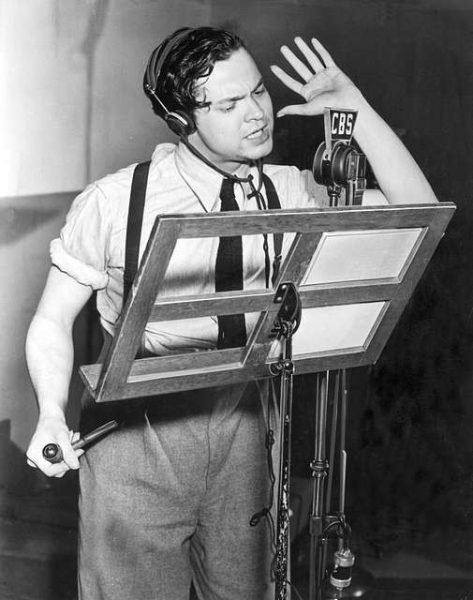
How a Radio Theater Troupe Uses Social Media to Gain a Worldwide Audience

Social media has played a big part in the success of Decoder Ring Theatre, a Canadian radio theater troupe that produces audio plays reminiscent of old-time radio. Their two mainstay characters, Red Panda and Black Jack Justice live in Toronto (Red Panda during WWII, and Black Jack a few years after). Decoder Ring Theatre also produced six of my radio plays last summer.

I interviewed Decoder Ring founder and leader Gregg Taylor, and asked him about how social media has played a success in what they’ve done, and what their strategy has been over the years. These are his answers.

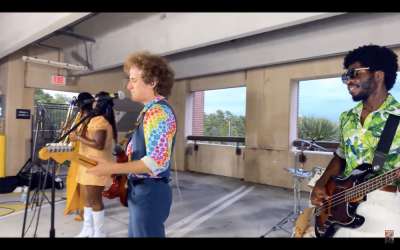
Decoder Ring Theatre cast

Cast of Decoder Ring Theatre, an audio theatre company in Toronto.

1) How much of your success do you attribute to your own social media networks vs. sheer doggedness and word of mouth?

I kind of lump our social media presence under the broad heading of “sheer doggedness and word of mouth”, so it’s hard for me to seperate the two! Really, Facebook and Twitter have evolved into ways for us to be a part of the daily lives of those listeners who want that kind of relationship.

I started both pages at the specific requests of listeners, and I do try and keep the content on each a little different, for the benefit of those who follow both pages and also our fan boards at audiodramatalk.com.

Yes, I certainly do let our corner of Facebook and Twitter know when a new episode goes up, or a new book comes out, because let’s be honest, everyone loses track of these things sometimes, even when you’re as predictable as we are (new episodes on the 1st & 15th of every month, year-round!).

But I do want our social media presence to be just that… social. Facebook offers those listeners a chance to react not just with me, but with each other, to discuss what they like and what they don’t (and of course, in the process, have us appear in the timelines of their friends)… Twitter started out as a little more “behind the scenes/this is what I’m working on right this second”, and still is that kind of sneak-peek for those interested, though by extension it also has become a “welcome to my brain”… again, it’s like the DVD extras for the really big fans. I think we pick up some new listeners that way, but for me, it’s about the enhanced experience, being a part of the extended Decoder Ring family.

2) Are you seeing a lot of traffic coming in from outside referrals (i.e. Twitter, Facebook), as opposed to repeat listeners? Where do they come from?

Listenership has been solid and steady. It’s often hard to tell where it comes from, in a way… when you’re just starting out and you get an extra 80 downloads it’s like “Holy Hanna, look at that spike!”. It has to be a pretty big event for it to really register as an abberation in our patterns these days. Well, big by our standards anyway. I think we’re getting to be big enough now to really properly understand just how tiny we are… we’re comparing ourselves to outfits with gobs of money and wondering just what we’d have to do to make an impact. There have been some serious spikes.

Roger Ebert gave us a shout-out a year or two ago, and that was nice. He tweets a LOT though. I’ve followed him on and off, and there’s no way you can check out everything he mentions unless you have a powerful amount of time on your hands. Still, I have a lot of respect for him and for him to think we were worthy of a mention was exciting.

I guess the biggest single event in terms on new listenership was when we unexpectedly got profiled by the BBC’s technology program last year… just a little piece, but it played all weekend on BBC and around the world on the world service. That was large. Our UK numbers passed Canada immediately and never looked back, which is pretty surprising, considering that the Red Panda Adventures is pretty much the only pulp hero universe in which you’ll hear about the Dieppe Raid, or have a cameo by WLM King, our wartime PM.

I guess what’s great about our listenership is that once we have someone hooked, they tend to stay with us forever, and they get that wonderful evangelical zeal that folks on the internet so often have when promoting things that they love to everyone they know. That’s what really makes us go.

3) What’s your biggest source of listeners?

America. I know that’s not exactly what you’re asking, but I think I ran on a bit in the last question. We have listeners all over the US, but seem to have some super-concentrated pockets in Washington State, in Southern California, in Texas and New York and in Iowa. Lots of Iowans. Don’t seem to have a lot in the Boston area, though. I keep shouting-out to my beloved Patriots and I rarely get a holler back. It is just possible that the crossover audience between NFL football and on-line old-time-radio-style mystery and superhero adventure programs isn’t as great as I imagine it must be. Still, never hurts. Go Pats.

4) You were recently in a radio theatre voting contest. When I last looked a few weeks ago, you were 3 – 4 TIMES ahead of the entire pack, if you had combined all their scores. How did you spread the word about that?

Yeah, I try not to do that stuff too much. I did mobilize our social media folks/fanboards to push for the Podcast Award in 2010, mostly because I was sick and tired of not winning it. Then we won it and it really changed absolutely nothing. Nice to win, made no impact on our audience. In all fairness, I’m not sure “Cultural/Arts” is really a high impact category for a lot of people. I’m sure it carries more weight in other divisions. Actually, come to think of it they never even sent us an award, or certificate or anything. Still, like I say, it was exciting to win, and I bugged people quite a bit about that. But I don’t like to do it too often.

The New Radio Theater contest was different because rather than competing for a non-existent trophy, it’s a cash prize, and I’d love to be able to give a little scratch to some of the folks who have worked so hard on the shows over the years. Really, I think the contest was devised to get people excited about either writing a script for their broadcast radio program New Radio Theater or allowing them to play something already created. It doesn’t take a prize to get me up for that, I love a little radio play wherever I can get it (Can I give a little shout out to Midnight Audio Theatre on Central Ohio’s NPR station WCBE 90.5, now playing Black Jack Justice? - Oh-me-oh, oh-my-oh, Columbus, Ohio! Thank you)

5) Did you end up winning?

Well, it actually runs until January 31st, and I’m writing this on Jan 26th, so I don’t know. (After the 31st, Decoder Ring’s play “The Albatross” ran away with online voting at 1,013 votes.)

Voting is only one part of the process. There are 6 official judges, and the on-line voting counts as a 7th judge. Who can tell? Maybe winning the popular vote in a landslide will actually work against us.

There are also some folks in the audio theatre world that don’t like what we do because we’re old-school. We’re telling stories set in the era when radio was king, but we’re not doing that because it makes us more or less marketable, we’re doing it because these are the stories we want to tell. You have to love what you do, or you can’t expect anyone else to.

We focus on the story and the characters, rather than sound effects, because those are the stories I want to write and we want to create. And also to hear. I think that love comes through in the work, and I think it’s why we have the audience that we do. In any event, there are some great shows in the running, and the judges are some very, very qualified people, I’ll respect their decision whatever it is.

6) Did you feel even a little guilty for exercising your social networks for this contest, almost like you had a social media cheat code?

No way, baby. We have an audience. That’s what everyone putting themselves out there on the Internet hopes for first, and most never find. We’ve developed a group of people who are passionate about the work that we create, that want to be involved and to help where they can, and we’ve developed networks that allow us to reach out to some of those most passionate people directly.

We’d be fools not to use it. It would be like wanting to fail. We can’t influence how the judges will vote, but if you put something out there that’s in our power to effect, by golly we’re going to go out there with our small but hardy band of internet ruffians and get it done.

7) How have you gotten most of your social media connections?

 We promote them on the website, and periodically give them an audio plug in the programs themselves, for those 50% or so of our listeners who get the programs from a podcatcher like iTunes and probably never visit the site directly. It gives our champions one more way to try and convert their friends to our cause.

8) Are they listeners who found you on social media, or are they people who found you on social media and started listening?

 I think both. It’s a bit of a longer shot on Twitter… “Hmmm… this guy seems to share my love for the wisdom of @GoddamnBatman, maybe I’ll listen to his radio show…”, but it happens.

9) How would you incorporate your social networks into a Decoder Ring production or promotion?

We have done a number of “live tweet recording days” from the studio, with various members of our ensemble popping on with comments throughout the seasion. Those were pretty fun. A lot of tweets in a short time though, and I try not to take up too much real estate on anyone’s feed.

10) What advice would you give to radio theatre and live theatre troupes who want to start using social media for their own promotions?

 Do it, but be yourself. You can’t just be out trolling for listeners/customers. You have to be giving something of yourself in the process, and it can be hard to keep up. I still haven’t gone near Google+…. really, I just haven’t had the time. I need to see some evidence that it’s going to stick before I can carve off another piece of myself for that!

11) Have you ever thought about video taping a show and editing it together for a YouTube promotion? Sort of a behind the scenes look at a Decoder Ring show? Better yet, how about uStreaming a taping one night? (I’d watch that one in a heartbeat.)

Yep. We’ve thought about it. It hasn’t happened for a few reasons (a) We run about a year ahead of releases, so it’s spoiler city (b) Making good video is a lot more time/trouble/expense than making good audio and (c) It can be a pretty big distraction when we’re already trying to get a lot done in a short time. Someday!

Author :  •  Content Location : Indianapolis, IN  •  Headline : How a Radio Theater Troupe Uses Social Media to Gain a Worldwide Audience  •  Keywords : social media, radio theater, Decoder Ring Theatre,  • 

What Malcolm Gladwell REALLY Said About The 10,000 Hour Rule

Too many times, people misquote Malcolm Gladwell’s 10,000 hour rule regarding being an expert.

“Malcolm Gladwell said you have to have 10,000 hours in a subject to be an expert,” they will often state. The problem is, they’re repeating a misquote from someone else who has never read the book.

The 10,000 hour rule is from Gladwell’s book, Outliers: The Story of Success (affiliate link), which if you haven’t read it, I highly recommend it.

The problem is, Gladwell never said you needed 10,000 hours to be an expert, you need 10,000 hours to be a phenom. To be so freakishly awesome, to be such a standout among your peers, that sometimes your first name is enough to tell people who you are: Peyton. Tiger. Venus. Kobe. Oprah.Malcolm Gladwell

But in the meantime, here’s what Malcolm Gladwell said about the 10,000 hour rule and being an outlier:

“In fact, by the age of twenty, the elite performers (violinists) had each totaled ten thousand hours of practice.” — p. 38

“The emerging picture from such studies is that ten thousand hours of practice is required to achieve the level of mastery associated with being a world-class expert—in anything,” writes the neurologist Daniel Levitin. — p. 40

“To become a chess grandmaster also seems to take about ten years. (Only the legendary Bobby Fisher got to that elite level in less than that amount of time: it took him nine years.) And what’s ten years? Well, it’s roughly how long it takes to put in ten thousand hours of hard practice. Ten thousand hours is the magic number of greatness.” — p. 41

So who is Gladwell talking about? Is he talking about the people who are merely “pretty good” or “very good” in their field? Is he talking about the Carson Palmer’s of the world? (Palmer is the QB for the Oakland Raiders. He’s good, but he’s no Peyton Manning.) Is he talking about the people who know enough about their subject to perform at a master’s level?

No, he’s talking about those surprising success stories who stand head and shoulders above the elite performers in their industry. That one guy who is way better than the 31 other “best quarterbacks in the country.” That one woman who fearsomely dominates all other female tennis players in the world.

“This is a book about outliers, about men and women who do things that are out of the ordinary. Over the course of the chapters ahead, I’m going to introduce you to one kind of outlier after another: to geniuses, business tycoons, rock stars, and software programmers. — p. 17

So, let me reiterate: an expert is someone who has a level of mastery about a special skill or knowledge in a particular field. They are not the freakishly good. The world class. The first-name-only celebrities. Those are the “outliers.” The “experts” are everyone else.

My point is, it doesn’t take 10,000 hours of deliberate practice to become an expert. It takes less than that. Don’t get me wrong, you have to know a lot about your field. You have to have spent thousands of hours doing it. But that’s not the 10,000 hour rule.

Calling ‘Bullshit’ On Four Social Media Myths

There are days I just want to shout at somebody for all the misinformation I hear about social media. I hear all these myths and bad information being passed around the business community, because some know-nothing shyster tried to sell a business owner on social media, and cocked it up so badly, the poor guy is going to just stick with the Yellow Pages and door hangers for the next 10 years.

Here are four social media myths that, if I hear someone mention them with a straight face, I’m going to throw something heavy.

1. You can’t measure the ROI of social media.

This has got to be the biggest pile of BS I come across. And to make matters worse, I hear it from so-called professionals in this industry, who apparently have no clue that this is even possible. Olivier Blanchard just recently ranted about a recent South by Southwest panel where the audience was treated to these little nuggets of stupidity:Photo of a very large bull

  • There’s no ROI for measuring ROI – it’s just too difficult.
  • You can’t put love and trust into a chart. Why? Because love and trust defies logical reasoning.
  • Social doesn’t always need to be quantified. Its not a spreadsheet metric only – trust, relationships, advocacy.

If you’re doing social media for your anarcho-syndicalist commune, then sure, you can’t measure trust, love, or that warm squishy feeling you get when you hand someone a fistful of daisies. But if you’re doing social media for a business that gives you money, then you’d damn well better measure it. Your boss is not going to want to hear about trust and love when she asks you to justify why she just spent $30,000 on your social media campaign. How are you going to demonstrate that the $120,000 your company made was a direct result of your efforts? If your job is on the line, you’ll figure it out.

There are plenty of tools for accurately measuring this kind of thing, the least of which is Google Analytics. It’s free, fairly easy to use, and there are big books you can use to learn how to use it. There are also books about measuring social media ROI, with real formulas and techniques and everything. And I can guarantee that not one jot of ink is spent discussing how to measure trust, love, or warm squishy feelings.

Granted, asking about the ROI of social media before you ever start on a campaign is a bad question to ask, but once the campaign is up and rolling, you’d better be measuring how well you’re doing, or you’re going to be out of a job three months after you launched this thing.

Read these blog posts about how, why, and how easy it is to social media ROI:

2. Social media can replace everything

Social media is just another tool in the marketer’s toolbox. It’s not a tool that can replace everything marketers have been using for the last 100 years. As much as the hipsters like to say newspapers are dead, TV is dead, radio is dead, and any other medium that’s more than five years old is dead, those things are still viable strategies.

As long as there are people who don’t have computers or smartphones, we’ll need TV and radio advertising. As long as there are people who don’t use computers and tablets, we’ll need newspapers and magazines. There are two very large groups of people who don’t use computers, smartphones, and tablets: the poor and the elderly.

In fact, because of these two very large populations, we will still need books and libraries, print publications, the Yellow Pages, broadcast television, and FM and AM radio. Not everyone has a satellite dish, a smartphone, satellite radio, and a laptop with broadband. We need to quit making the assumption that everyone in this country does.

As long as these media channels exist, there will be a need for that type of marketing. Until then, social media is completely ineffective for those two very large populations.

3. More impressions = good, fewer impressions = bad

Marketers who still believe their TV commercials are being seen by hundreds of thousands of people hate social media. They look at the social media stats and freak out when they see that only a few thousand people came to their sites and bought anything.

What they don’t realize is that they’re really seeing the actual size of their audience. They’re getting a real glimpse of what their true customer base looks like, and not the hyperinflated numbers from advertising salespeople.

Want to do a test? Launch a TV commercial, and set up a special URL specifically for that commercial. If you sell hammers for ABC Hammers, get the domain ABCHammersonTV.com, run it only on your commercial, and see how many people actually come to it. Use your commercials to drive web traffic, and then count the results. Those are the people who were inspired enough by your commercial to gather more information. Did it cause them to buy a hammer? We don’t know. But we can measure (there’s that word again) how many people that commercial drove to the website.

Want to quantify it some more? Let them download a 10% off coupon, redeemable within the next 21 days. Then count how many people redeemed the coupon. It’s not a completely accurate measurement, but you do know how effective your commercial was in driving traffic, how effective your website was in driving coupon downloads, and how effective the coupon was in driving sales.

No, it’s not the couple million viewers you were told would see your commercial on Monday Night Football, but it’s a better picture of who liked the commercial enough to take action. There’s still no mechanism to show you how many of those commercial viewers were in the bathroom. And there’s no way of knowing whether people went to the store and bought your hammer because of that commercial.

So if you keep thinking more impressions means success and few impressions means failure, you’re going to be in for a big shock.

4. The ‘I’ in ROI stands for influence, integration, intent/should be Return On Engagement

This is the hippie tree-hugging bullshit that Jason Falls and I wrote No Bullshit Social Media against. Social media is not

I get so tired of the Return On Influence/Return On Engagement whinging from the social media purist crowd. Yes, you want people to like you. Yes, you want people to trust you. Yes, you want people to be your raving fans.

But do you know what you really want from them?

Money! Being liked and being trusted are all fine and good, but it doesn’t mean a thing if they’re not buying from you. I’ve had plenty of potential customers who trusted me, but until I had a check in my hand, they did not contribute to my bottom line.

 
Social media marketing is all about marketing. It’s a business tool. And to be a business tool, it has to make money. And to show your boss that it’s making money, you have to measure it. You may even have to show that it’s as good as, or better than, the traditional marketing tools you’re competing with. (Of course, you should be measuring the performance of all your traditional marketing tools too. You’re doing that, aren’t you?)

Until people quit spouting all this nonsensical crap about what social media can and can’t do, it’s going to be slow going for businesses to adopt it. Hopefully the “professionals” who keep spreading misinformation like these four myths will eventually stop doing what they’re doing and go back to bartending, and let the real professionals clean up the mess they’ve left.

Photo credit: Oli R (Flickr)

Author :  •  Content Location : Indianapolis, IN  •  Headline : Calling 'Bullshit' on Four Social Media Myths  •  Keywords : social media marketing, social media myths, blogging, ROI  • 

One More Method to Breaking Writer’s Block

Yesterday, I shared six methods for breaking through writer’s block. But I forgot one of my most favorite ones.

Writer's Block

If you find you’re stuck for a way to explain something or can’t quite figure out a direction of a story or article, explain it to a friend. I mean actually sit down face-to-face with someone and tell them what you’re trying to accomplish. If necessary, pull out paper and pen, and diagram what you’re talking about.

I’ve often found that in order to be able to put my thought process into words, I have to be able to crystallize my thoughts. It causes all the thoughts that are pinballing around my head to get into formation, and I can express them clearly and logically.

Once I do that, I get unstuck for what I’m trying to say, and everything makes sense. I will occasionally pop open my laptop or notebook and scribble down the thoughts in a brief outline, which I can go back to later. It especially helps if I have several minutes after talking to that person to put everything down in a complete idea dump, which I can go back and fix later.

Author :  •  Content Location : Indianapolis, IN  •  Headline : One More Method to Breaking Writer's Block  •  Keywords : writer's block, writing  • 

Six Sure-Fire Methods to Break Writer’s Block

A lot of writers suffer from writer’s block. That big mental wall that sometimes get in the way of getting any writing done. But it doesn’t have to be permanent. Only a few times have people suffered career-ending writer’s block, but when that happens, we’ve gone beyond just plain ol’ writer’s block, and are getting into some serious performance anxiety.

Here are six sure-fire methods you can use to break through your own writer’s block.Erik Deckers' Moleskine & Coffee Tumbler

  • Carry a notebook with you at all times: I keep a little black Moleskine notebook and pen with me close at hand. Whenever I have an idea or a thought that I know I’ll want to use later, I write it down. If I have several minutes, I’ll write as much as I can about the idea that inspired me. Oftentimes, when I’m stuck for a topic or struggling with an idea, I’ll pull out the notebook and refer to what I’ve already written. Or if I’ve written enough, the material from the notebook is what I needed in the first place. I just transcribe it and clean it up.
  • Write something else: Most writers I know get hung up on one particular project. They can’t write this blog post, they can’t write that article. So write something else. If you’re a professional writer, or even a persistent amateur, there’s always something else to write. So write that instead. It often gets the juices flowing, and you can break the block. When you feel it break, immediately switch over to the project you were stuck on.
  • Write it in an email instead: Most writers seem to get stuck because they’re writing for posterity. They’re thinking not only of The Reader, but The Reader in 50 Years. I don’t know how many journals and notebooks I started and then trashed because I thought, “what if my grandchildren read this in 50 years” or “what if someone wants to study my writings in 100 years? What will they find?” I immediately froze up, got two entries into the journal, and then quit. I lost count of the notebooks I’ve pitched because of this.
    If this happens to you, regardless of what you’re writing, write it in an email instead. Start it out with “Dear Mom, this is something I’m working on right now.” Then write your project/article/blog post to your mom. We love our moms, and they love us. But they don’t always get what we’re working on. So write this in terms your mom will understand. Then, go back and delete the greeting, and you’ve got your piece. Stop writing for The Reader and The Future Reader. Write for yourself. And your mom. And call her once in a while, she misses you.
  • Pick a different environment: I have two offices. My regular office and my favorite coffee shop. Some weeks see me in one office more than the other. And there are times that being in one place or the other is not conducive to getting work done. So I go to the other office. The change in environment is often enough to jolt me out of my stuckness. But if it doesn’t work — and I can usually feel the torpor coming on — I’ll go somewhere completely different. A different coffee shop, a friend’s office (Tip: Make sure they own the business. Don’t stop by your friend’s place inside the giant corporate building.) The new setting is usually enough to jolt me out of my complacency and get my creative juices flowing again.
  • Write nonsense:I’ve never been a fan of writing exercises to get warmed up. This isn’t running. I’m not going to injure my brain if I don’t write something “creative” before I start real writing. But that doesn’t mean there’s not some validity to just writing complete and utter crap for the first 20 minutes. If you’re stuck on a particular topic, write stream-of-consciousness stuff about your subject, maybe even the piece itself. As you write, do it in an over-the-top voice and style, like Sideshow Mel from The Simpsons. As you do this, you’ll find yourself breaking through the block and starting to write some real material. But don’t delete the crap. Cut-and-paste it into another document, and then go back and read it a couple days later. You may find some nuggets worth keeping.
  • Quit waiting to be inspired: Once you become a professional writer, you don’t have the luxury of having writer’s block. You also don’t have the luxury of “being inspired” or “waiting for the right moment.” Real writers don’t get inspired. Real writers plant their asses in their chairs and start writing. If the words aren’t coming, try one of the other five things I mentioned. If they still aren’t coming, put your head down, and keep writing. They’ll come to you eventually.
    Most professional writers ignore the writer’s block, because they have a job to do, and they do what they need to to get it done. There’s no such thing as an accountant’s block, where the figures just don’t add up. Or a chemist’s block, because they can’t get the formulas right. When you reach this level of writing, the words just come automatically, like breathing and eating. You may have times where your work is better, but as a professional writer, even your “good enough” should be pretty good.

What about you serious writers? How do you break through writer’s block? How do you prevent it? Has anything worked or not worked? And did any of those involve alcohol?

Update: After I wrote this post, I thought of one more method to breaking writer’s block, which I published the following day.

Author :  •  Content Location : Indianapolis, IN  •  Headline : Six Sure-Fire Methods to Break Writer's Block  •  Keywords : writer's block, writing, Moleskine,  • 

5 Changes to Make to Your Blog After Google Panda 3.3

Google Panda 3.3 has caught some people off-guard and made a lot of SEO professionals freak out. After perusing SEOMoz’s discussions on the matter — these are the guys who do SEO for a living — it seems no one really knows what Panda 3.3 has done to their sites. I just know a lot of people aren’t happy about it.

There was one particular change, out of 40, that has everyone freaked out: “Link evaluation: We often use characteristics of links to help us figure out the topic of a linked page. We have changed the way in which we evaluate links; in particular, we are turning off a method of link analysis that we used for several years.

Now, no one knows for sure what it means, but chances are, if you have been relying on a backlinking strategy to increase your search engine ranking, or you’re painfully agonizing over your anchor text’s keywords, that may become a problem for you in a few days or weeks. We’ll have to see.

In Wednesday’s post, I discussed four changes Panda 3.3 is bringing to bloggers.

  • Improvements to freshness: Google can put fresh content in their results more quickly. Newer posts, articles, and pages are found more easily. This means the quicker you are in hopping on a trending topic, the more likely you are to win search.
  • Consolidation of signals for spiking topics: They can see when a new topic is spiking in popularity, and makes it easier to identify in realtime. If you search for breaking news, you’ll be able to find it sooner, and start writing about it.
  • Improved local results: They can more easily detect whether search queries and the results are local to you. If you search for “Topeka plumber,” and you’re sitting in Topeka, they’ll make sure you see those results first.
  • Link evaluation: This is the big one that’s freaking SEOs out.

Based on these four important changes, what kinds of changes can/should you make to your blog to take advantage of the Google Panda 3.3 update, as well as past updates over the last 12 months? These are five long-term changes you need to start making right now, and make as a part of your regular blogging habit.

1. Focus on local content whenever possible.

If you own a local business, or you’re a local businessperson, you need to write about your business in your city whenever possible. If you’re a real estate agent, write posts about real estate in your city. “How to Stage Your Minneapolis Home Before a Showing,” “Five Things To Fix Before Your Next Minneapolis Home Inspection.” Be sure to use the name of the city in the body copy too.

Learn the html schema code for your particular data types, and tag the appropriate content. (More on schemas in a minute).

2. Use the rel=author tag in your Author bio, point it at your Google+ profile.

First, make sure you have a Google+ profile. (There’s plenty of stuff out there about why you should be using it, so I won’t go into that here. Just know that it’s especially important to SEO now.)

Next, make sure that every blog post you write, whether it’s your own or a guest post, links back to the Google+ profile, and uses the “rel=author” tag. Here’s an example:

<a href=”http://bit.ly/xyLk6s” rel=”author”>Erik Deckers</a>

Hint: By shortening your Google+ profile link with Bitly, it gives you another analytics measurement point. If you really want to get creative, use campaign codes with each article you publish or guest publish, and you can see what kind of click-through traffic you’re getting from a post to your profile.

3. Use schemas whenever possible.

Schemas are a new web classification system created by Google, Bing, and Yahoo. Among other things, this is going to help with local search, as well as personal branding, because you can add your city and your name to your blog posts. This will help Google and the other search engines identify you and your town. You’re going to get a boost in local results and a boost on searches for your name.

There are a few hundred schema types, and you’re going to have a hell of a time trying to learn and use them all. In the meantime, there are plugins to use, and you can also identify a few useful schema tags for yourself to use on a regular basis.

For example, if you’re using the PostalAddress schema, to tell Google “this is my local address,” you would write:

<span itemprop=”streetAddress”>5348 Tacoma Ave.</span>
<span itemprop=”addressLocality”>Indianapolis</span>,
<span itemprop=”addressRegion”>IN</span>
<span itemprop=”postalCode”>46220</span>

We’re starting to use schemas here at Pro Blog Service, but we’re still learning the best ways to use it, and are limiting ourselves mostly to the SchemaFeed plugin for WordPress. Suffice to say, schema is a giant, complex system, and by using it only for blog posts, it’s like using a race car to drive down the block. Still, we’re just bloggers, so what do you want?

We’ll have more about using schemas for blogs in a future post. For more information in the meantime, visit Schema.org.

4. Fix your grammar and punctuation errors

One of the changes that Panda has wrought, starting back when it was first introduced was, that it even started looking at grammar and punctuation errors. While Google has not said they are evaluating pages for grammar and punctuation quality, we have discussed in the past how they are looking at user-generated indicators — time on site, bounce rate, click-through rate — to determine the quality of a blog or website. If your page is filled with errors, and visitors don’t like reading what you wrote, they won’t stick around for very long, and Google will determine that your page must not be a good one.

The same is true for the quality of your writing. If you’re a good writer, or even a fairly passable writer, you have nothing to worry about. If your writing has all the quality of a 10,000 word conspiracy theory manifesto that was written at 3 am in someone’s parents’ basement, then you’re going to have problems.

5. Don’t worry so much about anchor text and backlinks

Like I’ve said, no one is sure exactly what Google meant by “we are turning off a method of link analysis that we used for several years.” Some people think it means anchor text is no longer a factor, other people think it means they have devalued backlinks. Google already devalued backlinks when they first released Panda, but others have tested this and found that links still carry some weight.

We do know that Google has been seriously knocking many of these link farms and poor quality sites that did nothing but create thousands upon thousands of backlinks. Any SEO strategies that were built on this tactic are now (or soon will be) on the scrap heap, completely useless.

If you have been knocking yourself out trying to earn backlinks and you agonize over anchor text, you may want to pull back a little on it. Don’t give up on it yet, because until someone knows for sure which indicator has been shut off, it’s still a viable strategy. All we’re saying is don’t give yourself an aneurysm trying to figure out exactly the right keywords and placing all the right backlinks in all the right places.

While these five changes are rather involved, they’re going to be important in the coming months as Google continues to force us to focus more on the quality of our writing and content, and less on the automated SEO strategies that many people have been employing as a way to game the system.

If you’ve already been writing good stuff, and earning your links organically, you’ve got nothing to worry about. You’re good to go. Keep up the good work.

Author :  •  Content Location : Indianapolis, IN  •  Headline : Four Changes to Make to Your Blog After Google Panda 3.3  •  Keywords : Google Panda, SEO, search engine optimization, blogging, schema,  •